Have you ever felt like your team is full of energy, busy, and working hard but the company still isn’t making the progress you expect?
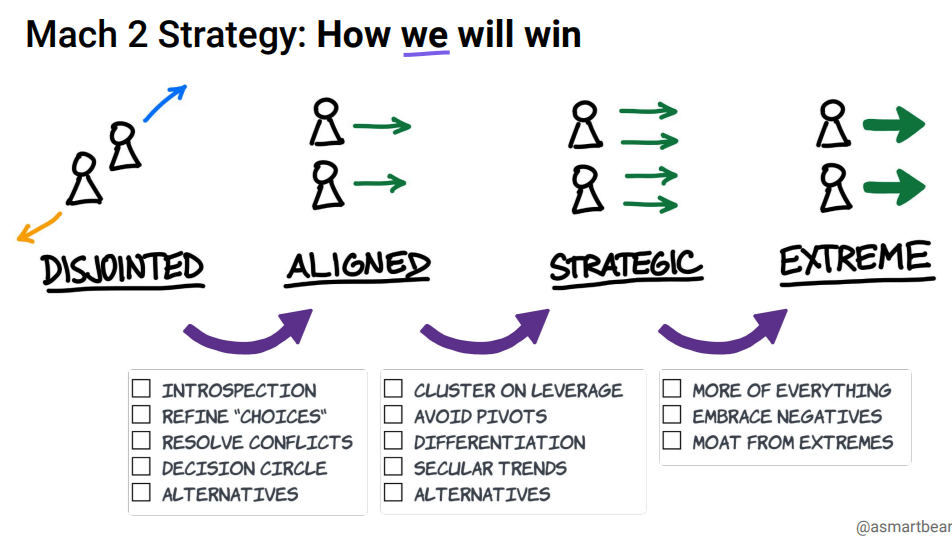
It’s a common problem: your team is moving fast, but in different directions. Like molecules in a glass of water – moving rapidly, yet the water doesn’t go anywhere. Without alignment, energy is wasted.
This misalignment shows up everywhere:
Support teams over-serve small customers.
Product teams prioritize feature requests from one big client.
Marketing crafts messages so broad they connect with no one.
Designers bounce between too many personas.
Everyone is optimizing locally. But the business as a whole isn’t moving in a single, powerful direction. That’s a strategy problem.
At Business of Software Conferences, some of the most surprising, memorable, and actionable insights come from the Lightning Talks.
These are short, sharp, 7.5-minute talks given by attendees on topics they care deeply about. No fluff. No long intros. Just insight, storytelling and impact.
And yes: Lightning Talks are back for BoS USA 2025. Applications are now open.
In today’s fast-moving business landscape, it’s a common scenario: you have the same ambitious goals and tight deadlines as before, but with fewer team members and tighter budgets than ever. Layoffs, budget cuts, and exhausted teams are a reality for many leaders, from CEOs to VPs of People. So, how do you achieve ambitious targets when resources are constrained? Claire Lew, CEO of Know Your Team (now Canopy), shares a powerful framework developed from over a decade of working with tens of thousands of people.
The core idea? It’s not about just piling on more work. It’s about being strategic, intentional, and empowering your team.
Here are seven practical steps to help your organization thrive in resource-constrained environments:
In today’s competitive landscape, many businesses find themselves stuck in a cycle of slowed, inconsistent growth despite having access to huge amounts of data. You might be seeing crappy conversion rates, relying on generic customer profiles, and launching marketing campaigns that simply fall flat. This isn’t just a minor hiccup; it’s a symptom of a significant underlying issue: customer blind spots.
So, what’s really sabotaging your marketing and product growth efforts? Here are some “shitty realities” that might be holding you back.
Insights from Stephen Steers’s Business of Software AMA
Stephen Steers is not your typical sales consultant. A world traveler, stand-up comic, and author of Superpower Storytelling, he’s helped companies close high-value deals by shifting their sales approach from feature-dumping to context-driven conversations.
At his recent AMA at the Business of Software Conference, Stephen dropped a masterclass in sales strategy, sprinkled with humor, honesty, and hard-won wisdom.
Insights from Jeff Szczepanski’s Business of Software AMA
At the recent Business of Software AMA, Jeff Szczepanski – CEO of Reframe Technologies, delivered a thought-provoking session that dissected the paradox of modern productivity: why we have more powerful tools than ever, yet seem to be treading water.
This wasn’t just another AI hype session. Instead, Jeff challenged us to think more deeply about how we use technology, what collaboration really means, and why context (not more code) might be the key to unlocking meaningful progress.
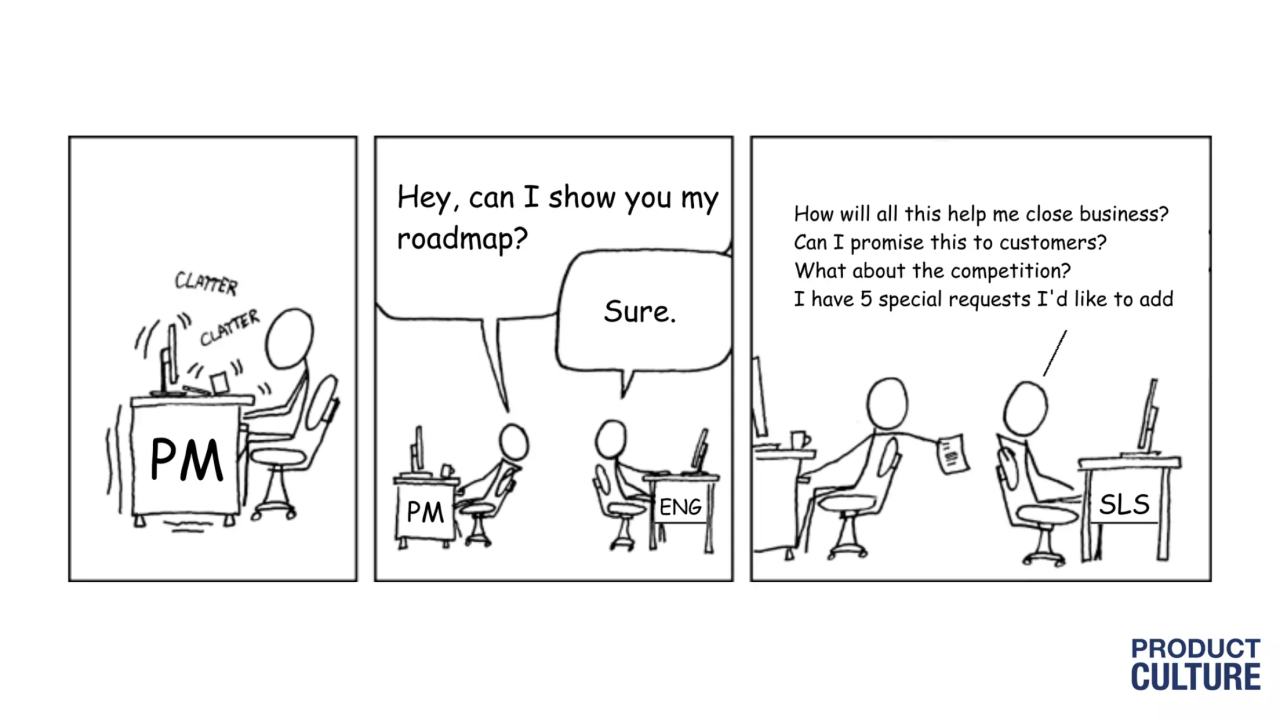
One of the most critical, and most overlooked, skills in product leadership isn’t technical or even strategic. It’s stakeholder engagement. As Bruce McCarthy puts it:
“Even the most perfect plan can fail if your organization isn’t aligned.”
Early in his career, Bruce launched a promising new product, only to watch it flop. Why? He hadn’t brought sales or marketing into the process. Despite achieving product-market fit, it failed on product-company fit. That experience taught him what so many leaders learn the hard way: if your stakeholders aren’t with you, your plan doesn’t stand a chance.
Differentiating your products or services is key to scaling sales and becoming a dominant market player. But how can you achieve this in a crowded software landscape? According to Stephen Steers, a sales expert and author of “Superpower Storytelling,” at the Business of Software Conference, storytelling is a powerful way to make your business stand out, attract people, and turn them into customers.
Insights from Chris Mele’s Business of Software AMA
Pricing is often treated as an afterthought in SaaS companies. Founders focus on product-market fit, customer acquisition, and engineering scale long before they turn serious attention to monetization. But according to pricing expert Chris Mele, that approach can cost companies millions in unrealized revenue.
So when is the right time to invest in pricing?
Chris Mele, managing partner at Software Pricing Partners, shared his perspective in a recent Business of Software AMA. Drawing from his experience advising over 400 companies on pricing strategy, Chris outlined why pricing shouldn’t be delayed, and what to do instead.
Insights from April Dunford’s Business of Software AMA
In an era where “AI-powered” has become the default label for tech products, positioning your company clearly and effectively is more challenging than ever. April Dunford, executive consultant, speaker, author and widely recognized expert on product positioning, tackled this head-on during her AMA with Business of Software.
Here’s what every founder needs to know to navigate the new terrain of positioning in the age of AI.
Have you ever wondered why pricing software feels so complicated? Chris Mele, a pricing expert from Software Pricing Partners (SPP), shared some insightful perspectives on this topic at Business of Software USA, drawing from his own experiences and decades of industry data.
It turns out, many businesses make a fundamental mistake: they try to sell software based on how they want to sell it, rather than focusing on how the customer actually buys.
Chris learned this the hard way with his own startup. Despite raising significant funds, he realized he could have potentially avoided fundraising altogether if he had better understood how customers valued his software and what they were truly willing to pay. This experience sparked his deep dive into the science of monetization.
It’s a question every marketer asks… And most are still guessing.
Despite all the tools, personas, and campaign data, it’s still far too easy to fall into marketing that sounds good, but doesn’t land.
That’s where Jobs to Be Done (JTBD) comes in. Not as a tactic, but as a foundational way to understand what your customers are really trying to achieve.
Many of us feel overwhelmed by technology, despite using countless tools designed to make us more efficient. Jeff Szczepanski, a successful software entrepreneur, recently spoke at the Business of Software Conference about this very challenge: Why isn’t technology making us more productive?
While technology has significantly boosted task-level productivity and helping individuals complete specific actions faster, it has often left us overwhelmed and misaligned at the organizational level.
Current digital tools are usually described as merely “paper in a screen,” lacking the ability to truly support collaborative thinking and the coordination of complex work.
Think about it this way: when you’re trying to sell something, especially software, it’s easy to just show off all the cool things your product can do. This is like giving a product walkthrough. Many people, especially founders from technical backgrounds, incline towards this because they want to avoid sounding like that pushy “used car salesman” stereotype – someone seen as lying or just trying to get your money without caring about what you actually need.
However, just showing features or being able to haggle on price isn’t what actually wins deals. What really makes a customer choose you is having a super clear reason why they should pick you over anyone else. This unique reason is your differentiated value. It’s the unique thing you can do for customers that nobody else can.
At Business of Software, we often hear from founders:
“We’ve built something that people genuinely use and value. But we have no idea how to price it.”
It’s a common and challenging problem. Pricing decisions are rarely straightforward; they come loaded with uncertainty, emotion, and long-term consequences.
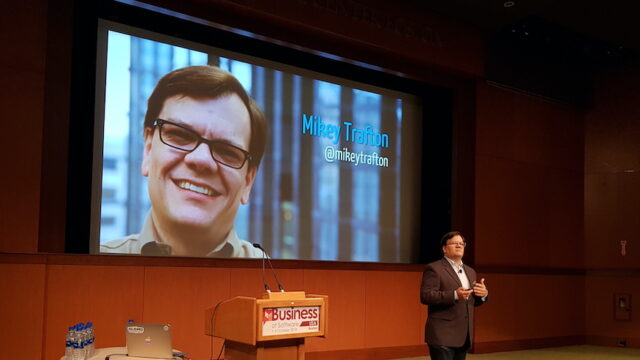
I’m very sad to report that Mikey Trafton has died, unexpectedly and far too young.
Mikey was an extraordinary human. He was introduced to us by Jason Cohen at WP Engine who told me I should have him speak. Jason said Mikey was a brilliant story-teller with an exceptional ability to communicate and explain though definitely not one of those folk who are, ‘on the speaking circuit’. That was true, but Mikey was so much more than that. He was a delightful person who always left you happier and smarter after you spoke with him.
Last week, founders, product leaders, and software builders from across the globe gathered in the historic halls of Churchill College for two days of insight-packed talks, honest conversations, and the kind of community you don’t find just anywhere.
BoS Europe 2025 wasn’t just a conference. It was a chance to step out of the day-to-day and spend time with people who actually get it: The highs, the lows and everything in between when building great software businesses.
Before everything…Missed BoS Europe?
We’ll send you the talks as soon as they’re available.
Lightning talks are back at Business of Software Conference. They are fast, focused and packed with insights – sharp perspectives from experts, leaving you with actionable takeaways in just 7.5 minutes.
At BoS Europe 2025, we’re featuring two standout applications that discusses some of the biggest challenges in leadership and product development. Meet Steve McLeod and Gareth Marlow, two experts with practical wisdom to share.
At BoS, trust and meaningful connections are at the core of what we do. We have never and will never sell attendee, speaker or community contact details. Your information is private, and we keep it that way. If you ever receive a message claiming otherwise, it’s simply not true.
The messy middle is where real progress happens, tough decisions are made, and leaders are forged. At this year’s Business of Software Conference Europe, we’re discussing frameworks, strategies, and lessons that help you push through uncertainty and come out stronger.
Here’s the full schedule and flow for two days of action-packed learning on 31 March – 1 April 2025 in Cambridge, UK – featuring candid conversations, bold ideas, and the tools to help you build a business that lasts.