Gallup’s 2025 workplace poll puts a number on something most founders already suspect: out of 100 average employees, only 31 are actually engaged. Fifty-two are showing up and doing enough to get by. Seventeen are actively working hard to avoid doing any work at all. Before you factor in a single generational difference, most teams are already carrying dead weight.
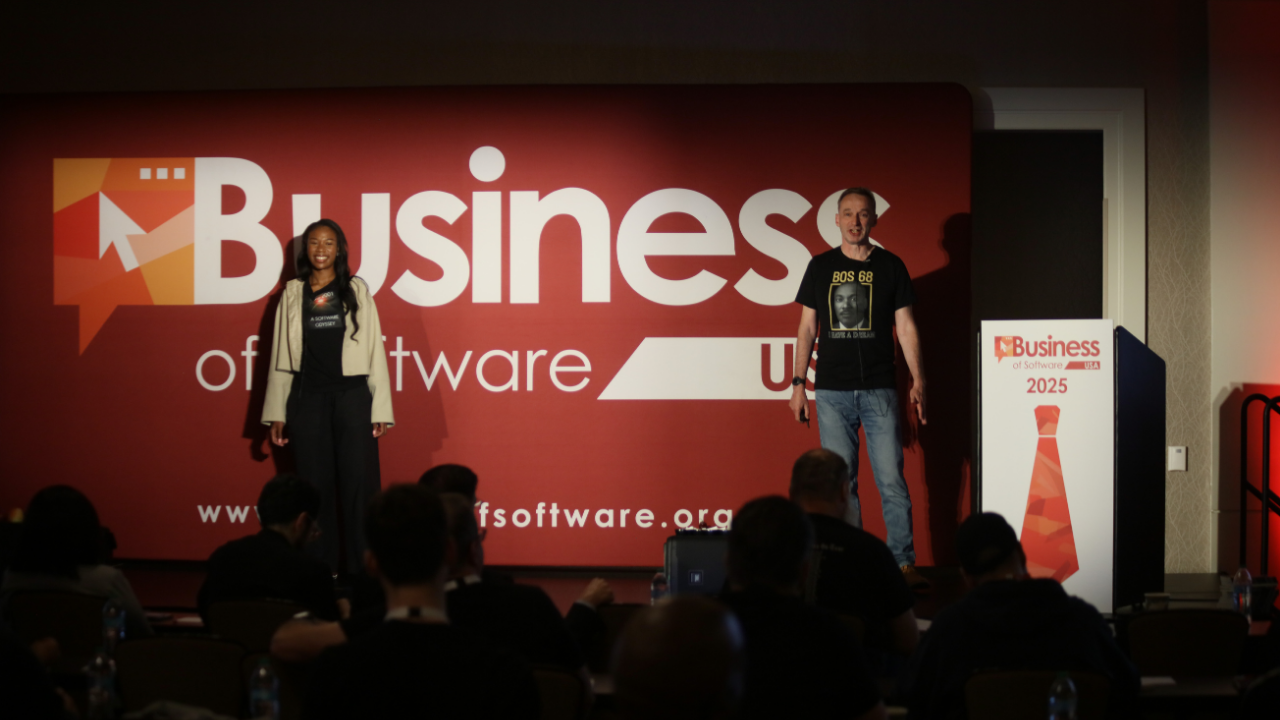
That was the starting point for Chika Emebo and Mark Stephens at Business of Software USA 2025, in a talk about running a team that spans four generations, Baby Boomers, Gen X, Millennials and Gen Z, often in the same room, sometimes reporting to a boss the same age as their own child.
Mark, who runs UK software company IDRsolutions, and Chika, a Gen Z member of his team, built the talk as a back-and-forth between their two generations rather than a lecture from one. The point wasn’t that generational differences are a problem to manage around. It’s that they’re the raw material for a better team, if you’re deliberate about it.
Most founders optimize the wrong part of their network.
They spend their coffee meetings with the same core circle, people they already know and trust. It’s comfortable, but it’s also where the time gets wasted.
John Knox, in his lightning talk at Business of Software USA 2025, put it plainly: “The edges of your network are the most valuable part of your network. Yet most people spend all their time on the core.”
When John ran an event for med tech startups, he reached out cold to eight founders he’d never met. Seven said yes and ended up speaking at his event, despite having no prior relationship with him and no particular reason to trust his outreach. The leverage was never in his existing contacts. It was in the people he hadn’t talked to yet.
MIT ran a simple experiment. Researchers split a group of students into three and asked each group to write the same essay. One group used Google. One used ChatGPT. One got no assistant at all.
The ChatGPT group could recall 83% less of what they had supposedly just written, nearly every student in that group, and they reported a much lower sense of ownership over their own work.
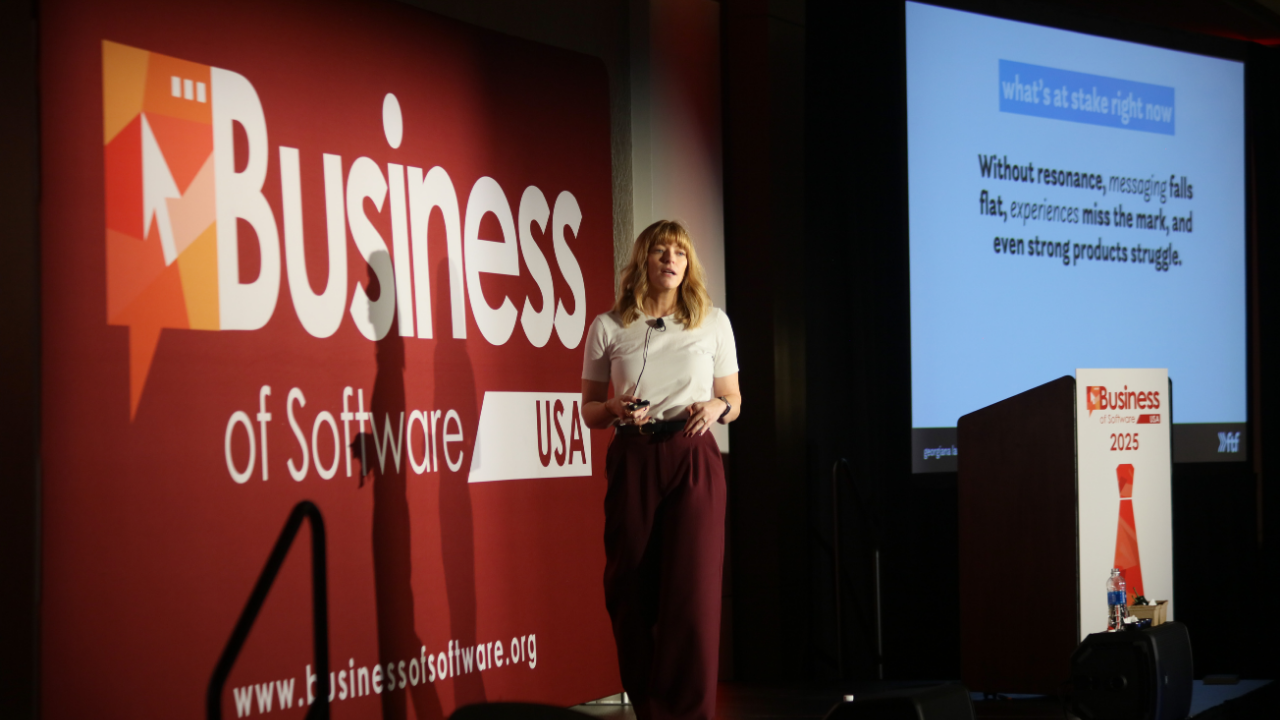
Georgiana Laudi, co-founder of Forget The Funnel, used that study in her talk at Business of Software USA 2025 to make a point about SaaS go-to-market strategy: the same thing is happening inside marketing and growth teams right now, and it’s quietly undermining their ability to make good decisions.
Her talk wasn’t really about AI. It was about three things she believes are the actual source of the disruption founders are feeling, and none of them show up on an AI roadmap.
Raj Mahajan, in his lightning talk at BoS USA 2025, shared that he bought Super Salon in 2015, a point-of-sale software business built for salon chains (if you’ve ever checked in at a Supercuts, you’ve used it). For four years, he did everything you’re supposed to do – tripled the revenue and stayed profitable the whole way, hired a real management team, and put proper systems behind the business. Every number pointed the right way.
By 2019, the company was ready to sell. Several offers came in, and Raj was deep into the checks a private equity buyer runs before signing.
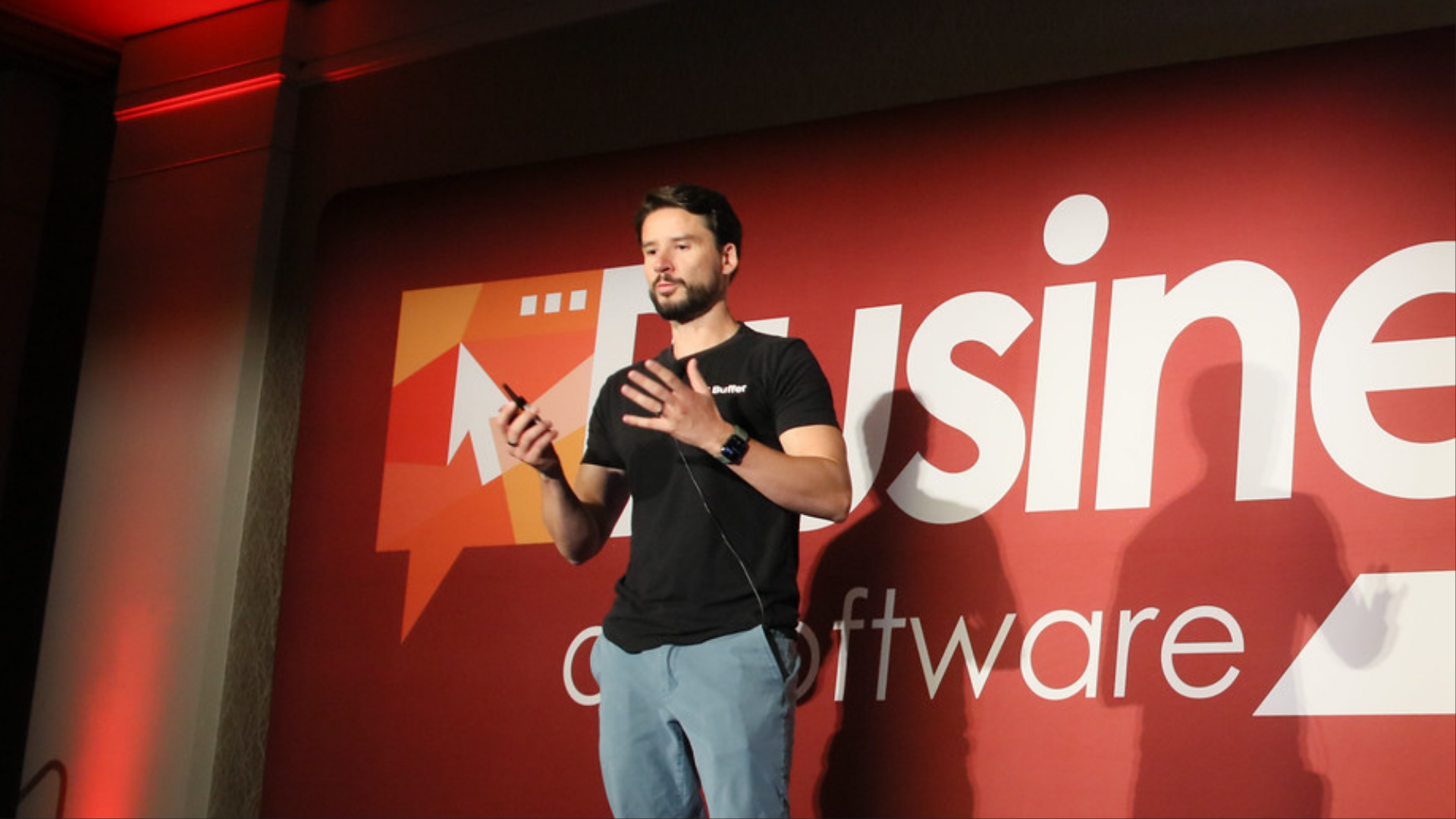
Buffer spent ten years growing, scaled smoothly to around $22 million a year in revenue, and built a loyal community along the way. Then, right around 2020, they hit a plateau. Over the next three years, the business slid into a decline, losing 20% of its revenue.
Joel Gascoigne’s talk at BoS USA 2025, “Navigating a Multi-Year Decline to New All-Time Highs,” makes an uncomfortable case: Buffer didn’t start tanking because they made stupid mistakes. They started tanking because Joel followed the exact advice every SaaS expert tells you to follow.
The Playbook Trap
When growth first slowed down, Joel did exactly what the startup textbooks say to do. He decided to focus on a narrower type of customer, choosing direct-to-consumer e-commerce brands because they relied so heavily on social media. To make more money from each existing customer, the team restricted the free plan, raised the Pro tier from $10 to $15 while cutting features, and eventually hid the free sign-up option altogether. They also started building more products so they could sell customers more than one thing at a time, and hired search firms to run four executive hunts at the same time.
On paper, the early data looked good. They were making more money per customer. But their paying customer count was collapsing underneath it. They told themselves the drop was just a natural side effect of chasing bigger, pricier customers. By the time the pandemic added its own pressure, the business was in a real spiral.
Two Different Ways to Grow
It took Joel three years to see this: there isn’t one universal way to scale a tech company. There are two different ways to run one, and mixing them up is exactly how you end up squeezing a company that was never built to be squeezed. One way relies on a small number of customers who each pay a lot, get personal attention, and see their prices go up steadily over time. The other relies on a large number of customers, a simple product, a strong flow of people trying it free and slowly deciding to pay, and small, steady growth in revenue over time.
Buffer was built from day one to be the second kind of company. Forcing it to act like the first, just to chase bigger customers and higher prices, put them on a path where they were squeezing more out of a shrinking base instead of delivering more to a wider one.
Turning Inward
Before any of that, Joel hit his own wall. After the layoffs and after his co-founder left, he thought he had things stabilized. Then he burned out completely. In his words, he couldn’t get out of bed. He took six weeks off, did nothing for a while, then slowly built himself back up. It’s a pattern that shows up a lot after burnout: once someone recovers, they usually come back wanting a fresh start, wanting to change things so they don’t end up in the same place again. That’s probably part of why the decisions that followed were so personal. He’d already had to lay off ten people once. He didn’t want to be in a position where that happened again.
I keep noticing this pattern, not just with Joel. The best decisions a company ever makes rarely come from a strategy deck. They come from the worst, most personal moments a founder goes through, the ones they never planned for and can’t fully explain to anyone else. Joel didn’t get to four day work weeks or a people first culture through a growth framework. He got there because he broke down first, and decided he never wanted to put anyone else through what broke him.
That same instinct, to look after people first, is where the four day work week came from. It started in May 2020, in the middle of the pandemic, when Joel’s team was dealing with kids at home and life turned upside down. For Joel, trying it felt like an easy call. For the team, it felt almost too good to be true, a full extra day off with no cut in pay or hours squeezed into the rest of the week. They ran a one month trial, then a six month pilot, and it just stuck. It’s still how Buffer operates today, five and a half years later.
Two years after that, in 2022, the same instinct showed up again in a bigger decision. Joel stopped the executive searches. He realized bringing in more managers during a decline just added distance between himself and the actual work. He took on the direct reports himself, told the product and marketing teams who’d been stuck waiting for a new leader that they were a complete team now, and it was time to build.
They shifted the company out of just managing the decline and back into actually building again. They ran team-wide weeks focused only on shipping, to pick up speed, and finally tackled the old, avoided technical problems everyone had been too afraid to touch.
Strategically, Joel reversed the push toward bigger customers with a framework he calls Down and Wide. Down meant targeting individual creators, early entrepreneurs, and small businesses, the opposite direction of competitors like Hootsuite. Wide meant keeping the product flexible enough to handle a wide range of social channels.
They brought the free tier back as a core part of the business instead of something hidden. They changed the main button on their homepage to send visitors straight to free sign-up instead of a pricing page. Monthly sign-ups jumped from 65,000 to 85,000 almost immediately.
Back to All-Time Highs
By matching the business to what Buffer actually was, instead of what the textbooks said it should be, the business recovered. In 2024, Buffer grew revenue by 9%. By 2025, they were back to all-time highs in paying customers, hit a healthy balance of growth and profit that most SaaS companies chase and rarely reach, and were projecting $2.5 million in net income, all while still running on a four day work week. They even started proactively canceling subscriptions for customers who were paying but inactive, on the idea that long-term trust matters more than inflating short-term numbers.
Joel nearly lost Buffer by making good calls that belonged to someone else’s business. If you’re running a company right now and something feels off even though you’re doing everything the way you’re “supposed” to, that might be your answer too. Before you copy the next piece of advice from a founder you admire, ask yourself if you’re actually building the same kind of business they are. And ask yourself, honestly, whether the people inside your company are doing okay. Buffer only found its way back once Joel stopped treating both questions as separate.
Jason Cohen’s “Escaping the Growth Ceiling” talk uses Buffer’s real churn numbers as its worked example, and Cohen’s own approved post already references Joel’s talk as a companion piece. Worth cross-linking the two once both are published.
Here’s a new tool for the BoS OS, works freely on other, inferior operating systems too. Prospect Intelligence Scoping uses what you know about your best customers to identify new potential customers and your best route to engage with each.
Our new skill takes your ICP and walks you through a structured process to establish: where do those folk hang out (LinkedIn, Slack communities, email lists, specific industries)? What’s the best way for you to reach each one individually? It tests each assumption against real data before you commit to outreach.
As always with BoS OS, you, the human, are in charge.
The output is a working prospect list. Not a spreadsheet of guesses. Not LinkedIn filters. A list of people who match your ICP, with a mapped route to reach each one individually (email address, LinkedIn profile, mutual connection, event they’re attending).
You can route and monitor follow-ups in the BoS OS and existing systems. Once you’ve run it, you have a repeatable process. When your ICP sharpens (and it will, because every customer conversation teaches you something), you run the skill again. You scale what works.
This doesn’t replace your instinct or your sales skill. It removes the manual research work so you can focus on the conversations that matter. You spend time on people worth reaching, contacted through the channel that works for them.
I had no idea what BoS OS was when I joined. I’d used AI tools before, sure, but just on my own, for my own stuff, no different from how a lot of people are dipping their toes into AI right now, half curious and half unsure it was worth the time. Then I walked into Business of Software right in the middle of a much bigger shift, one that started after a talk from Tim Barker got everyone in the room thinking differently about what AI could actually do for a company like ours. That talk is part of why BoS OS exists in the first place. I just happened to show up while it was still being built.
No map, no handover
Nobody handed me a system on day one. Jann was out on maternity leave. Mark was buried in conference prep. The person who had my role before me had one week left before she was gone. Great timing all around. There was no drive with everything sorted. No map of how anything worked. I inherited a pile of systems nobody had time to walk me through, and I did not know where to start.
There was no proper system yet, so I built one for myself, temporarily, just to keep things moving while we figured out the real one. We’re still figuring it out, honestly. The first thing I actually wrote down was our passwords. Not exactly the heroic starting point you’d expect.
The real work started with a meeting.
No onboarding doc existed. So I made one live, during the call, asking every question I had while someone answered. Whatever came back, I typed straight into a Google Doc as we talked.
That document got me through those first weeks. I built it out of pure necessity, not because anyone told me to.
Making the system fit me
Even with that doc, BoS OS itself felt like a lot to take in, the whole way we worked had changed at once, and some days I couldn’t tell what my actual job was anymore.
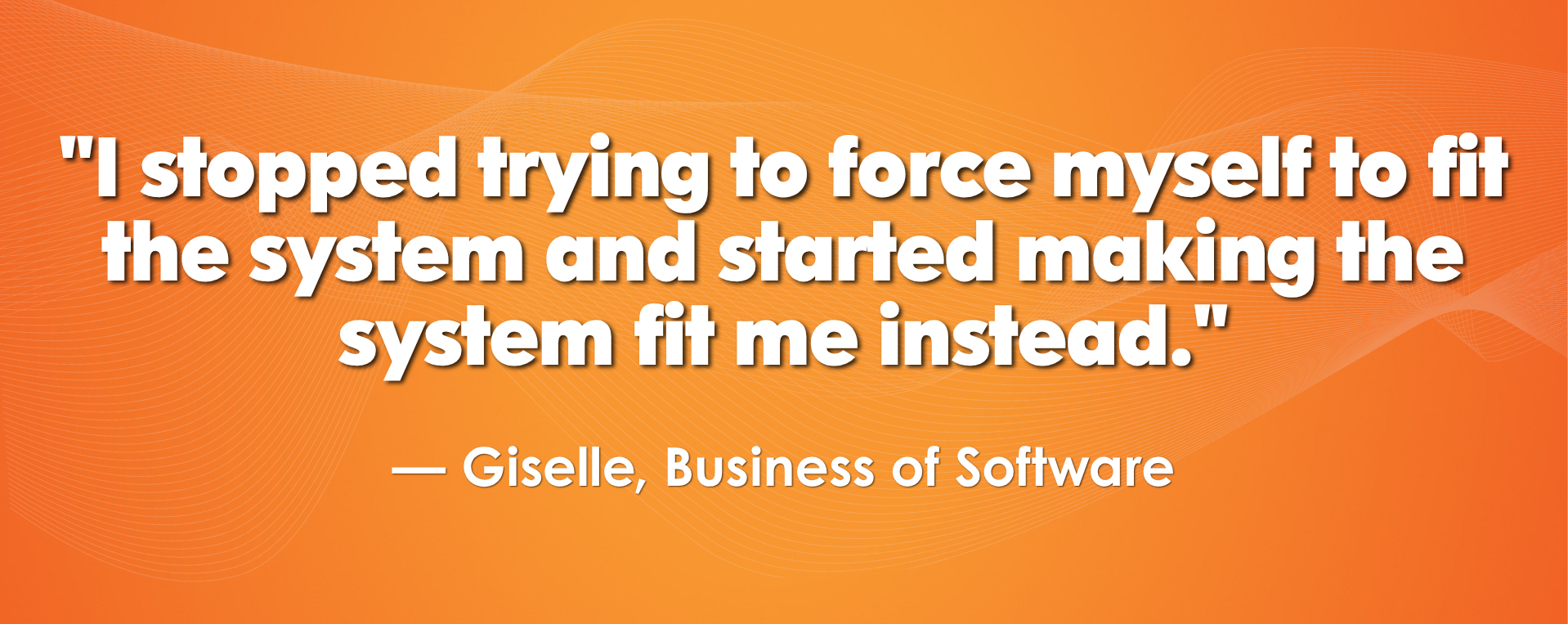
Then Mark said something that stuck: BoS OS is supposed to make our lives easier, not add more work on top. I stopped trying to force myself to fit the system and started making the system fit me instead.
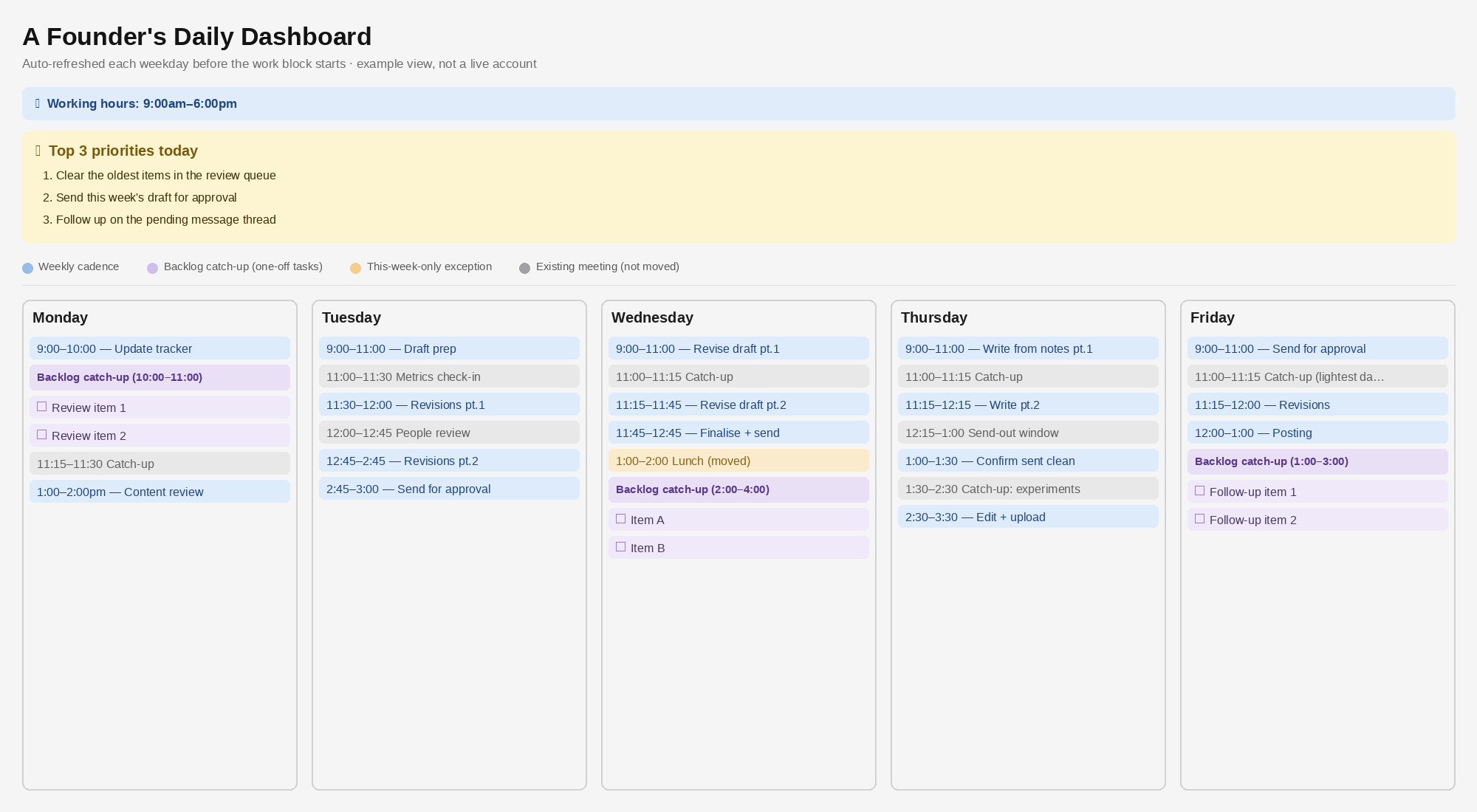
I have ADHD, and a wall of text will lose me every time. So I told the OS how I needed it to talk to me: plain language first, the simple version before the technical one, and show me, don’t just tell me, because staring at pure text for too long pulls me somewhere else entirely. I built myself a dashboard where every task lives, and I cross it off when it’s done. Watching that happen gives me a kind of satisfaction a text reply never did. I even taught it to call a hard stop when I’ve hit my limit for the day, because left on its own, AI will happily pull you down a rabbit hole for hours and act like that’s normal.
That is when BoS OS stopped being something I opened and used. It started working with how my brain actually runs, and started helping me decide instead of just answering.
What’s still unfinished
We are still fixing things. Naming conventions are half sorted. Sync issues are getting better but not solved. What is different is what the process itself surfaced: parts of BoS that had been broken for a long time and nobody had noticed, workarounds nobody questioned, extra steps that never needed to exist. Building this properly meant we couldn’t look away from any of that.
My own role got clearer too. I know what is mine to own, what BoS OS can carry for me, and what still needs my hands on it directly. The manual grind that used to eat my whole day is mostly gone now. What is left is room to actually work on growing BoS instead of just keeping it standing.
If you’re new somewhere and you got handed a mess with no map, I get it. I wasn’t trying to fix anything. I just needed a way through mine.
If you’re staring down that same pile with no map, that’s exactly what the Introduction to BoS OS workshop is for. Two sessions, real example, no jargon required to start.
Learn how great SaaS & software companies are run
We produce exceptional conferences & content that will help you build better products & companies.
Join our friendly list for event updates, ideas & inspiration.
Every SaaS founder hits the same wall eventually. Growth is working, then it slows, then it flattens. And the easiest thing in the world is to blame something outside your control. Bad quarter. A loud new competitor. The market’s just saturated now.
His diagnosis is simpler and a lot less comfortable. You hit a mathematical ceiling. You were always heading toward it. You just never ran the numbers that would have told you it was coming.
Jason walks through the mechanics using real data from Buffer and ConvertKit, showing how the math works against you by default, and what the companies that break through actually do differently.
I’m still new to marketing, so a lot of what I’ve learned so far is the “just post more, try more channels” school of thought. This talk was the first time someone showed me why that advice runs out of road on its own.
How you get customers and how you lose them are two completely different shapes.
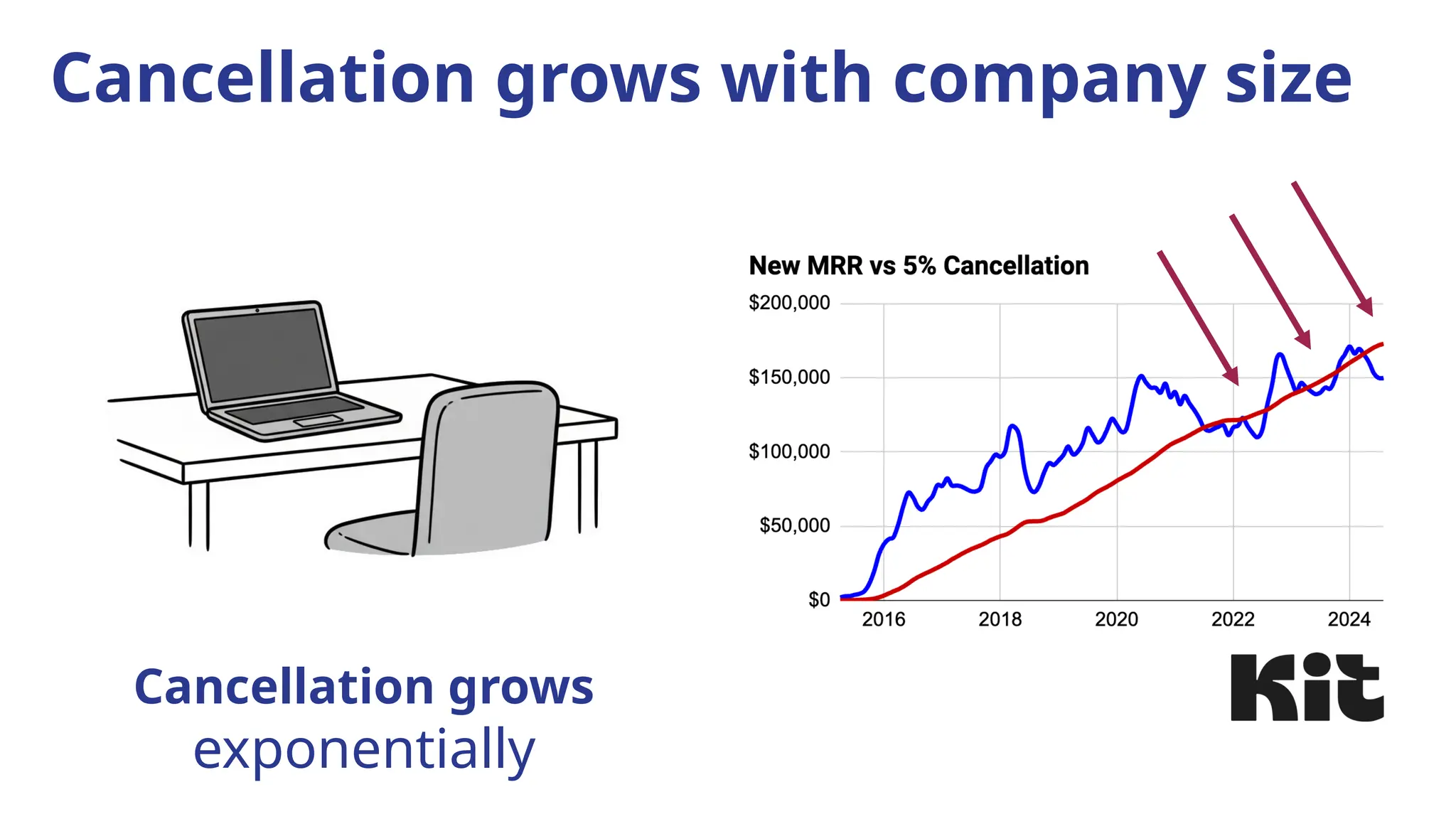
Marketing is linear. Even when you optimize your channels, you add a roughly steady number of new users each month. Draw it on a graph and it’s a straight line.
Cancellations are exponential. This is the part that sneaks up on you. Churn is a percentage of your total base, so the bigger you get, the bigger that number gets too.
As Jason puts it: “Marketing grows linearly. Cancellations grow exponentially. That’s what a percentage is.”
Say you have 1,000 customers and 5% monthly churn. That’s 50 people gone a month. If marketing brings in 100 new users, you’re still up 50. Feels fine. Feels like you’ve cracked it.
Now triple the business. 3,000 customers. Same marketing engine, still pulling in 100 new users a month. But 5% churn on 3,000 is 150 people. You’re now shrinking by 50 a month, and marketing didn’t change at all. Nobody did anything wrong. The math just caught up.
The Ceiling Has a Number: Max MRR
Jason’s fix for founders flying blind is a metric he calls Max MRR. It’s the revenue ceiling your business hits once cancellations catch up to acquisition.
Max MRR = New MRR per month ÷ Monthly Churn Rate
Bring in £150k in new MRR a month with 5% churn, and your ceiling is £3 million. You can throw every ad dollar you have at it and you’ll still hit that wall.
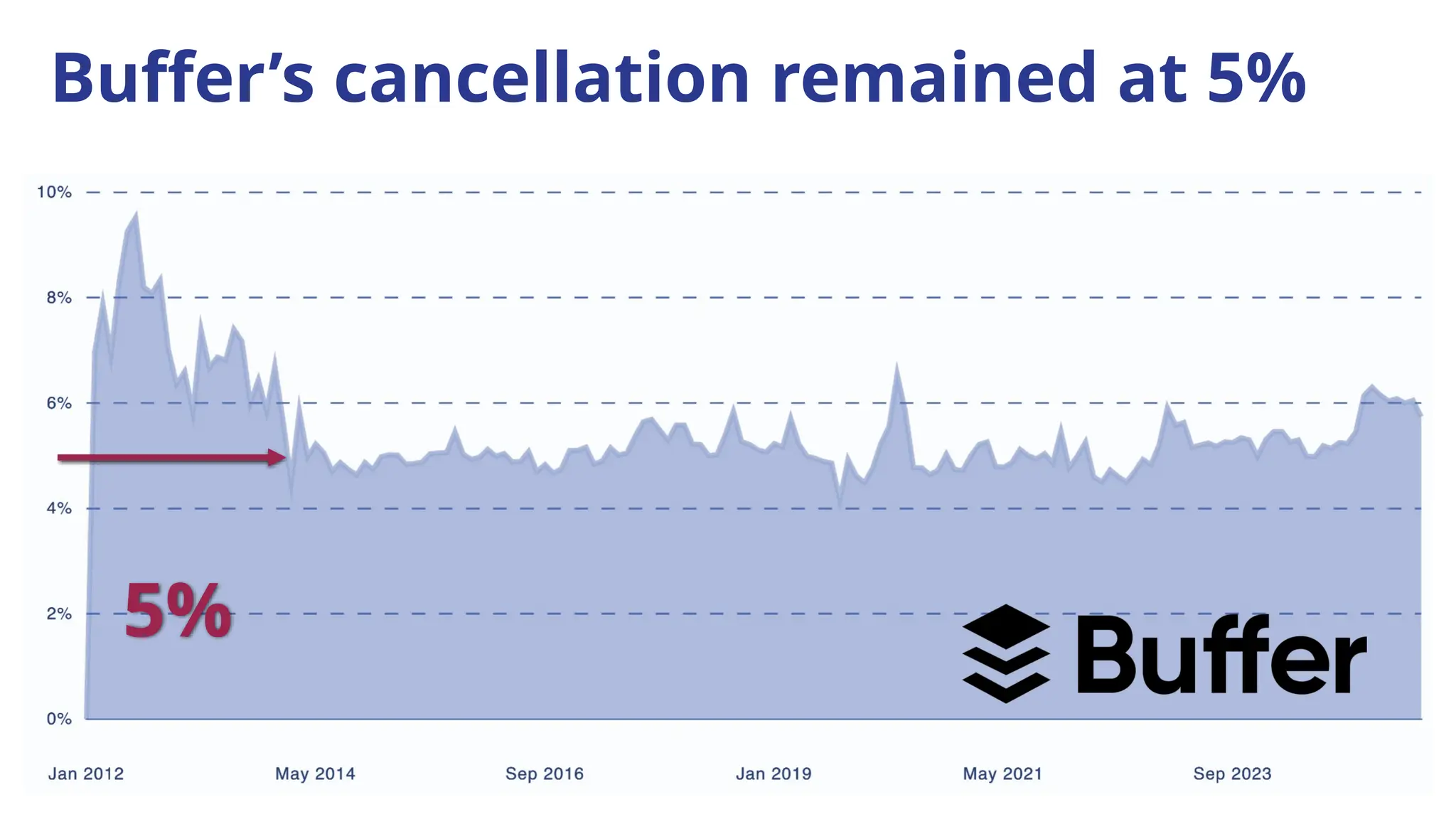
This isn’t theoretical. Buffer lived through a hard 5% churn rate for years. Joel Gascoigne told that whole recovery story at BoS too, and you can see the ceiling sitting right there in their graphs the entire time. ConvertKit went the other way: a decade of work to grind churn down to 3%, which is what let them keep climbing instead of stalling out.
Max MRR moves months before your actual revenue chart shows anything wrong. It’s an early warning, if you’re watching it. I didn’t even know this was a number you could calculate before this talk, and now I keep wondering how many teams find out their ceiling exists only after they’ve already hit it.
Your Cancellation Survey Is Lying to You
When revenue dips, the instinct is to dig into the cancellation survey. Don’t bother. Most of those dropdowns are noise. People click whatever’s first just to get past the popup.
Open ended, casual questions work far better. Groove tested this. They switched the automated email subject line to a plain “quick question,” and got a 10% usable response rate. Then they changed the actual question from “Why did you cancel?” to “What made you cancel?” Same idea, softer framing. Response rate doubled to 20%.
But even good feedback has a trap built in. When someone writes “too expensive,” we panic and reach for the pricing page. Jason’s counter is simple. They already agreed the price was fair the day they entered their card details.
“Too expensive” is usually a translation of something else. A value drop that happened weeks earlier. Confusing onboarding, a feature that didn’t work right, a workflow that felt like friction. It wasn’t price. Value stopped showing up. The fix was never in the pricing page. It was in something that happened quietly, weeks before anyone typed “cancel.”
The real fix is catching people on the happy path, the sequence a healthy, sticking around user actually follows. Someone who falls off that path hasn’t decided to leave yet. They’re just lost. Wait until they hit cancel and you’ve already lost the window. Fix the onboarding instead, and it compounds across every cohort after it, because the steepest drop off is always right at the start.
Three Ways Out
These are the three levers Jason points to for breaking the ceiling instead of hitting it.
Give and get referrals. Skip the one way cash incentive. Dropbox’s “we both get extra space” reads like a favor between friends, not a commission pitch.
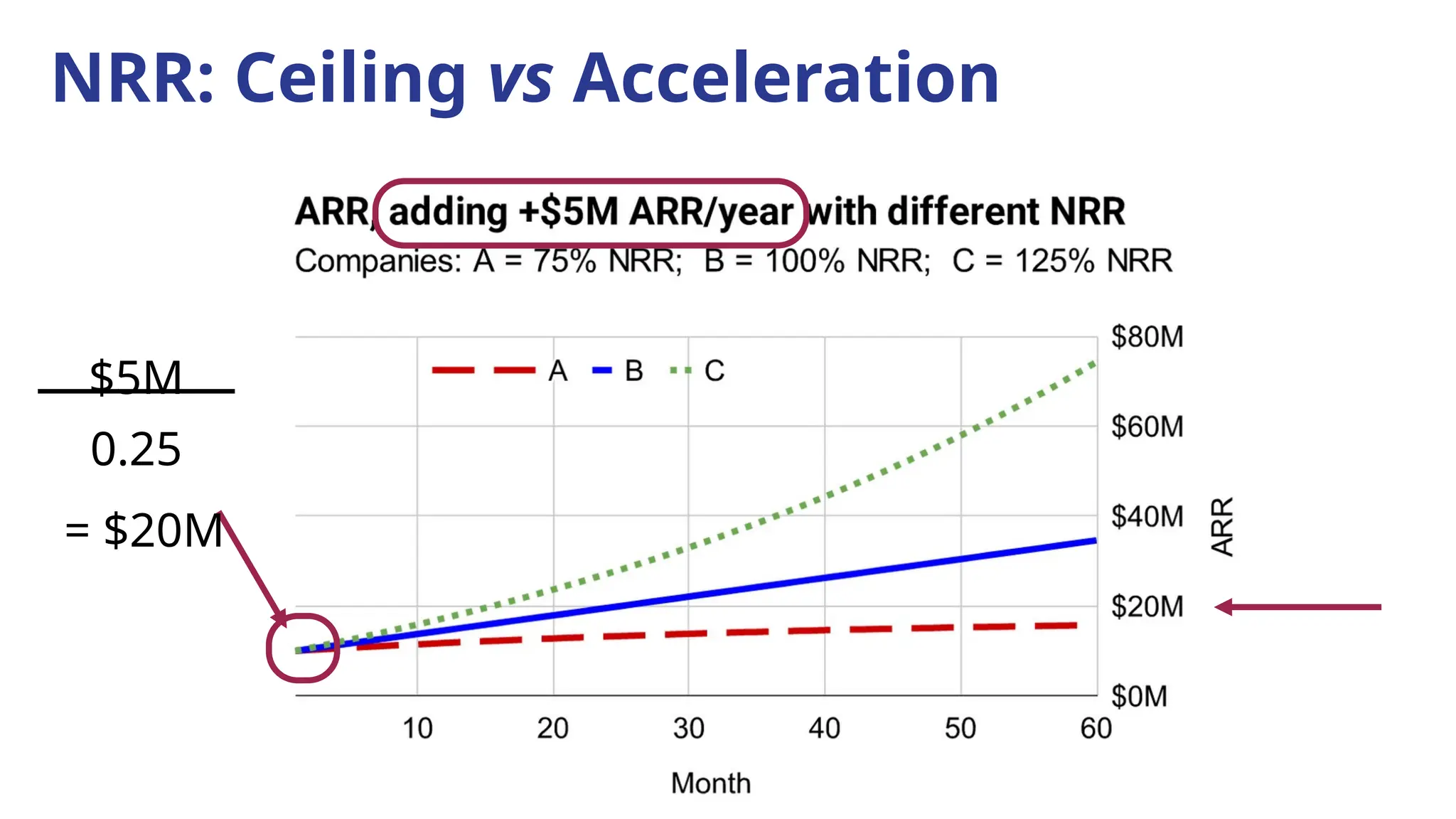
Net Revenue Retention above 100%. This is the real lever. Above 100% NRR, upgrades from your existing base outpace what churn takes away, and the business starts compounding on its own. Dropbox has been acquiring fewer new customers year over year and still growing revenue, because the existing base carries it.
Show your receipts. Remind customers what you’re doing for them before the invoice lands. A security dashboard that says “blocked 5,000 attacks for you this month” builds the case for you. So when a price increase shows up later, it feels earned instead of random.
The full talk is on the BoS website. Watch it alongside Joel Gascoigne’s companion talk on Buffer’s recovery to see these ideas actually play out.
Jason has built four software startups, both bootstrapped and funded, both alone and with co-founders. All of them grew to more than $1m annual revenue.He sold two, and currently serves as CTO of the fourth, WPEngine, with 380 employees headquartered in Austin, Texas. More recently, he has also been an angel investor and was a founding member of Capital Factory, an Austin incubator and co-working space. He writes about software and startups at ASmartBear.
Most founders who’ve been experimenting with AI for the past year or two have the same collection of things.
A ChatGPT or Claude subscription someone uses for drafting. Copilot in the codebase. Maybe a chatbot on the website that was set up and then quietly forgotten. A few team members who’ve found prompts they like and use them for specific tasks. A Slack thread somewhere with “useful AI prompts” that nobody’s looked at in three months.
That’s not an operating system. That’s a drawer full of tools.
And the difference between a drawer full of tools and an operating system is roughly the difference between a 1x business and a 5x business.
Tim Barker, former CMO at Salesforce and CEO of a 600-person healthcare company, now running a five-person AI-native startup, spent seven months building the latter from scratch. He came to Business of Software Europe 2026 to explain what it actually involves.
The answer is not more tools. It’s not better prompts. It’s a system. And most businesses don’t have one yet.
Let’s be honest about what’s underneath AI resistance.
It’s not technophobia. Most founders who’ve built software businesses are not afraid of new technology. It’s something more specific, and actually quite reasonable.
You’ve seen the hype cycles before. You’ve watched tools get adopted across your industry with breathless enthusiasm, only to discover that the ROI was questionable, the implementation was painful, and the main beneficiaries were the vendors. You’ve built a business on judgment, not trends. You’ve learned to be sceptical of things that promise to change everything.
And now you’re watching every conference, every newsletter, every LinkedIn feed fill up with AI content, most of it superficial, much of it plainly wrong, and something in you is saying: wait.
That instinct is not wrong. But it may be leading you to the wrong conclusion.
I watched Tim Barker walk through his business OS, went home and built one for BoS.
Giselle had just joined the team. Jann was on maternity leave. I needed to onboard Giselle fast, hand off Jann’s context, and figure out how we’d work together short-term. All in the run up to a conference. Our onboarding docs were out of date, probably had been for years. We needed something that reflected how we actually work, not how we worked three years ago.
Tim’s insight cut through everything I’d been reading about AI:
Ignore AI. Start with the System.
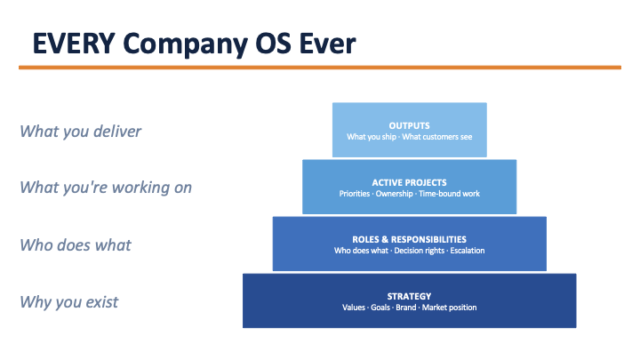
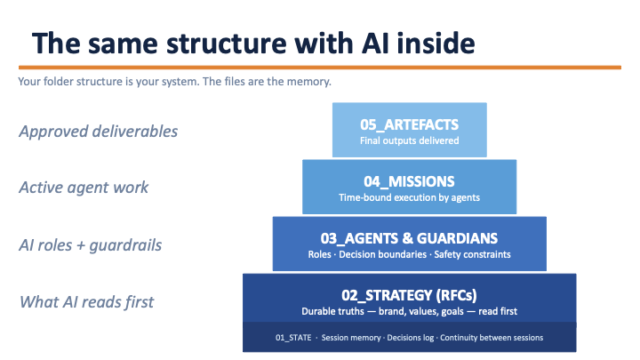
Every company runs on the same basic structure. Strategy. Roles. Active projects. Outputs. Most founders have all of this. It’s mostly undocumented, siloed, or living inside someone’s head.
If you overlay AI on a system you haven’t mapped, you don’t get clarity. You get speed in every direction.
Speed is not Velocity.
Map the system first. Then overlay agents.
What surprised me: the benefit isn’t just AI governance. When you have to articulate how your company actually works, everything else gets sharper too. Onboarding becomes real. Decisions get logged. Context doesn’t evaporate when someone leaves or joins.
We’re still early. But it’s already changed how BoS operates.
One founder I spoke to this week mentioned he had 1,200 lines of ideas for blog posts, to-dos, market observations, product thoughts, things he’d meant to follow up on…
There’s at least one document somewhere in your system – it’s called ‘ideas’ or ‘backlog’ or ‘misc’. It’s been there for a while. You lost it once. Started a new one, You add to one or the other. You rarely take things out. You know you should deal with it and you don’t.
The document is a partial record of stuff you’ve decided to care about without deciding what to do about it. Every item = a small claim on your attention. Together, it’s a lot of background noise.
What The Document Costs You
Most people treat their backlog doc as a minor irritant. Minor irritation => minor irritations => major irritation => a nasty rash => bubonic plague… Where to draw the line?
Every unresolved item is a deferred decision. Deferral becomes the default. You stop dealing with it. You manage around the list rather than resolve. The stuff, your ideas, your intentions, your plans for the business you meant to build. You feel a faint sense of failure every time you think about it and move on.
The problem is not time. If time were the constraint, you’d have dealt with it in a quieter week years ago. The constraint is the absence of anyone else who can process it. In any business where you’re the main strategic brain, the backlog is yours alone. You can add to it, but you can never quite clear it, because clearing it requires the same thinking capacity that everything else in the business is already competing for.
Why This Matters Now
Today, you can use tools to execute the boring stuff so you can focus on the stuff that you decide matters. Not the decisions, but the processing. Taking raw input and turning it into something you can look at and act on: that work no longer has to wait for you to have a free afternoon.
Back to the Founder…
He said he had put aside time next week to work through this then decide what to do with it. I asked directly, it turns out that setting time aside next week for this has been going on a long time.
We tried an alternate option, we pasted the whole doc into the OS.
As we watched, in the space of 3 minutes, the document got digested and organised into structured content plans, a separate list of prioritised to-dos, and 60 blog and video topics. He watched it happen.
His response: “It’s done what I was going to do next week AND organised it. I can see how I can use this now.”
A lightning bolt of realisation,
“AI just gave me a day I was dreading back”.
He wasn’t surprised by the capability. He was delighted by the outcome. He didn’t leave the session with a framework to think about his backlog, he left with a plan.
We’ve all got at least one similar document.
The document isn’t waiting for you to have more time. It’s waiting for you to stop being the only one who can process it.
AI should work for you. When it does, it can delight.
Learn how great SaaS & software companies are run
We produce exceptional conferences & content that will help you build better products & companies.
Join our friendly list for event updates, ideas & inspiration.
After Business of Software Conference, we got a lot of messages.
Not about the after-party. About one talk – Tim Barker’s session on building an AI operating system for your business. Founders wanted to know where to go next. How to start. Whether there was somewhere to actually work through this with people taking it as seriously as they were.
There’s a version of this you’ve probably told yourself.
“We’re heads down on the product right now.” Or: “Our engineering team is already using Copilot, so we’re covered.” Or the most common one: “We’ll get to it properly once we’ve got past this quarter.”
You’re not alone. Most founders are saying some version of this. And that’s exactly the problem.
Tim Barker spent 20 years building SaaS businesses. He scaled a company from 100 to 600 people and $80 million in revenue. He knows how founders think, because he was one for a long time.
And in April 2026, standing at Business of Software Europe, he said something that should make every founder who’s been putting this off sit up:
“I honestly thought that in two or three years, my currency in SaaS would run to zero. I’ve got to reinvent myself for this next chapter.”
That’s not a warning from an AI evangelist with something to sell. That’s a practitioner who’s spent seven months inside an AI-native business, watching the gap open up between companies that moved and companies that waited.
This week, founders, CEOs, and product builders from across the globe made their way to Cambridge, UK for BoS Europe 2026. Two days of honest talks, unhurried conversations, and the kind of community that makes you realise you’re not figuring this out alone.
The problems you’re facing right now aren’t new. But the solutions that actually work are rarely found in blog posts or LinkedIn thought leadership.
They’re found in honest conversations with people who’ve been exactly where you are, and figured out what works. That’s what Business of Software Europe 2026 is about.
Cambridge. April 13-14. Two days with founders and leaders who’ve built real companies and are willing to tell you the truth about what worked, what didn’t, and what they wish they’d known sooner.
In the world of B2B software, there’s a dangerous temptation to treat positioning like a checkbox: a workshop you run once, a tagline you set, and a “mushy” value proposition you leave on the homepage for three years.
But in a recent Business of Software AMA ahead of her talk at BoS Europe in Cambridge, positioning expert April Dunford made clear that even for the people who wrote the book on it, positioning is a living strategy that demands constant refinement.
As she prepares for her upcoming talk at Business of Software Europe in Cambridge, April shared why she decided to release an updated and expanded edition of her seminal book, Obviously Awesome.
In a recent AMA hosted by Business of Software with Kristie Jones, a familiar tension surfaced:
Founders know they can’t scale forever on founder-led selling.
They know they need help. They know revenue has to become more predictable. And yet, when it comes time to hire their first salesperson, many are about to make the same mistake: they think what they need is talent.
At Business of Software, we’ve always believed that great thinking shouldn’t be long-winded. Sometimes the best lessons come in short bursts: direct, usable, and memorable. That’s where Lightning Talks shine.
These brief, practical sessions pack high-value ideas into a few minutes, and they’ve become one of the most talked-about parts of our events.
As we gear up for BoS Europe 2026, we wanted to spotlight some of the standout Lightning Talks from BoS USA 2025, talks that cut through noise and deliver real insight you can use now.
The fundamental challenge in building a resilient business often boils down to talent. However, most companies approach hiring backwards.
In his powerful talk at BoS Europe 2025, Jobs to be Done (JTBD) expert Bob Moesta challenged founders to adopt a demand-side perspective: “employees hire companies more than companies hire employees”.
Bob’s research, based on over a thousand job transition interviews, asserts that “every job switch is caused, luck has very little to do with it”.
By understanding the progress employees are trying to make, leaders can drastically improve their teams and retention.