A lightning talk for solopreneurs who want to scale without chasing venture capital or burning out, and are willing to choose their market segment strategically to do it.
One of the lessons Art learned the hard way is that ‘Land and Expand’ generally has an implication of undue speed. Sometimes speed ist good, but sometimes a ‘Plant and Grow Slow’ strategy is a better one to adopt. In this Lightning Talk, you will learn about a different way.
Slides
Find out more about BoS
Get details about our next conference, subscribe to our newsletter, and watch more of the great BoS Talks you hear so much about.
Transcript
Think about the scale of coordination it takes to move a massive operation from one place to another. A military landing like D-Day. Hundreds of moving pieces. Thousands of people. That’s the complexity of traditional market penetration and “land and expand” strategies. Most founders feel the pressure to scale like that. But there’s another way.
The Diffusion Curve and the Chasm
You’ve probably seen Geoffrey Moore’s diffusion curve. Technology adoption breaks into five segments: innovators, early adopters, early majority, late majority, and laggards. There’s a predictable pattern to who buys your software and when.
But there’s also a chasm. The gap between early adopters and the early majority. That gap is where most companies die. Crossing it requires capital, coordination, and risk. Lots of it.
The middle segment (the early majority through late majority) is where the money is. That’s where most founders try to go. That’s where I tried to go when I started out. But crossing that chasm is expensive, and the odds are brutal.
Understanding the Wild West: Early Adopters
Early adopters operate differently than everyone else. They accept minimum viable products. They’re lean. They’re hungry. They see a struggling moment. Not a crisis, but a better way of doing things that your product can unlock. That mental struggle, that “Why are we doing it this way?” moment, is their trigger to buy.
Here’s the uncomfortable part: early adopters do not talk to each other. They won’t talk to each other.
I come from engineering. In my world, we talk. We show our peers what we’re building. We compare. It seemed natural that early adopters would do the same. I went to one of my best clients and said: “Hey, man, have you told your buddies about this?”
His answer stopped me cold. “Why the hell would I want to do that?”
Our whole marketing program was built on word of mouth. It didn’t work. Because early adopters see your product as competitive advantage. Why would they tell their competitors?
The Team You Need in the Wild West
If you’re serving early adopters, your team is small. You’ve got the software team: your builders. You’ve got the check writer. You’ve got the financial overlord watching the budget. And in the middle, you need true believers. People who are fully invested in the mission, who aren’t just collecting a paycheck.
Working this way means you’ve got to wear most of the hats. It can get lonely. But lonely isn’t the same as impossible.
Plant and Grow Slow: The Alternative
There’s another way. It’s not glamorous. It doesn’t attract venture capital. But it works.
When you decide to serve early adopters exclusively and grow slowly, you get control. You train the market instead of the market training you. You’re the only one doing what you’re doing. You don’t need finance capital. You don’t have complex coordination. You’ve got your team, and that’s it.
There’s a trade-off: you don’t scale at D-Day speed. But you also don’t carry D-Day complexity.
Think about it like trees. A 100- to 150-year-old oak grows slowly, but it’s deep-rooted and strong. An Arizona ash tree can double in size in a few years. But at 20 years old, it’s already weak and has to be cut down. Both strategies work. One gives you speed. One gives you durability.
The Cost of Going Too Fast
When you chase segment dominance and rapid expansion, you attract investment capital. And with investment capital comes financial overlords. You get pressure to hit metrics. Your team gets pulled in different directions. In a small shop, you can keep people focused. In a fast-growing shop, you can’t. You’ve got database architects working on side projects because “the boss isn’t looking,” and you spend your time reining people back in.
User requirements get fuzzy. Users don’t know how they do their jobs, so they can’t tell you what they need. Scope creep kills you.
Choosing Your Strategy
I finally got fed up. Our website used to say we work with everyone. Then I changed it: “We only work with business degree holders and early adopters.”
That’s not because everyone else is bad. It’s because I know where my happy place is. I work with early adopters because they know what they’re looking at. They see a solution and ask, “How do I get that?” instead of “How much is that?” My best clients (the only clients I have) are the ones where there’s no mismatch between what I’m building and what they actually need.
Land and expand. Plant and grow slow. There are benefits to both. There are drawbacks to both. Make sure you know which one is right for you. And don’t be the guy who doesn’t.
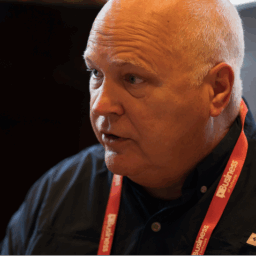
Art Koenig
CEO Founder, xGEL Data Systems
Art is the founder of xGEL Data Systems. He’s a 1977 graduate of Rice University and is skilled in enough code that he can mess up anytime in multiple ways so has to have real software folks around to keep him from choking himself.
Art’s been a US Army Officer stationed in Germany; a gas compression/production engineer for Exxon Oil Company in South Texas; founder of MDI Labs, an R&D engineering company, and GeoLog. Art holds several patents. Aside from software, engineering, and reading about political and economic philosophy, Art takes long distance rides on his personal watercraft. He’s been married since 1974 to the girl he met in high school. He lives in San Antonio, Texas.
Next up
BoS OS is how founders harness AI to run their company, not as a chatbot, but as a system. See how it works →
Not sure which workshop is for you? Start with the stage that matches where you’re at.
Start here
Ready to build your foundation?
Have your basics running? Get going with confidence
Already running your OS? Put it to work
Further ahead