Bridget co-founded YouCanBookMe with her husband Keith as a bootstrapped SaaS in 2012. Over more than a decade, often in the face of competition with significant funding, (their closest competitor has taken over $350 million in venture funding), the YouCanBookMe team built a remarkable, remote-first company. In January 2025, YouCanBookMe was acquired by Capacity.
In this session, Bridget shares some of the existential moments in the company’s growth, why she and Keith decided that the time had come for them to sell and how they negotiated the sales process.
Find out more about BoS
Get details about our next conference, subscribe to our newsletter, and watch more of the great BoS Talks you hear so much about.
Transcript
Bridget Harris
Thank you so much for waiting. I know this is the end of the conference. I feel like I’ve been name checked a lot today as well, so I’m under a lot of pressure.
Mark Littlewood
Yeah, we’ve got some combat questions for those as well. So we’re going to have a conversation, and I hope it’s going to be interesting. Well, I know at least one person in the conversation is going to be very interesting. If you have questions as they come up, you’re allowed to put your hands up or just go. We’ll catch your eye, because we’d really like to take this on. So Bridget’s been coming to Business of Software since 2016.
Bridget Harris
Well, I came to some of your London events. The story is, I came to was it the London Leaders Network or something? And I was feeling very small. I was feeling very, like Gareth described, this is not the place for me. I’ll be completely honest, it was a room full of men, and I walked in, and immediately I can’t. Turned around, walked back out again. And Mark basically stopped me on the way out and said, Who are you? And started to talk to me, then made me come back in, and the rest of history. So I’m very grateful to him for the basic instinct of bringing people into his tribe. It’s worked very successfully.
Mark Littlewood
So my cost of acquisition there was, who are you? My lifetime value has been, your lifetime value has been excellent. Thank you. You’ve been coming to America and to Europe and have spoken. I think it’s Mark Stephen said, You have a great talk on..
Bridget Harris
Well, I would just wanted, is Mark still here? That was really wonderful. Thank you so much for that memory of that talk. I really did enjoy it, and I put a lot of work into it, and hiring. I think the title of that talk was, ‘Who You Hire is the Most Important Thing That You Do in Your Business’. It can make or break your business. I was talking about this at lunchtime, that you can have bad software that is successful because it’s run by good people, but it doesn’t matter. You know how good your software is, (but) if you’ve got bad people, you’re going to really struggle. So I think people is more important than software, in the business of software.
Mark Littlewood
Give me the two minute version of 2014 when you found it.
Bridget Harris
So Keith is here, my co founder. He is very special. Most software circles don’t actually think Keith exists. Business of Software is the only software conference he comes to, for similar reasons. So we, he’s a software engineer and married couple. And I worked in politics, I did a whole lot of other stuff before I ran Youcanbookme. And basically, accidentally successful. Keith started writing in 2002. Keith was your first product? Tip Boxer, survey building tool.
So for 20 years, we were trying to build a web application product, sort of freemium type tool, like a survey building tool, or any other kind of thing. Where you’d stick it out in the internet, people would solve a problem. We built other scheduling tools before Youcanbookme. But Youcanbookme came along and I can’t remember, there was a slide earlier today. I think it was Sarah’s slide, when you know it, you know it. Where you know there’s immense value, people immediately pay. You’ve got a very specific sector in mind. And then again, Steve just talked about that relationship that we had with massage therapists like Alan as soon as Keith did.
Mark Littlewood
Simon? Because this is important, because ladies and gentlemen, and even Bridget doesn’t know this, but we’ve brought Simon from.. It was Alex.
Bridget Harris
But yeah, so as soon as we switched from to when is good as bit like doodle, sort of consensus scheduling to business booking. Essentially, businesses that have this compelling need to bring in appointments for their customers, just the whole thing took off. And that was in we took first version of Youcanbookme was out, actually late 2010-2011. Then we did a year of very early MVP development. Keith was doing most of it by himself. We had young children at the time. I was working full time. And then we got to the point where, I think we must have been bringing in, actually, I remember it exactly.
It was October 2012, and we were bringing in £2,500 a month from Youcanbookme income, but we were growing really, really fast. And we were a freemium tool, so it was a lot of support at that time. And I had a full time job, I was working in Westminster. And it was essentially, it was break-even point where we could financially support ourselves on what we were bringing in from Youcanbookme, and me giving up my full time job that was supporting the family was enough for us to I started to run the company from 2012 onwards. And then by 2014, we must have been at probably half a million a year. I mean, we grew really, really fast, and then we got to a million a year in 2016-2017 which was the same year that we started to become profitable, and then we just went from strength to strength, and then we sold the company last year, just before Christmas. We were at $5 million ARR.
Mark Littlewood
Bootstrap businesses aren’t supposed to sell, Bridget.
Bridget Harris
I don’t think I didn’t hear that little line from you Mark. There’s no suggestion that being bootstrapped means that you are sort of lifetime that it’s equivalent to not selling your company. I don’t think you could probably go back to any public statement I’ve ever made, and I have never said that we wouldn’t sell the company, and nor have I ever said that we wouldn’t raise investment if it was appropriate, if it was something that was was necessary. And actually, to an extent, what we’ve done with our acquisition by capacity, is it the deal is 50% equity, 50% cash.
So to an extent, what you can see, what me and Keith have done, is we’ve rolled over 50% of the value of our company into a different vehicle, into a different company, for lots of good strategic reasons, which we can talk about. So I think you’ve got to be pragmatic about what it is that you want to do. And for us, we were always trying to build a commercially successful software product, which we were always expecting at some point to sell.
But you don’t talk about that so publicly, because your people work for you. And it’s a bit weird to sort of talk about it until it’s happened.
Mark Littlewood
What was the, during that time, the growth piece? What was the thing? What was your greatest triumph? What was the thing that just gave you all the energy and you were like, yeah, yeah, we’re doing it.
Bridget Harris
So I would say probably a little bit more negatively than that. I think that the greatest triumph is that we didn’t fail. I think that it’s a whole series of firefights that you’re continually putting out thinking tomorrow is going to be a better situation. I mean, there was times when I think there was me, Keith and Kate, and we had just like fools moved to intercom customer support, which opened the floodgates of all this freemium support tickets. There’s nothing wrong with intercom, it’s just that we had, we’d been keeping a lid on our freemium support, and it suddenly came flooding in, and we were doing tickets at two o’clock in the morning from a whole load of people around the world. And we have, for context, we have 1.3 million accounts on Youcanbookme. We have nigh on 20,000 customers. We have 50,000 customers, users a month. We have 1.3 million bookings a month. So we are super busy.
And to even then, three people bootstrapping it from freemium self-service, supposedly, that was really hard. So I think, from our point of view, it’s actually managing the two things. So you have to manage immense stress and firefighting problems. And, I’ve just totally agreed with everybody that’s been talking this today, that everything is in stages. I always think it’s like a marathon based on a series of sprints. You’re never going to get to the promised land. You’re always going to have to enjoy that journey, because that’s what you’re on. And for us, it’s not falling over.
So, coming out at the other end, we’re 100% bootstrapped. So we’ve maintained control, but it wouldn’t be worth it if we just burnt our lives doing that. So in the meantime, we have children are about to leave. Teenagers are about to leave home this year. We’ve done plenty of things in our life. We’ve moved home, we’ve carried on investing in our personal lives and our family life, as well as growing this business. So I would say the thing is that you have to get out of it, what you want, what suits you personally. So we’re not Calendly. I mean, that’s the big thing. We launched Youcanbookme in 2010-2011, took off like a rocket ship. Calendly came along in 2014, tope just looked at all of the booking tours. Looked at youcanbookme, saw what Keith had done, which isn’t a great with Calendar API booking tour. He said, Yep, those are the guys literally created Youcanbookme account, paid some Ukrainians $500,000 for a couple of years to build Calendly. Calendly takes off, and it’s a $3 billion business. And I think that’s amazing. He’s an amazing business operator, but we’re not Calendly. But there’s reasons why we’re not Calendly, because we wanted to stay the course that suited us personally, not just served other people’s financial interests.
Mark Littlewood
So maybe just to correct you on that little bit there was a $350 million secondary at a valuation of 3 billion a number of years ago. So we don’t really know what size Calendly is at the moment, because who knows whether..
Bridget Harris
It’s a $3 billion business on what basis?
Bridget Harris
Are we here to talk about Calendly?
Mark Littlewood
I’m gonna mention it in passing.
Bridget Harris
What was valued, they took on, I think it was like $350 million a few years ago, and it was valued at that. That was the last valuation that they took on. He did amazingly well. He did a secondary on that deal where he took the vast majority of that cash is secondary.
Does anybody else have any more intel on Calendly? That’s probably the I don’t know. And it’s wonderful there’s so many people here that use Youcanbookme. I would say we are a better tool than Calendly. We have a lot of people who use us, who come to us from Calendly, and Calendly suffers now from the same problems that lots of companies their size do. Which is that their product developments gone in 15 different directions. And they’ve just essentially headed into big company problems. Which same as same as Mark, we’ve always stayed intentionally small, so we’ve tried to keep our problems within our scope, within our competence.
Mark Littlewood
Yeah. So let’s not talk about, let’s not use the C word. Let’s just talk about that competitor. You had a competitor come out, they have huge amounts of venture capital. There’s a bootstrap company that’s quite often a, what’s going to happen?
Bridget Harris
Yeah, we’re sort of, we’re pretty Zen about it all. Actually quite pragmatic, because there are bigger competitors in Calendly that had come and gone, previously. So in 2012, we had just taken out like a 25,000 pound overdraft, which I know sounds ridiculous now, but at the time, it was like, this was going to be backed by me and Keith. We’re going to either work ourselves to pay that off, or Youcanbookme was going to make enough money to pay it off. But that’s how we were bootstrapping. We were borrowing money from the bank.
And in 2012, Google appointment slots came out. So then we had people saying to us, Well, surely you’re going to shut up shop now because of Google appointments. And it’s like, well, no, because what we have is a product that really means something to. I’ve always thought you just have to focus on your customers, what they’re using your tool for and make sure you’re the best tool for them. And if you spend your whole time, and I really do mean this, you spend your whole time thinking that other competitors are going to crush you, then your actual business model is flawed. Because your business model is all about people not discovering that you might be a bit shit. Whereas actually, it’s a sort of that’s, I don’t you don’t look to what other people are doing, because you’re always following. I know this is a cliche.
And the other thing that I say, and again, like in 13 years or 14 years of running youcanbookme, one way or another, everything evolves, everything changes. And so what we say to the team is you need to fall in love with the problem, not the solution, because the solution is bound to change. So we now do things in our product that Calendly doesn’t do, which I know are much, much better for solving the problem of scheduling than the way Calendly do it. So you can get yourself into this kind of mindset where you get paranoid by what other people are doing, and it does who is saying that it suppresses innovation, it suppresses change. Who is saying that? Somebody that complexity suddenly you’re unable to go beyond the complexity of what you’ve created. So you have to, and this is, as founders, me and Keith have led inside our company a desire for change, not just for copying or for surviving, but actually to say, how are we going to innovate and how are we going to change?
Mark Littlewood
How did you communicate that to your staff? Because it’s one thing you being relaxed and laid back about it, particularly in retrospect. Did your staff ask questions? Or were they so focused on making great product that they didn’t really notice that there was a competitor?
Bridget Harris
No, I think so, Youcanbookme is a product led company, and it’s been a deeply self-service company product as well. So we don’t have, until recently, any kind of mature sales and marketing department. So we don’t have no sales reps inside Youcanbookme. Everybody onboards and self-selects and basically gets through the tool. So it’s fascinating, talk earlier about self serve, about activation, onboarding, because that’s our bread and butter. That’s what we do.
So a lot of people inside Youcanbookme are obsessed with our product. Heads down, making it better. I think on reflection, I probably should have injected more competitive energy in the sense of saying, we shouldn’t be afraid of competitors like I’ve just ignored them. But in fact, you can get a lot of people working for you in your company that are competitive. They want to win. So there was a point where Trust Pilot, Calendly was at 3.1 and Youcanbookme was at 4.7. So, I don’t want to be sort of flat about it, but at the same time, like, well, we are absolutely a better tool. We get better results. We get better reviews. People love us, and Calendly doesn’t get that kind of love.
Maybe they’re doing a bit more about it now, and I understand. Actually, the team do feel quite tribal about it, and we’ve probably been quite British and sort of reserved and like, Oh no, we don’t want to blow our own trumpet. And I was like, hang on a second. We’re really good fucking product. Why do we not spend more time actually saying we’re literally a better product, and older and more experienced with better engineering. We’re more secure, and we just got better UI. We’re better designed. So anybody actually who doesn’t believe me, look at my LinkedIn, there’s a post that. So when we joined Capacity, and I don’t know if anybody else does this, but this has been a revelation. Capacity said, right, all of our products go on our, we have net promoter scores on everybody’s products. One of the first thing we did was install the NPS tool, and that goes straight into Slack and capacity. Youcanbookme got 1000s of customers. So they were having like, one or two NPS scores coming in, because they’ve only, they had sort of a couple of 1000. And so anybody who happens to log in might do NPS. Soon as we switch Youcanbookme like there’s just like barrage of NPS, like flooding this Slack channel. And I’m just so proud of the fact the average score is 8.5 and an overall NPS just below six, which is really, really good. And so on my LinkedIn, I just copied somebody who said, I mean, I just swear. I don’t know you’ve been saying, not really.
“Fucking love Youcanbookme. Never change it. It’s fucking awesome. I’ve been looking at 30 different apps.” You just like, basically F bombs the whole way. And I have just put that on LinkedIn. So maybe I’m not allowed to swear on LinkedIn. But he did. And so it just gave, talking about Steve’s example of Simon from Canada. It’s about getting those, those early champions of your product, of your tool. And we do have 1000s of them. And some of them have used Youcanbookme for years. I was talking to an Australian potter, a guy called Joe Darling. He’s used Youcanbookme for 13 years. He absolutely loves the product. And so those are the people that are championing why you’re in business and what you’re doing.
Mark Littlewood
So just wait, what’s the job that a potter is?
Bridget Harris
So this is really remarkable. He is a really successful potter. He runs pottery classes in Melbourne. He’s from California, and he runs everything through, his whole business gets run through Youcanbookme. And he really is very, very successful. We thought he might be on some sort of money laundering type, Ozark type activity. And sure enough, he told me in the interview that PayPal thought the same and closed him down because he made $40,000 the first week. Who knew? But this was pottery, is a very, very popular thing. He’s done 90,000 bookings. So I said to him, that’s 90,000 pots. That’s why there’s so many pots out there. The Romans, the Greeks, they all knew it. Pottery is a very big thing.
Mark Littlewood
It’s amazing, dang. Let’s do the business of pottery then surely.
Bridget Harris
We look at Joe Darling sometimes. Maybe we should get into the pottery business definitely.
Mark Littlewood
Who’s your favorite other? I mean, that’s a great example of a handful of it. Who’s was the bulk of your customer?
Bridget Harris
So well, they split into three groups. So we have a huge educational usage. Pretty much every single university and school in America has either used Youcanbookme, or when is good, or some version or combination of it. So we have very high level of presence inside American University. So 70% of our revenue is America.
Then there’s a third that are basically what I would deem kind of B2B companies using us for customer success and sales and recruitment and Calendly type use cases. And then we have a really happy third who are small businesses, people like Gareth uses us as a coach. I was just telling him the other day that we’re just earlier today that coaches convert on Youcanbookme 10 times the rate of other normal signups. So, last couple of years, we’ve spent a lot of time looking at our conversion rates. Because if you have hundreds of people signing up every day. You can’t just have this blanket approach on onboarding and activation for everybody, or indeed, marketing. So if you go to Youcanbookme’s front page, it was a result of a two year repositioning, an exercise where we moved from basically building we were halfway through building the wrong product for the wrong people to actually something that was really successful for the groups that convert the best.
And those are small businesses who are doing online, digital work, mostly, and who are basically earning money through their bookings. And so bookings are their business, is what we say. And they are offering services, or they’re selling services, and they need Youcanbookme to run all day every day, for them to take in their bookings. No questions so far. We’re not talking about the acquisition, are we then, Mark?
Mark Littlewood
Well, we are going to talk about the acquisition a minute, but there’s a couple of things I want to talk about before we talk about the acquisition. You’re a husband and wife. Glamour pus, Dream Team, and you Bridget, so how much of your identity as the Harris’.
Bridget Harris
He’s not allowed to speak. That’s how I handle it. So I think that I’ve been I feel very blessed because I do have a co founder. I’ve always been a co founder, and me and Keith have extremely complimentary skills. So I know that when I speak to business co founders, they struggle because they’re trying to find a technical co founder, or they really are relying on somebody outside that they’ve hired to do the technical work for them, or indeed, a technical founder who is desperate to find somebody who can do business and operations. And so between me and Keith, we had worked together before. We’d worked on political stuff in years gone by, he used to build databases for me and motor contact software for me and web projects. So Keith had always worked for me, and then the software project kind of carried on. And basically in 2012, I had an option to either carry on with the work I was doing in politics, which wasn’t very enjoyable, or switch and basically run the company.
And so Youcanbookme, operationally, financially, legally, business strategy that all comes from me. And Keith has resolutely maintained his developer status and just is essentially continue. You’re flying your own flag, aren’t you Keith? Doesn’t want to manage anybody just wants to write code. He’s the CTO of CTOs. He’s stayed true to his origins. And actually in 2022, we got to the point where we hired enough people, and we’d done well enough in terms of the strategy that Keith stepped down as an employee of Youcanbookme. So he kind of left. He left a couple of years ago.
Mark Littlewood
Yeah, we’ve been through that. How many weeks holiday did you have a year? I’m curious, is this?
Bridget Harris
I feel like this is kind of some sort of exit interview that I’m doing here.
Mark Littlewood
I’m just curious, you know, for completely random reasons, to get a sense of how husband and wife, co founding teams kind of keep the distance between the work and the home.
Bridget Harris
So, okay, the definition of a holiday for me and Keith is that we bring one laptop, not two. There were times in the early days, train travels, small children, Keith would go to different carriages to code, and I would say, and then we realized that he had to stop doing that, because otherwise he’d miss every single train journey with his kids, and that we couldn’t constantly separate out work from family. I don’t know, Keith, how many weeks holiday have we had? We’ve never counted it, but basically, we’ve always worked in every holiday. And now with smartphones, you can just work every day.
So we are this, in the next couple of months, we are going to go and do various things. We’re neither of us are going to bring our laptops, and that will be the first time in 20 years we can. I just say, on our honeymoon, he did have Enterprise Java beans as his honeymoon book that he read. So it’s like, he’s such a romantic guy. I have no expectations. I know you know more than Unified Modeling Language than I ever thought I would.
Mark Littlewood
Where are the mics? Could someone get one back to.
Bridget Harris
After my break? So, well, yes, the break is important, because the break is going to help us figure it out. I think Keith, you’re going to carry on coding. I think you’re just not going to stop. He said, Nothing stops him from coding. We’re going to do a lot of music. We’re both musicians, so we’re doing a lot of music together, and traveling so. But this has been affected more by our teenagers than Youcanbookme, because we’re a remote company, so technically, we could have traveled anywhere we wanted to and carried a working. It was our teenagers that just kept us in Bedford. And they’re doing a levels, and GC is so boring, it was on for years.
They’re going to university, both of them this year. So that’s going to be more of a liberation than Youcanbookme. So we’re going to be doing some traveling. We’re going to go travel around South America and Southeast Asia and just hit the road. And then after that, Sarah, I think that I want to get back more into advocacy in the political world. By that, I mean understanding what I’ve learned from running a private company, and understanding all of the lessons of of PNLs and HR and regulations. We’ve done an international hiring. So we’ve hired in America and France and Germany and Spain and Portugal. So, I have a lot of operational experience of the different legal frameworks inside countries for people, how it affects people. And I want to do something that that turns that experience into being part of the conversation of in the political world, to try to make the world a better place, I would say.
Mark Littlewood
Well, let’s talk about that acquisition. And I guess there’s a few things in the run up to that I think are really interesting. You and I have spoken, I mean, not just at the conference, and I’m blessed to have built some really lovely friendships.
Bridget Harris
You’re a friend, Mark. You can say it, he’s a friend.
Mark Littlewood
There’s definitely been times I would feel from the conversations we’ve had where you felt almost like a prisoner. And this is not an unusual situation, for whether they’re venture backed or bootstrap founders, to be in. And there’s almost that sense of, if you stop pushing, the company stops moving, and that’s quite frustrating. How did you get from there to starting those conversations about an acquisition? Because if the fact that you are really integral to the growth and the continued development of the company, it’s very much down to you. That’s a much less interesting proposition for you as a seller, because you’re going to get tied into the company, now you haven’t. We’ll come to that. Was there a moment when you thought over that time that led to the serious acquisition talks? Oh, actually, I’m not as fundamentally tied into the business.
Bridget Harris
Okay, so that essentially has been my job for the last 13 years. And the good news, I have written a little bit about this in my bootstrapping manual. I was recommending this to people earlier today.
I wrote it in a kind of frenzy on a plane to San Francisco last year, about 10,000 words. Basically every chapter is about how we tackled different things in youcanbookme. How we bootstrapped it, and the decisions we made and the priorities that we had at the time. And most of it is about, how do you separate yourself, personally, from the operational competence of the company? And you know, that’s very hard. If you can imagine, Keith is this 10x full stack developer, where absolutely everything is Keith Harris. So what do you do when you start? Well, the first thing you do is you get Kate to start doing customer tickets, for example. Then you get Darren to do a little bit of CSS and HTML. And then you start to say, Well, okay, he’s really rubbish at front end client side applications. We need to hire a JavaScript developer and get react developer. So you start to, I was always followed by, what is Keith doing, and how do I hire people who are going to start to replace what he does?
And I didn’t think about it for myself for a long time, because that took the job of running the company, until eventually as I said, Keith could leave. Because we hired a head of engineering, who then in turn hired about five developers. In the end, we have a team of 10 developers, all run by Veronica and Antonio, no longer run by Keith. It was like absolutely perfect.
Five years ago, we came very close to an acquisition offer. It was a really, really good one, and it would have been 100% cash. Actually, it was a hell of a lot of money. But it would have been two years me and Keith in the company, and so it really came down to what we wanted. And the difference between running your own company and being in charge of your own destiny and only bringing one laptop on holiday, then, if I bring a laptop on holidays, because I’m working. But I’m not going to bring laptop on holiday to work for somebody else. There’s sort of a boundary there.
Well, two years is a lot, but also they gave us feedback about the things that they were worried about inside Youcanbookme. And one of it was that we had a monolithic application. It was still built by Keith, and so that starts to define what you have to do. He said, Well, you can’t sell the company unless Keith is out of the company. He’s not out of the company unless all the software that he’s written, and actually he’s only had three hours sleep, because we’ve just moved to Stripe billing. Absolutely just phenomenal, because we had, for the last six years, we’ve been powered by Keith’s custom software for Billing and Subscriptions, an amazing piece of kit. But the original buyers five years ago said, What is this? What is this? What’s happening here? You know, this looks a bit kooky, and so when we did the acquisition with capacity last year, we said, Don’t worry, Keith will just get rid of that for you and move to Stripe billing.
So that was the beginning, that was four and a half years ago, five years ago. And in many ways in hindsight, two years of being a little bit petulant, taking a fuckload of cash and then wandering off would have been a very, very different life story for us. And so sometimes I do think, Oh, God, we could have just done that, what on earth were we thinking? On the other hand, the experience of extracting Keith from Youcanbookme on an engineering, not as a co founder, but from an engineering point of view, was so consequential that we’ve learned so much about what we’ve done and what we’ve built.
So it’s like the spade, where you have 17 new handles and five new shovels or whatever. Like Youcanbookme, it’s been completely rebuilt from ground up. Now it doesn’t have a spec. Now that billing’s gone, it doesn’t have a spec in there. So it feels very cathartic to sell the company now, where me and Keith, effectively, operationally already exited, and we’ve learned we actually had some other. I was talking about this last night, we had some huge, pivotal things that we needed to do, where we repositioned the brand and the business. And I’ve learned so much about that. It’s kind of quite a nice opportunity. So I won’t be a second time founder, but in the period of time that I’ve run Youcanbookme, I’ve actually had to do the job twice because I had to in the last five years, I’ve had to renew and refresh what we were doing strategically. And that required some very difficult interactions with people that we worked with.
So I love that experience that I’ve just had. So I think at the end of the day, you do what you do. You make the decisions. We weren’t in a position. So five years ago, we were trying to sell the company because we were probably burnt out. I think Keith was burnt out?
Keith Harris
At the time, I was. We didn’t quite have the facility to do that, two years. We went on. It was a very, very challenging two years. But again, we could do the priorities our life and everything else.
Want more of these insightful talks?
At BoS we run events and publish highly-valued content for anyone building, running, or scaling a SaaS or software business.
Sign up for a weekly dose of latest actionable and useful content.
Unsubscribe any time. We will never sell your email address. It is yours.
Mark Littlewood
I’m just anticipating because I want to ask him what you were like as a boss, by the way. That’s a separate one.
Bridget Harris
Well, that’s the thing. That you don’t know what you don’t know. And at the time, I thought everything was cool. And it was only in retrospect I thought, my God, we were really burnt out. So your point about exiting, like we really wanted to sell the company, then we really wanted to get out. And when the offer came in, that was going to be utterly life changing. It was a kind of okay, this is the way out. Oh, but it’s not the way out, because now we need to do another two years. So we didn’t feel the same kind of exit. And then when that all fell through, it was like, Okay, we’re back on the saddle. We’ve all had that experience.
Mark Littlewood
How much time did you invest in that?
Bridget Harris
So that was the result of two, so covid was obviously a complete bastard in the middle of all of that, that was a result of a process. And so I think that process had been kicked off at around October time, and then it fell through in the following February. So we’ve been doing a lot of process. I mean, the Capacity last year was not process. It was just a strategic acquisition.
Mark Littlewood
But that process, it’s like three, four months. You walk away from that. How much, in retrospect, of your time that you spent,
Bridget Harris
I would say, especially you’re bootstrapped. You don’t have a board, you haven’t got VCs breathing down your neck, you haven’t got anybody else telling you what to do. You do have some advisors, like we have got friends that we talked to. But at the end of the day, I treated it always as a kind of strategic audit is what we’re doing. Because you have this opportunity of sharing all your numbers with people who are interested and they want to know, and then they’ve got their feedback, and your numbers either are good or they’re not good, or they’re either working or they’re not working. So you become accountable for how you run your company and how your business looks to somebody else, what they value it.
So the following year, we made huge changes. We hired loads of different people, we made massive investments. And when we sold at the end of last year, me and Keith were not burnt out. We were not burnt out, and we didn’t have to sell. This is the big thing. We just, we weren’t kind of crawling to the finish line. In fact, our team was going, why are we selling? This is brilliant. We’re just on our way here. We’re just, everybody I was able to sell to Capacity to say, you’ve got an amazing team, we’ve refitted basically everything. There’s nothing in the closet now that, other than an opportunity that Capacity want to take hold of. And that makes me feel good, like I don’t want to kind of slink away. I want to feel proud of what we’ve built.
Mark Littlewood
Yeah, talk me through, can you remember the first time you’d ever heard of Capacity?
Bridget Harris
Yeah, they contacted me actually just coming up to a year ago in May.
Mark Littlewood
That’s an interesting thing. I said, When was the first time you’d heard of Capacity? And you answered when they contacted you. So they weren’t even on your radar. Interesting. Okay, and what was that?
Bridget Harris
So David contacted. David Karandish is the CEO, founder, and he just contacted me on LinkedIn. And you’ll, I mean, if anybody contacts you, and they’re not obviously a time waster, it’s always worth taking the calls. We took the call, Keith, you and I were both on the call, weren’t we? We met him and Marcus the CFO, and they just were very clear about it. Capacity, strategic plan at the moment is acquisition. So they’re growing, and they’re just, they’d acquired, I think, in 2024 they acquired eight companies. So they’re just kind of barreling along at a phenomenal pace. They said they wanted to buy as they were interested. And we said, that’s really interesting, where we’re interested in principle, but not now. So at the time may last year, we were planning on, we had, we just changed new pricing over the summer, we build out loads of features. And again, I felt like, well, we’re halfway through rebuilding the machine here. You know, it’s not really for sale when it’s a bit on the floor, but when we put it all back together again, you know, I’ll call you. But I didn’t really think much of it. I didn’t pay much attention.
Mark Littlewood
When did you pay attention?
Bridget Harris
I’ll tell you, when Marcus the CFO said, Bridget, I’m going to, this was in September. He said, Bridget, because I went back to him, and I said, Yes, Marcus, I am kind of interested. But we’ll probably run a process later on in the year. You know, I’ll call you. He said, I’m coming to Bedford, and I wondered if I could just come and see you and Keith. And for those of you not familiar with Southern England, Bedford is a small provincial town just off the M1. It’s like, nobody comes to Bedford, nobody. We used to live in London, and all our friends, not our beautiful best friends, but people that we knew acquaintances, would say, yeah, next time you’re in London, yeah, let’s have lunch. And I’d often want to say, like, well, next time you’re in Bedford, catch up with me. We’ve got a really nice coffee shop around the corner. Like, nobody comes to Bedford. I mean, it’s an ancient medieval town. For those of you medieval historians amongst us, one, Bedford is worth listening to, worth visiting. So I was like, wow. Okay, if the man’s gonna come to Bedford, we’ll, we’ll take him to the embankment.
Mark Littlewood
So was this like the Glengarry, Glen Ross I was in the area?
Bridget Harris
They just bought a company called Sarah Brock, which was in Edinburgh, and he was over there with his wife. So I think he was deliberately, he was doing a good thing, which was meeting us face to face, and wanting to find out what the situation was.
Mark Littlewood
And he told his wife that Bedford was the place, forget Stonehenge.
Bridget Harris
Well, what I learned later, is that his wife is an emergency A and E nurse, and it sort of puts everything into perspective. Obviously, there’s nothing that’s life threatening about what Marcus does at Capacity. So, I think it was a really nice lunch. It was laid back. And as I said, we were relaxed. Because, people come and they try to chat you up, whether you want to sell your company or not, it doesn’t matter. If you’re enjoying your job and you’re enjoying running your company, then you’ve got nothing to lose having the conversation. And that’s certainly how we felt.
Mark Littlewood
I don’t want to talk numbers. What I do would talk numbers, but they’re always confidential, but we can all talk percentages, right? Depends on cash equity. What was the original offer?
Bridget Harris
So I can’t talk about that publicly, and the reason why is because David and Capacity have got their own commercial strategy about what they want to do. And so I can’t, they’re not my numbers. But what I can say is that in the end, and this was partly due to the fact that we were bootstrapped, we’re profitable. So we already had a pretty good balance sheet, anyway. That we ended up with essentially, a very good cash exit, even if we didn’t include the 50% equity. And so we achieved a very respectable valuation for Youcanbookme that I was very pleased with.
Mark Littlewood
So what were the three biggest levers during the negotiation or the process that you pushed because, and this is something that you have with a lot of companies. Founders can be tied in for four years. They can get all cash, they can get all equity. They have to leave.
Bridget Harris
Okay, so we had said to Marcus, look, this is in September. We’ve changed our pricing. We’ve just repositioned the tool. We’re doing a rebrand that we’ve built all these features out. We’re basically taking on a certain section of of the booking and scheduling market. We think we’re going to win there. There’s a lot of business strategy that we have just put into place. We don’t know if our numbers are going to come out, whether we’re going to achieve success. So therefore, how can you possibly value the company when our numbers are actually in flux, but we will be doing a process. Probably I would have thought around this sort of time. We would have done a process. We’d have gone to a broker, and we would have essentially run a process for an exit by me and Keith at some point in the summer of 2025, this year. And that’s what I said to him.
And he said, Well, look, how could we persuade you to bring that forward and just sell to us, and we’ll close before Christmas, and you only need to hang around for six months. So for us, it was time is the currency as much as the money. And so for us, the idea that we could sell to Capacity and do our jobs that we’re doing anyway, like we’re not giving Capacity any extra time that we wouldn’t otherwise have been doing for. Because they’re a strategic acquirer, they had departments for every single one of our team members. So all of our departments are now reporting to their respective CPOs and CEOs and so on and so on and so forth.
So there’s about 200 people in Capacity. Youcanbookme could fit very nicely into the way they run things. So I could see that me and Keith could very quickly, other than billing, moving to Stripe billing, the final whiplash. But other than that, we could suddenly see that the fields would become clear, and we would be able to actually benefit from the the exit in our lifetime, as opposed to being kind of racked against a process which can sometimes take a long time, and then massive due diligence and everybody messing around. I just felt like these guys know what they’re doing. They’re going to work fast. They’re strategic. So it wasn’t like insanely difficult DD, it was confirmatory DD.
We went to St Louis and we spent a week with them. We had really good lawyers. They had really good lawyers. And one of the things that I learned from the previous failed acquisition, which was also a strategic acquirer. And this came home to me with an advisor who I spoke to in the autumn. He said strategic acquirers have their own agenda, their own time scale. You’re either in it, you fit into it, or you don’t. And he said that basically, time kills all deals, and don’t be in the difficult bucket.
And so I realized it with the previous one, five years previously, me and Keith had definitely been in the the difficult bucket. We were like those flower pot men and women. The flower pot men sitting there on the wall. Am I really old? Does everybody else remember flower pot? We were like those characters are just really difficult, sitting in our weird pots. And then also the time, because we were doing a process that stretched everything out. So when we could have maybe done that deal in October, we’d stretched out to February, and by that time, their strategic objectives have moved on.
So I felt with Capacity, look, I don’t want to make that mistake again. Like, how many really good options come along where you’re pretty sure it’s a good company for your team. You like it. For those of you don’t know, Capacity is an AI support automation tool, so they have an enterprise relationship with lots of retail companies who are using AI support for their or their customer service. So scheduling just fits into that loop. So it was a really nice landing. A page for the product itself, for the team. They were offering us a really nice, flexible exit. And as I said, enough cash for us to feel very well taken care of on the day. And it’s just like, yeah, that’s it. We can do it.
Mark Littlewood
Nice. When did it close? What were you doing? You had the conversations. And I’ve listened to podcasts.
Bridget Harris
Okay, so we originally had a closed date of 15th of November, and every lawyer I spoke to was like, we’re not going to make the 15th of November. Okay, fine, let’s just see how we get on. But me and Marcus were pushing everything along, and we were just making sure that keeping the lawyers in their boxes and making sure it wasn’t going to get out of control. And last, it was the the 18th of December which was a Wednesday, and on the Monday we had another one of our kind of all hands lawyers and Corporate Dev people. And lawyers have just got these endless lists of things that they need to do. And I said, Look, we have to close by Wednesday because we’re going to see Paul McCartney on Wednesday night. And no matter how much I care about Youcanbookme, I’m sorry but it’s not a Beatle and we’re going to see Paul McCartney. So they love that idea.
So the close call, which was scheduled for, I think it was like midnight on the 18th, was called the Paul McCartney closing call. And so we, so all of the lawyers realized they needed to get a shuffle on. And they had, like Tuesday they spent doing lots of stuff. So we went to Paul McCartney. If you haven’t seen Paul McCartney, if you get another chance to go and see him, absolutely it was amazing. And we were on the train from Bedford to London, and all these e signature requests come in. So we’re basically signing away, this kind of like on our phones with our teenagers. Were signing away, like, there’s another one, there’s another one, okay, there’s another one. I literally have no idea what I signed. And then to sit in our things with Paul McCartney starts, and he’s Christmas time, so he’s doing all of the amazing things. He literally starts singing, “It’s getting better all the time.” And then you could see all the lawyers going back and forth. He carries on singing, then he finally finishes.
And then we get on the train and I don’t know why we hadn’t planned it better, but we literally had my son’s Airpods, like we like crap grandparents. We were sharing an Airpod each on my phone to kind of go for the call. So everything had been signed, and then you have this. It’s only takes about five minutes where they all have to kind of do a, are you alive? Am I alive? Is this alive? Is that real? Is that real? Do you agree with this? Are we all here? Is everybody, you know, compos mentis? And me and Keith are on the party train back from London to Bedford, surrounded by drunk people, don’t know what’s going on. And we’re like, yeah, yeah, sure, yeah, whatever. Like, what’s going on? And then they were like, congratulations. And they all started clapping. It’s like, okay. Then we went back to Milo and grace our teenagers, and that could have sold the company. They’re like, Yeah, whatever. Just absolutely classic, couldn’t have given a shit. And also, they’ve just been to see Paul McCartney.
Mark Littlewood
So I’m gonna bring in a question in, so you faced with a choice between selling the company and seeing Paul McCartney. You went to Paul McCartney. Mark, you’ve got a question, now you faced with the choice of listening to three of the living Beatles and playing Space Invaders.
Mark Stephens
And I think you’re going to want to wonder why I went to Eric Clapton’s wedding and didn’t actually go to the unofficial Beatles reunion. So I think we’re going to disagree pretty vocally on at least two issues.
Bridget Harris
The Beatles is the hill I will die on.
Mark Stephens
Overrated, particularly when you can have… So the question I have is people, particularly founders, who invest a lot of their life and their time and their energy and their passion form a very emotional attachment with their companies. And Gail Goodman did a brilliant talk a couple of years ago about how in some respects, she felt she was selling one of her children when the company left. So I wondered how you navigated. Maybe you just felt it was time that the kick the child out. You just had such a bad relationship. But I wondered if you could talk about how you managed to navigate. Particularly as a mother yourself, so you have other children, whether you felt the company was another child, or how you managed to get that differentiation into it, or whether it was a struggle? Particularly over multiple years. You’ve seen that, seen it grown up, and it’s now gone off into the world.
Bridget Harris
So absolutely. And we were talking about this earlier, at lunch time. And what I would say is, yeah, Youcanbookme has got sometimes the same time drain and emotional drain and obligation and responsibility as children. But it’s not actually a child, I don’t plan to sell my children. I love them. They also have got their own independent opportunities and thoughts and beliefs in their own lives, and they’re going to move on and do their own things. I mean, they will always be my baby, but at the same time, they’ve got their own opportunity for independence is going to be driven by them.
Youcanbookme is a corporation. It’s a collection of legal agreements between people to create something which is going to sell to something to customers to make money. And although I hugely believe in investing in culture and people and in what you do with a company, and I do believe, and have done for many years, been at the forefront of protecting that company and protecting that team like a parent would. It’s also been operationally separate to me. It’s not my personal, I look at my children. I’m proud of them for what they’re going to become and who they are. But with Youcanbookme, I also want Youcanbookme to live beyond me. I don’t want it to be me and Keith. As I said, I’m proud of the fact that now there’s very little about it. That, in fact, me and Keith, we’re really sort of responsible for, we’re responsible for the strategy of the company. But again, another reason why we realized we needed to sell was because Youcanbookme is going to go from strength to strength. It’s still going to have millions of people using the tool. It’s going to carry on with its own life as it should do, and it will do that inside Capacity as a better and bigger and more corporate brand.
That’s wasn’t going to happen with me and Keith. We were going to keep Youcanbookme, and you don’t keep your children in boxes under the stairs, unless you’re Harry Potter’s uncle or whatever. But, you don’t keep your children and like you stop them from growing up, so that you keep them as children. And my view is, and I’ve got no problem at all with lifestyle long term. I mean, you were talking about it, Mark. Sort of, longevity inside a business, if you really, really enjoying what you’re doing. But I think really, me and Keith, we just want to do other things. It’s as simple as that. I don’t want to ever not parent my children, but I do want to do other things, other than run Youcanbookme.
And also, there is a dimension to me and Keith being married, which is it, yeah, the good part of we’ve married for 23 years. We’ve been together for 25 years. And we’ve been running Youcanbookme for a good half of that. I want to do something else, which isn’t just about Youcanbookme because you could. I mean, Natalie Nagels talk about the beast. It’s absolutely true. A company will just take as much time as you’re willing to give it. It will take as much time and energy as you’re willing to give it. People will take all of that. And some people can carry on doing that for years and years and years, and they love it, or they give it up. They sell their company. They want to do it again. They start a new company. But I just think, for me and Keith, we’ll probably launch a new product next month. Who knows? But, I mean, at this stage, we have no further plans. Does that answer your question, Mark? Do you understand it?
Mark Stephens
It did. I think the trap for a lot of us founders is we get trapped in the identity of the company, and we can’t differentiate our creations from ourselves. So definitely, when you said, what I’m trying to do is distance myself and hand it over to the next generation, but not to sell the company. So I think we absolutely agree on that, it’s the means.
Bridget Harris
And I mean, the difference with me as a software founder is I was 38 when I started to work with Youcanbookme. I already had what I thought was my career, and it was entirely different to running a software company. So for me, I always feel like I’ve stepped out of one world into another world. And actually that was my third career. So I’m quite happy to then say, Okay, well, I’ve done that now. I’m going to go, I want to go back and do something different.
Mark Littlewood
We’re not taking more questions, because I think this is a really elegant way of, also really elegant way to stop. And I’m slightly shocked that we’ve spent 55 minutes already, and I feel like we keep going all day. You’re on LinkedIn, we know that. If and I know I’m offering your time and advice on behalf of you, if a founder wanted to get in touch with you about something. What’s the thing that you could provide advice or perspective on that would make you go, Oh, I’m interested in helping that person.
Bridget Harris
So my biggest danger is I’m a jack of all trades. I have an opinion about everything. So there’s a kind of like, if you want to just have run anything by me. I’m like chat GPT Bridget, I’ll just stop spitting out whatever sound. You know fine at the time. As I said, I did write the bootstrapping manual, which I think you go to, I’m sure it’s still up there, Youcanbook.me/manual, and that’s you’d fill out the form. And then you get the bootstrapping manual. If you do that, then you’ll read pretty much everything I’ve ever thought about, how I make decisions, and how we’ve built a strategy around Youcanbookme, including a chapter from Keith. But I think that that’s where you’ll understand what kind of value I can offer. I’m very happy to help. If you find me on LinkedIn and you catch me after today’s talk. I want to stay in touch with everybody and stay alive to all of the problems everybody is solving.
Mark Littlewood
Maybe we could get you back next year as like a fiddler.
Bridget Harris
The entertainer, the busker. For those of you don’t know, the first talk that I did at Mark’s Business of Software in Dublin was called the Busker’s Guide to Running a Tech Startup, which was a little bit like what you were saying, Gareth. Which is I was just sort of self deprecating and acting like I didn’t know what I was doing. So I kind of turned that because I used to be a busker. Literally, I did busk, and then busking is definitely what we do, because we go around putting our case down. Start playing a tune, see if anybody likes it. They don’t like it, move on. Start playing a different tune. Oh, they like it, giving us money, keep playing. That’s what busking is about, and I think that’s what we’re all pretty much doing, aren’t we?
Mark Littlewood
Bridget. Thank you.
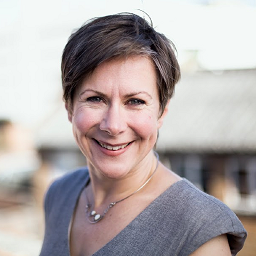
Bridget Harris
co-founder and CEO, YouCanBookMe
Bridget is the founder and CEO of YouCanBookMe, her third career. Her first was in the television and film industry before switching to politics. She served primarily as a policy adviser, with wide ranging interests including the role of technology in society, equal rights and opportunities. She ended up being an advisor to the UK Deputy Prime Minister.
In 2012 she co-founded YCBM. The service now manages over 750,000 appointments a year for companies including TED, Uber and Netflix as well as a huge number of SMEs. It was acquired by Capacity.com in January 2025.
Bridget is a regular attendee at BoS Conferences in the US and Europe and has spoken on being a bootstrapped founder and hiring remote talent.
Next up
Online workshops
Can’t make it? More dates coming up