What got you here won’t get you to where you want to go. Most successful organizations reach points where if they want to scale, they have to change. Zack’s spent his career driving change and scaling companies, generating more than $20 billion in shareholder returns in the process. He’s discovered what works and what doesn’t.
He discusses his experiences with an almost endless series of real life examples of success, failure and critical moments. You will understand how to recognize the points in your company growth where you need to do something different and the steps you need to take to evolve a successful company.
Find out more about BoS
Get details about our next conference, subscribe to our newsletter, and watch more of the great BoS Talks you hear so much about.
Transcript
Mark Littlewood
So you’re going to be talking about existential moments. I notice the speaker comfort screens and very comfortable there for us, because we’re not standing up. But there’s someone having an existential moment.
Zack Urlocker
That’s me during the toughest times when I was at Gatsby looking, it’s not literally me but I live on a lake in Michigan.

And the lake is frozen over, and I was looking out, and I was thinking, how far out would I have to walk in order to create and then jump through the ice and drown? It was like a really, really tough situation. So we’ll get into that.
Mark Littlewood
So why don’t you tell people why you think I invited you to speak?
Zack Urlocker
Well, who knows what goes on in the minds of Mark Littlewood? So I try to be generous in my time to founders and executives, people running software companies, particularly in the early stages, it’s really hard to build a business at scale. And so again, I just try to share my lessons. And over the last year, I’ve been writing a book called Build to Scale. You can find it a work in progress at buildtoscale.substack.com. And I guess I’m a repeat offender, having spoken at the conference in Boston a few years back. So, why did you ask me this?
Mark Littlewood
I’m not telling you.. because you’ve done some pretty cool things. And like most entrepreneurs, go, oh, I had a seven figure exit, and they mean $10,000.01 and you consistently kind of talk down your success. But I think you’ve had $4 billion plus exits that you’ve been pretty instrumental in. Going to talk about them a little bit, but you’ve also put a lot of time into thinking about what you’ve done well, what you haven’t done well and pretty nice. And sometimes it’s nice to say we have all the speakers from A to Z, and that’s another box to check.

I took some extensive notes, which I’m going to share with you for this conversation. So anyone know what this is? Lines. I’m going to give him a prize. So that’s the hockey stick curve, and then that’s the reality. They say that no business is ever as well run as it looks from the outside, and no business is ever badly run, as it looks from the inside. This is a story, or a series of stories, about that thing that goes on in middle, the messy middle. And those existential moments that Zack has had. Tell us very quickly, actually, we’ll put another slide up. How about that? Who recognizes those logos? Who recognizes all five? And I’m going to pick on you. Who recognizes four? Yeah, you see, that’s what happens when you work in a startup. You’ve got some marketing to do my friend. Tell us about them very quickly, and then we’ll go into one.
Zack Urlocker

So I have just recently joined a new company called Crescendo AI, and that’s the C, and I’m not sure that’s actually the logo, but it’s close enough. And the other ones, I think, are a little bit more famous at this point and. But the funny thing is, when you when you see the curve, you show the curve to investors, Duo Security, or Zendesk, etc, always looks so smooth and exponential and up to the right. But when you’re on the inside, it is not like that at all. There are ups and downs like crazy. And every startup I have joined, you look under rocks and there are snakes. There are problems of all, all kinds things you you can’t even imagine.
I remember joining Zendesk, and it’s doing about 5 million in revenue, and I was talking to somebody said, Oh, don’t worry, we’ve got Salesforce all set up. It’s great. The work was done by a guy with a PhD in Microbiology. And you could just imagine how over complicated the system was. It took us three years to undo all his PhD Ness. So but the thing is, when you join a company, there’s problems, and that’s why we’re there, is to help fix those problems and turn it into something that scales. And so part of what we’ll try to do today, is get to some of these lessons and examples, and maybe you’ll have some takeaway things that you can think about, and we’ll also have some time for questions.
Mark Littlewood
Great. So I’ve picked five of the companies that Zack has worked with. And you’re going to tell us something that happened each one of them. I think we’ll save questions till the end. So let’s run through those. So let’s kick off with Duo, because that’s the biggest one, right? The biggest.
Duo Security
Zack Urlocker
Actually, Zendesk was bigger. Zendesk was exited at around 12 billion, and Duo was only 2.3 billion. So, you know. Okay, so how many people are familiar with Duo Security? Quite a few. Okay. So, I joined the company is in Ann Arbor. I joined that company in, I forget what year it was, but it was a few years back, and the company had been in existence for a couple of years, and we were doing about 5 million in ARR and it was things were going quite smoothly, and I joined as COO to help them launch a new product.
I remember we’re going to a walking down the street to in Ann Arbor to our sales kickoff meeting. And the head of engineering kind of pulled me aside and he said, Hey, we have an outage. And of course, the outage is happening right when we’re gathering all the employees to an event, and I’m like, and he’s like, Should I go fix this? Yes, fix it right now.
And we had a funny situation. They’d had two years of 100% uptime, but now we were getting 1000s of customers joining. And it was early September, and we just brought on a couple of universities, and one was quite large, Penn State. And really it’s kind of crazy that an organization as big as Penn State was betting on Duo Security, which was really quite small at the time, and they didn’t pay us all that much money, but it was still a decent deal. But what they were doing is they had all the students start on the same day in September, and they all download the, you know, the Duo app, and they all register at the same time, and it spawned a active directory sync process, which was, candidly, not the best software we’d ever written. I think it was something John and the founder, had written and never really updated, and it was woefully inefficient. And it brought down. Again, we’d never tried it with, you know, 10,000 students, or whatever it was. Maybe it was 30,000 or 100,000. We’d never tried at that scale before, and so it crashed. But it also brought down the entire server, the Duo one server. And we had lots of different servers.
But for reasons that were a little bit arcane, 80% of our customers were all on the Duo one server, and so it just created a complete meltdown of all our services. And we had actually a series of outages over the next couple of weeks, and it became a little bit of a come to Jesus moment for us as a company. Because as a security company, like, if your service isn’t available, it’s really not that confidence inspiring for your customers. And when you sell the startups, if something goes wrong, the startups are like, Yeah, we get it. We’re a startup, you’re a startup, it’s okay. But now we’re selling to banks and hospitals and universities, and we had to really change the culture to focus on reliability.
And so I sat down with the Chester, the Head of Engineering, who was really good guy. And, you know, there was a roadmap, there was a list of priorities, and we said, okay, reliability is now P zero, so that trumps everything. And we’re sitting with the all the engineering managers, and they’re like, Okay, but what if Doug and John, the founders, come and say, Hey, we got to work on these new features. Because startups, you’re often very Feature Driven, you’ve got this backlog of things you’re supposed to do. I said, don’t worry. I’ve got your back. Priority is, you know, reliability. He says, Okay, but what if it, what if 30 days from now, we’re still working on? Don’t worry, I got your back. What if it’s 60 days? Don’t worry. What if it’s 90 days? Okay, well, then, we’re gonna have a conversation and figure it out.
And what I found was, so you really had to reprioritize everybody in the entire engineering organization around the reliability initiative. If you just talked about at the abstract level, people heard you and say, yeah, yeah, reliability. And then what’d they do? They went back to doing the thing they were doing before. And I had to, actually, between me and Chester, we had to sit down with kind of every engineering team and review and say, Okay, what are you working on? Okay, that’s not one of the like. We defined 10 or 12 different initiatives to bolster our reliability. So it wasn’t an abstract thing. We defined the projects, and we didn’t do everything that every everybody came up with, but we picked the highest impact things. But we had to then sit down with every single group and really make sure, okay, that thing you were working on yesterday, if it’s not reliability, wrap it up today and get focused on the reliability project. And I’ve often observed this.
When you have a crisis, it’s an opportunity to kind of redirect the company to focus on something in a slightly different way. Because when something really goes wrong, it’s not one single point of failure. It wasn’t really just the Active Sync directory in efficiency. It was actually a cascading series of problems, and the biggest problem was when new customers signed up for a trial. We always put them on the duo one server. And then before they went live into real production, the customer success team was supposed to move them on to another server. But what they found was if they had Cisco equipment, or maybe it was at five, I forget, then they had to reconfigure those things, and that was a pain in the neck, so they chose not to do that. They just kept all the customers on the dual one server. So you imagine this big fat server just keeps getting fatter, and all the other servers are kind of like sitting there with low capacity, and it’s like, okay. So you really have to re engineer the organization to think about the impact of all the decisions.
Mark Littlewood
So there’s a difference between saying and doing, I guess. Are there any things that people should sort of take away from that in terms of how you really reinforce that? Because everybody’s like, got these mission statements.
Zack Urlocker
Yeah, you have to go from, you have to get out of the abstract and take it down to what are you working on? And there was an article by Paul Graham, YC about founder mode. And I think most of that article is nonsense, not nonsense, but it’s not very nuanced. Let’s say it’s a little bit okay.
But I do think the idea of, like, Hey, you got to get into the weed sometimes, and this is an example of where, like, You got to be hands on with people. And you actually have to be very prescriptive. When you’re making a cultural change, when you’re saying, this thing is now more important than this other thing, and you’re asking, you’re changing the status quo of how people operate. You really have to be in the weeds and help people with that. And that’s one of those times where you got to do that founder mode, even though I wasn’t a founder.
The other thing to consider is, if you’re in a fast growing company, small problems become big problems really fast. And you know, if you’re in a big company, you see a problem, you look up and there’s some damp on the ceiling. Yeah, let’s wait and see what happens. Yeah, let’s come back in a six months and we’ll review it. If you’re in a startup you see something bad like, You got to jump on it right away, because if you’re growing at 100% a year or close to it. Both problems compound really, really fast. And again, it might turn out that there’s no problem at all. It’s just a damp spot. But it might also be that the bathtub upstairs is about to fall through. You should probably do something about that.
Mark Littlewood
That’s good.
MySQL
Zack Urlocker
So MySQL, so how many people are familiar with the InnoDB transaction engine of MySQL? Okay, so a few people. So at MySQL, it was an open source database, and initially it was an ISAM database, so. It did not have transaction support for ACID transactions, and we partnered with a company called InnoDB. It was a three person startup in Finland, and they open sourced their engine, and we licensed it for, I think about was a per unit basis, but I think it had a cap of 250 grand a year. And in the early days of the company, that was a decent amount of money, but we were doing 5 or 6 million. And I remember saying to the founders, Monty and David, and to Martin the CEO, we should acquire that engine, because 50% of our customers were using that transaction engine.
And we kind of had some half hearted discussions with Heike, the guy he ran in ODB, and he was kind of keeping us at arm’s length. And then I remember there was a board meeting in London, and it was probably the only board meeting I missed. I stayed in California, I don’t remember why. And it was around California, just California, and we had offices in Cupertino, and it was just about one o’clock, and I was thinking we should go get some falafel for lunch. And then a press release came out from Oracle, and it said, Oracle acquires InnoDB engine. Fudge. I mean, okay, this was as existential a crisis as you get. And I actually had a phone call with Martin just just before this. He said, Yeah, the board meeting went really well. The Board gave us approval to go acquire in ODB. Fucking A. Timing was a little bit off, but their intent was good. And next thing, we’re like, it’s Friday, and we don’t even know, are we in business next week? I mean, it was that serious an issue.
And so I kind of got on the phone with Martin. I had a Skype session going with our PR guy. I had an IRC chat with somebody else. And we’re just trying to figure out, how do we put out some kind of communication by end of day, to have a strategy and make sure all our employees know we’re okay, and all our customers know we’re okay. Even though we don’t actually know if we’re okay. So it just was really pretty terrifying moment for us as a company. And so what we did is we figured out a way that, because MySQL had these multiple storage engines. We decided, well, that is our strategy. It’s conscious decision. We have multiple strategy, multiple storage engines. InnoDB is one of them. We welcome Oracle to the to the show, etc. And we announced that this open engine architecture will have lots of different engines, and remember, it’s all open source, so you’re okay, which is was mostly true, but it was not so true for us. It was true for our customers, but we were really in a difficult, difficult situation. But we did get the news out that day, and then we began this torturous six month process of working on plan B.
And plan B was Monty Vedenius had a storage engine under development called Maria, which was named after his daughter. But we looked under the covers there, and basically what he had was the name and about the 10 lines of code, there was nothing there. And then we started working with kind of other companies to try to figure out. The good news was there were lots of other third party storage engines out there who wanted to work with us. And so we were like, Okay, we actually are in a fortunate situation. And then we had to work on plan B, C, D and E, all in parallel to try to figure out a way through this and figure out how to negotiate with Oracle.
And this was the surprising thing to us. The contract that we had with InnoDB had a auto renewal clause in it after two years, and we were, like, a year into it, or maybe a year and a quarter. So some months later, we’re waiting for, like they had to notify us to cancel the contract, and we’re waiting. And, the folks, we had an office in Sweden, and it’s five o’clock in Sweden, we said, Why don’t you unplug the fax machine? Just to be on the safe side, and you all go home. And we waited an extra day just to be on the safe side. And we there was no cancellation. We had no idea why. And so Martin sent an email to our handler inside of Oracle, guy named Ken Jacobs, fantastic guy. He was real. He was like employee number seven at Oracle, and actually a big fan of ours, of MySQL. And so we just sent him congratulations. Here’s the invoice for 250k and glad to have you on board for our ongoing success.
And then we had the MySQL conference coming up, and we had these awards, and we announced Oracle as our partner of the year. And he, Ken thought that was pretty funny, but you went up on stage and he shook her and he’s like, well played. Now we never really understood why they renewed. But my theory is that they kept trying to convince us, Hey, you should closed source this portion of the database of MySQL, and maybe you could be a little bit more like us. And we’d listen, and we’d nod, and we’d say, Yeah, but can the MySQL community really doesn’t go for that type of thing. And Martin, I really believed in the power of open source, maybe more than the founders did.
And so it’s kind of like Ukraine staring down the barrel of a Russian gun, you know, like Oracle has all the power in the world, and we’re just trying to hold them off and say, yeah, we’ll give that some thought. But we never moved away from our open source strategy, not an inch. Because we we realized that if we did that then, then we’re just competing with Oracle and MySQL Server and DB two on a level playing field. And we actually had this tremendous power of the of the community, the open source community. And I think actually maybe what Oracle was afraid of is if they screwed over MySQL community, then the community would then, the open source community would maybe then move in a different direction. And Oracle was huge on Linux. And so I think they were maybe very afraid of the Linux community and the MySQL community somehow combining or just something. So I think it goes to show that the power of the community or your audience can sometimes be even bigger than the giants of the industry.
Mark Littlewood
That’s a great point. So things to take away, don’t panic, in the words of Douglas Adams.
Zack Urlocker
Yes. And you know, we I often think of Peter Drucker, and we live by the Drucker’s principles at MySQL. And Drucker is the foremost management consultant, the first management consultant who ever existed. This brilliant guy, and he kind of says the most important thing to do as an executive is there’s kind of eight, seven or eight principles I forgot, but it’s:
Ask what needs to be done. Ask what is right for the enterprise, meaning not your department, but for the company itself. Make decisions, develop action plans, communicate, say us or we rather than I, look for opportunities rather than problems, and run productive meetings.
And I think I got all eight. So if you do like, if you do four of those, you’re doing pretty well. And so again, for us, it was about thinking about the business. It’s like, Yeah, we could panic, and it doesn’t really matter. What we need to do is we need to communicate a strategy, then we need to build that strategy. And then we need to have, you know, building database engines is really friggin hard. So, like, we built two or three of them, and luckily, in the end, I mean, you probably all know this, Sun acquired MySQL, and then later Oracle acquired Sun, and so InnoDB and MySQL reunified, and it was great. And actually, Oracle has been a tremendous steward of MySQL, so they’ve continued to innovate in it. But we’re always a little suspicious of those people.
Mark Littlewood
Excellent. Thank you. Who’s heard of The Great Gatsby? Well, this is the not so Great Gatsby.
Want more of these insightful talks?
At BoS we run events and publish highly-valued content for anyone building, running, or scaling a SaaS or software business.
Sign up for a weekly dose of latest actionable and useful content.
Unsubscribe any time. We will never sell your email address. It is yours.
Gatsby
Zack Urlocker
So that was a, this is the $0 billion exit. So it was a tough company. And I look back, I had a lot of fun, but it was kind of a bad decision to join the company. So I joined during COVID. It was like August 2020, and how many people are familiar with Gatsby the front end framework? Okay, a few developers, so in the JavaScript world. And it was a big deal for a little while. The investors called me in June of 2020, during lockdown, and asked me to talk to the founders. And again, I try to be generous with my time. So I talked to the founders about what to look for in hiring a CEO or a COO, et cetera. And then a couple hours later, Shardul Shah of Index, he calls me back. He says, hey, the guys want to hire you. Like, no, no, not at all. And then they called again a couple months later, and he said, Hey, the company is really in crisis, and we’re worried the whole company is just going to blow up. And the founders were good guys. They’re a couple Mormon gentlemen, young, very, very high integrity people, but they’d screwed up a few things.
Mark Littlewood
Why was it in crisis at this point, you think? And also, why was it in crisis and you didn’t see that? And then.
Zack Urlocker
Oh no, I did see it. You know, moths are attracted to flames. Yeah. So the crisis was, they’d hired all these open source people, and they made a really rich, extravagant offer to somebody, a quote, rock star, that they wanted, and they paid that person above what they should have paid. And then somehow, because it’s a younger generation, they all shared their compensation data with each other, and suddenly the women noticed that they were paid less. And I don’t know that there it was a, there wasn’t a conscious decision, but there was a very high paid male employee, and there was a woman who had the same title, and she was paid about 75k less. They were in different locations, etc, but the whole thing blew up, and the founders didn’t know how to manage a crisis, and so they proceeded to make it even worse. And again, this is during the height of COVID. There’s no vaccine. Everybody’s locked down. You got black lives matter. You got everything in the world going on, and it is just chaos. And that’s why they asked me to join. And I remember I spoke to Kyle and Sam, the founders on Friday said, Okay, I’ll start Monday. And they had some funding. They had that 50 employees, no revenue, very high burn rates, so it was kind of a sub optimal situation.
Mark Littlewood
But what were the downsides?
Zack Urlocker
And downside was I couldn’t travel anywhere to see any of the employees, and so everything was just a mess. But I did see two of the younger executives. I thought, okay, these people, they’re gonna be great. And there were two technical people who I thought, okay, I can bet. So between those four people, that was the bet I made, that we will figure something out. And initially I joined his interim, which was a good idea, but a bad idea, because the interim meant, okay, we will look for a CEO. But nobody was dumb enough to take that job, so I ended up becoming the permanent CEO.
And although it was difficult, we did get we did make progress. So we got from zero to 5 million, the first thing we had to do is, like a lot of you. If you’ve ever worked with early stage, young founders in their 20s, technical people every new project they just loved. So there were six different projects going on. Build a new GUI this, build a new dashboard for this. Build, this, build this. And every single project was at 25% completion and not enough staff to ever get anywhere. And we had quote launched our cloud product, but it was incomplete. It was buggy. They had, like, a couple early customers, and the churn rate was 50% so it was just like a disaster.
So I immediately started applying the Drucker principles, we focus. We canceled five of those projects, and then we focused on, let’s build the quality, let’s build scale. And I communicated this directly to all the employees. Here’s my SWOT analysis of what’s going on. Here’s what we need to do. Invited the other execs to participate in this, and soon we actually had a working product. Coincidentally, Penn State, who had been a good customer of ours at Duo, they became a good customer of ours at Gatsby, just coincidence, it was a different department. And Penn State decided that although they could use Gatsby for lots of interesting projects, they chose to use it on their biggest, baddest, highest traffic news sites that had 70 different news contributors around the campus, etc. I was like, Oh, boy.
And I remember we looked at that. We said, well, it might fail. But we’re going to learn a hell of a lot in the process. And so I kind of just said to the founders and the engineers, like, hey, if we take this on, we’re going to have to do major surgery to ensure that this thing scales. And the early versions of Gatsby did not scale that well, it had kind of terrible performance, the more pages and the more views, etc so. But we were able to fix that, we got 10x gains and another 10x and another 10x and eventually it worked for them, and we got things going so, but it was, it was a very difficult situation. And then it got even worse.
So just as we got to, like, about 5 million in revenue, then I’m thinking, like, Okay, well now we should start investigating raising another round, and the valuations had just started to plummet. I forget what year this was, but it’s like all those billion dollar valuations were just cratering, and I was going out talking to investors, and you just couldn’t get anybody excited. And luckily, though, I’d been friendly with a couple of different companies in our space when I joined. And Gatsby was always part of a solution with something else. So it always went with contentful or content what’s the other one? All WordPress or all these other things. And so we were friendly with people.
And then I sat down with I was traveling out to Florida. My dad lived in that area for a while. This is post vaccine, and it was his his birthday. And I went to meet Nick Gerner from WordPress VIP. He’s kind of the GM of that, we’re sitting down and having a drink, and then he says, he kind of leans forward, and I’m thinking, like, Okay, what’s going on? He says, Zack, have you ever thought of maybe joining up with WordPress? And I’m like, and then I’m trying to play it cool. We were raising money, no, not at all and but I’ll give it some thought. And then, coincidentally, the next week, I had a couple more inquiries. And so suddenly, now we had three inbound inquiries to sell the company, and fundraising was not looking that good. And I realized, look, this space is going to get consolidated. There’s too many players, and there’s too many pieces of technology that are not complete solutions. And early audiences will buy and assemble the best. But when you go into the mainstream, people want it to be easy, and so I remember I wrote up like, again, a SWOT analysis and kind of my assessment of the industry that was going to consolidate, and I kind of came to the conclusion we need to really have Plan B. Like, if we get a good offer, we’re selling.
And I had founders kind of along on this journey, and they were initially like, No, we should just raise money. We’ll do, we’ll help you with the calls. We’ll do all this and and then we did probably a dozen more meetings with VCs. And it’s like, Guys, Plan B has to be Plan A. Now we have to sell the company. And we still had some amount of cash, but you know, not enough. Like, our burn rate was still pretty high, and so unfortunately, a couple of the inquiries, they also saw that the market was going south, and they’re like, hey, nothing personal, but we got to preserve our cash. We’re not comfortable doing this deal right now. Maybe in a year. I’m looking at our boss, it’s like, we don’t have a year. So we ended up selling the company to Netlify, which had some it was a safe landing for the technology.
One of the things we did, and again, this might be helpful, so you should always have a list of who are the companies who might conceivably one day want to buy my company and just be friendly to them. Don’t moon the giant. Be friendly and share with them what you’re doing in a positive way. Don’t assume they’re trying to steal your secrets. But just be positive about what you’re doing. And we always, my philosophy is build a good business, and there’ll be, there’ll be some kind of exits for you so, but I realized the traditional, the Gatsby business, wasn’t that exciting. It was 5 million, but okay, maybe would get to 10 or 20, but it wasn’t going to have a hockey stick. Wasn’t going to be huge, huge thing.
And so we embarked on this new, we realized that the key asset that we had inside of Gatsby was our think of it as the data engine. It could consolidate data from many different sources, and that was the thing that people loved about Gatsby. There were things people didn’t love about Gatsby, but that was really the crown jewels. So we turned it up on its head, and we said, now we have this way to integrate lots of different sources of content systems into one thing. Because if you’re in a big company, you don’t have one content system. You have like seven of them, and three of them aren’t supported anymore, and two of them were acquisitions. And every time you try to launch something, it’s a mess. So we kind of saw, hey, our best paying customers are all doing the same thing. They’re integrating multiple different systems together.
So I had a meeting with Netlify, and I was driving from Berkeley to San Francisco. And I have a Miata in California, so I’m driving with the top down, and I see clouds around the Salesforce building, and I’m meeting these. Yes, this is a metaphor coming up. And the founders of Netlify are Danish. And, you know, I think we had some terrible name for our new thing. We called it the data repository engine something, completely non sexy, and I’m driving, and I’m thinking, What would resonate with these guys, and then we’ll call it Valhalla. So I called my VP of engineering, Dustin. I say Dustin, change the slides, make it Valhalla, and just say Valhalla. And what we want to do is we’re running an experiment, and we’re going to see do these guys repeat back the word Valhalla. And, we did the presentation and we, we didn’t say, we said, hey, we have this new project. We call it Valhalla, and it does this and this. And they’re like, Okay, this is super interesting. We’ve been thinking about this thing. And of course, I can’t do a Danish accent, but they’re like, Oh yeah, Valhalla, they really liked it.
And of course, the idea was to kind of say, hey, it’s what’s behind the curtain that’s super exciting. You know, yeah, you understand the existing business, Gatsby, but this new thing, that’s the exciting thing. And that was actually the thing that resonated most with with all of the potential buyers, but especially with Netlify. And so there is sometimes people are more excited to buy a thing that is, the promise of the new thing is sometimes sexier than the existing business that everybody understands. And both of us, both Netlify and Gatsby, had this challenge, which is, hey, we’ve got a good run rate business, but we got to get to the enterprise. And so effectively, what Netlify bought when they acquired Gatsby, was this gave them an enterprise strategy and an architecture. And they had actually, this is a common thing if you ever need to sell your company, or you think about it, it’s like you might think, well, they’ve already done that. Big company has already done the strategy, but sometimes they’ve done the strategy, and it screws up, and then they’re like, we need to do this right the second time. And Netlify had actually acquired some technology in a similar space, but it just didn’t work, and we knew it wouldn’t work, and they were shutting it down, and that’s why they had this pressure that they felt like, Okay, we really need to go acquire this thing.
Mark Littlewood
It’s interesting. Move on to that. Let’s touch on this one, because no one will A will have ever heard of it, and I want to leave plenty of time for questions. Let’s who’s heard a Zen Desk? Is that your friend?
ZenDesk
Zack Urlocker
He is now. So Zendesk was, was a lot of fun. It was early in the SaaS business, a lot of companies weren’t doing SaaS at the time. And, we were doubling, kind of it was triple, triple double, double. So we were growing at a really fast clip. And Salesforce, no surprise. Salesforce had tried to acquire US, and they had offered 200 million, and this was just before I joined and the investors told me this. And Michael and the founders had had actually raised at $180 million valuation, so they turned down a higher valuation than they were getting from the investors. But we knew, like we could keep building this thing. And at the time again, it was, they were doing about five or 6 million in revenue, so a $200 million valuation, that was extraordinary. But they didn’t want to sell, and so we’re just building this thing. We kept building.
And maybe about a year later, we had a couple of small competitors. One was called Assistly. And Assistly. We looked at their, you know, the management team, they’re good guys, but we’d seen they’d sold their companies pretty early three times before, we said they’re going to flip this thing. And they were pretty aggressive with our clients, and they did some features that we didn’t do because we’re Danish and we’re rigid, and just because customers ask for something. Well, that’s no reason we should do it. Eventually we got a little more customer oriented, but so at some point, maybe a year later, Salesforce acquired Assistly. And I remember I got a call from Brian Halligan, CEO of HubSpot, and it was sort of a condolences call. It’s like he was calling me like my wife had left me, my dog had died and my house had burned down. He’s like, Are you okay? Are you gonna be okay? And I think he just assumed we were, we’re dead at that point. But of course, Salesforce, you know, a big company digesting a small company. It’s like they’re just going to spend the next two years in meetings debating, well, is this feature going to Salesforce, service, desk, cloud thing, or assistly? And because they had two offerings, like, do we merge them? Do we keep them separate? I mean, it was just chaos for two years. So it had actually no impact on us whatsoever, and we just kept growing. They did. Salesforce did come back a few times to try to buy the company, but luckily. I think Michael was just a stubborn guy, and he didn’t want to work for somebody else, so we just kept building it and building it and building it.
Mark Littlewood
Key lesson?
Zack Urlocker
I think, it’s just back to the ups and downs. They’re never as bad as you actually think they are, and you got to plan for contingencies. So we adopted a policy that said we will never lose a deal on price with assistly. Because we knew, once they were inside a Salesforce, it was going to take days or weeks for any of the sales reps to be able to go back and say, Well, can I get a discount? Like suddenly they were a they were a startup that was engulfed in the Bureau bureaucracy of a billion dollar company, which meant they were no longer moving fast, and we could always move fast. So we basically equipped our sales team, we didn’t want them to drop their drawers for nothing. But pardon the language. I hope I haven’t offended anyone. Something there. Okay, yeah, okay.
But, we just said we’re not going to lose deals to those guys. And it actually created a nice esprit de corps inside the company. So sometimes having a, I hate to call them an enemy, because we thought the world of Salesforce. I mean, they’re a great company, but we’re competing. We know we have a better solution. And customers would tell us, sometimes they’d say, Well, Salesforce, I’ve got Salesforce, so I could just integrate their thing. It’s like, let me tell you, integrating their thing into Salesforce is five times harder than Zendesk integrating into Salesforce. It’s just kind of crazy the way those things work. So just because somebody big enters your space, you still have the ability to be more agile and more customer focused. And our culture was just we became obsessed with customers. And again, it wasn’t. Not everybody understood this. I remember we brought in a new CFO Alan Black. He’s nice guy, but after a while, he’s looking at all our operations. Is Zack, we have all these customer support people. Couldn’t we just outsource that to India? I’m like, No, that’s how we compete, because we have great service. So you really have to understand, what are your competitive vectors, what are the things that actually make you different? And for us, it was actually that responsiveness to customers, being able to cut through red tape, make decisions quickly and be responsive to them.
Mark Littlewood
That’s great. So let’s move on segueing through customer service, assuming this is the right logo.
Crescendo AI
Zack Urlocker
Yeah, so I’ve joined this new startup Crescendo. It’s like 12 people. It’s but we’ve got funding, and it’s AI for customer service, and the guy running it is a friend of mine. He worked for me at Zendesk, and he described the ideas that AI is going to be big. It’s going to be as I think it’s big impact on the industry as the internet and mobile. So it’s a massive, massive impact. And there’ll be over investment, there’ll be some high flyers with ridiculous valuations, there’ll be some backlash, there’ll be some things that blow up, but when we get through the end of it, the industry will, I think, be very different. And nobody really knows how AI will impact different areas, but it will have some kind of impact.
And having been in the customer service space for a long time, we kind of felt like, Okay, this is a real opportunity to deliver high quality. And bots can get you so far. You can easily build a bot using some of the APIs and engines and LLMs out there, and you can get the 85% accuracy. 85% accuracy is not great. Our view is you need humans in the loop. And so we call it augmented augmented AI. It’s humans plus AI technology. That’s how you get to great quality customer service. And so we’ve really only been the company’s been around for less than a year. We’ve been selling for about three months. We we’ve got to a million in ARR, which is pretty good, pretty fast, but very ambitious. And so to me, it was like, if Matt called me up and said, Hey, Zach, I’m gonna go run a marathon around Lake Tahoe in a snowstorm. Are you in? I’m like, I am in, hell, yeah, this sounds too dangerous and too much fun for you to do by yourself. So I’m actually pretty excited by it.
Mark Littlewood
Right. So what do you think will be the existential moment for that company, looking into the future?
Zack Urlocker
You know, it’s a crowded space, so it might just be that it gets very crowded. But we kind of look at it all the big companies, or the companies I’ve been part of that have been successful. They have disrupted very large spaces. And in order to do that, you need disruptive technology, but you also need a disruptive business model. And it’s the business model that is really, I think, up for grabs in the AI era. So we kind of look at the the call center industry is a $741 billion industry, and a lot of the calls are not that much fun. Let’s put it that way. There’s a lot of mundane tasks, and we think we can automate a big chunk of this. But the key is to be able to change the model. Instead of having a labor model where you’re paying per hour or paying employees on salary, changing it to a per successful incident, let’s say. So you pay $5 per incident to resolve them, et cetera. And we kind of view it as a full stack solution. It’s technology plus people. But that view is non consensus. So the VC venture capitalists look at that and say, Well, why do you want humans? Like humans’ bad, like we just want software 100% margins. And it’s like, yeah, but have you tried AI?
Mark Littlewood
Everything they do on LinkedIn and Twitter is AI.
Zack Urlocker
Yes, sometimes not that good. So we’ll see what the I mean. But the thing is, there will be some kind of crisis. And the question is, is it internally self inflicted crises, those are no fun at all, or is it just competition in the market? Who knows?
Want more of these insightful talks?
At BoS we run events and publish highly-valued content for anyone building, running, or scaling a SaaS or software business.
Sign up for a weekly dose of latest actionable and useful content.
Unsubscribe any time. We will never sell your email address. It is yours.
Q&A
Mark Littlewood
Good. Zack, thank you very much. We’re gonna open for questions. So can we have a house lights up a little bit, so I have a. There, that’s great. We’re going to take questions. So if you have your hand up, we’re going to get a mic to you. The way that questions work at BoS is that we don’t like to hang around. We’ve got we’ve got a mic here for Klaus. But put your hands up and catch my eye and I will get a mic to you. Anyone got questions? Okay, we’ve got one here. And is there anyone over here that I can queue up? Let’s start with you, Klaus.
Audience Member
Thanks, Mark and Zack. Zack, you came into several companies at an interesting time when they were already revenue wise, like 5 million. I heard a couple times there, and then you scale from there. Fortunately, that’s around the time, the point where I am at moment. So I’d love to know you come into my company, or any company at that scale, where do you look? What do you focus on? Because we heard some interesting stuff, but it was so random. Where do you where do you look really a systematic way.
Zack Urlocker
Unfortunately, there aren’t like three rules and then just follow the three rule. Or I could say there are three rules to successfully scaling a business, but nobody knows what those rules are so but I would say the thing I do quite often is I look for what are the patterns among the customers that you have today. And this is the thing I find I do in every single organization I join. I’m trying to see and by pattern, I don’t mean 100% of the customers are this way, but it’s like, hey, there’s a certain type of buyer. They have this situation, and they’re by for this reason. Great, let’s optimize that specific customer journey through marketing, through product features, through sales, et cetera. And if you can find two or three or four different patterns that can be repeated and you can accelerate the growth of the business.
The other thing I do routinely When I join companies and advice I give to people always is like lots of businesses have have early small customers that don’t pay very much. At Zendesk, the the average deal size when I joined was $748 per year. It’s not a lot of money. You got to figure out a way to grow your average selling price. And sometimes that’s based on the model you have, so Zendesk gets seats. But sometimes it’s also like just adding more value and having the super plus premium gold edition and enterprise editions, etc. And I often, I do find a lot of founders try to be all things to all people. Like I don’t want to choose just one segment, because it’s software. It could do anything. It’s way better to be narrow focused and then expand from there to other areas. But I would say it’s all also most founders don’t spend enough time talking to customers or listening to customers. They might talk to customers, but you really have to understand the problems that the customers have and which problems they are trying to solve, and that bring that back into the roadmap. And if you solve those problems in a B2B context, people will pay you.
Mark Littlewood
Thank you.
Audience Member
Sorry, Zack. I’m over here. I was curious about your time at duo when you were talking about making reliability priority number zero. It sounded like it was at a time when there’s probably a lot of tremendous pressure to innovate, make commitments. So how do you balance that with reliability?
Zack Urlocker
Sometimes you just have to choose. Many of the problems you have in startups is there’s so many problems or opportunities you have to focus. And if you spread your resources too thin, you can’t focus. And I think it’s just in that instance, we basically said all the new feature work, we’re not doing that until we get to this right level of reliability. And similarly, even at Gatsby, it’s like, hey, there’s five projects, only one of these things really matters. So sometimes you just have to make the bold decision. And it’s not that I’m making the decision, it’s that I’m actually listening to the employees and understanding what’s most critical here. Your security company, you have to be available if you’re not, if the service isn’t up and running like it doesn’t do anyone any good.
So I think sometimes you just have to make those strong decisions and then have the conviction to see it through, and you can listen to both sides, et cetera, but in the end, like you got to play to win, and you just have to know what’s the highest priority at any given time, and then you have to make sure that the entire organization is moving in that direction, and that you don’t have too much second guessing or Well, that’s what they said. But they then told us, we have to do this. And so I would go to the founders quite often say, like, Look, you have a set of 30 priorities. 30 priorities means there are no priorities. So let’s, at the beginning of the year, we would say there are five key initiatives this year, and even five is too many, but try to distill things down to a small set of things, and then just make sure that people are following like taking their cues from those high priorities.
And a lot of what I try to do is I also push decision making down in the organization. So it’s not, it’s not that I’m trying to make the decisions. It’s that I’m listening to the engineers or the sales people, or understanding their world and saying, Okay, what do you think we should do? And then, like, it’s the people close to the problems usually know what needs to be done. Like the engineers knew we didn’t have high quality but they felt constrained because, well, Doug keeps telling me, I got to work on this, and Jono said I got to work on this. And it’s like, okay, you got to take all the noise out of the equation.
Mark Littlewood
Thank you. So we’re going to have one last. First timer, Jim?
Audience Member
Yeah. Hi. Zack, So one concept I’ve spent a lot of time thinking about, and I really value my time, is this idea of push versus pivot. And whether that’s in a micro sense, like, Should we continue working on this project, or in a macro sense, like, should we sell the business for 200 million or keep pushing? Are there principles that you’ve gathered in your experience on making that decision, push versus pivot?
Zack Urlocker
Well, in the in the context of selling the business, is that what you mean or?
Audience Member
Yeah, so I mean, it could be that. But just in general, when you’re at an intersection, should I push on or should we stop? Is it more valuable to stop and do something different?
Zack Urlocker
So I always just try to keep building the business. I remember at Duo, Doug, the founder, co founder and CEO. At some point he came in. He’s like, we got to sell the business. We got to sell to Microsoft. And he had met Ray Ozzy, who was was no longer at Microsoft even, and he’s convinced we got to go sell the business. I’m like, why? Let’s just keep building the business.
So I try to think of like, if we can keep building and adding value, like, yeah, just keep going. If you think that the industry or the competitive climate or something else is going to change, I mean, nobody can really predict the peak of any business, right? It’s like picking the peak of the stock market. Somebody gets it, but it’s by luck, but we don’t really know. But if you think you can continue to build the business, keep building the business. But the industry is cyclical. And I remember in I forget it was 2021, I was on advisor, and I was a board member and three different companies that I had helped out all had exits that year. And they were, there were pretty good exits. And it’s like, look, it’s not because we’re geniuses, it’s the market has heated up crazy, and it’s better to be selling in a overheated market than buying. And we were happy to be sellers in all cases. So I think you also have to look at like industries, the tech industry, goes up. It goes down like, you can’t always time it. But if somebody offers you a big bag of money, at us, at a high multiple, take the money. I mean, and especially for founders, you know, if you have a big chunk of equity of your personal wealth tied up in the business, there’s nothing wrong with cashing out. And then you can figure out, do you want to stay? Do you want to stay with the company? Do you want to do it again, etc.
And one of the things I’m most proud of at Duo is we created about 500 jobs, many in Michigan, which is why I moved to Michigan to help create jobs. We minted 85 millionaires, again mostly in Ann Arbor. And you know, some execs. Okay, who cares about the execs and the investors all made money, good for them, but, I don’t really care about them, but you know, we impacted people’s lives. And so if you can look at it and say, get paid, and get your employees paid and taken care of, that’s a great thing. But there’s a lot of second guessing that goes on. And even for Duo, we sold it for 2.3 billion. And the investors next 6-12 months are like, Yeah, you should have kept it going. And it’s like, come on, because somebody else sold for more money than they thought. Well, we could have been worth 6 billion. It’s like, maybe, but now you look at the mark and say, maybe we wouldn’t have been worth that. So it’s just a personal decision, but you got to look at do I think I can continue to run things as it is?
Mark Littlewood
Amazing. Zack, thank you.
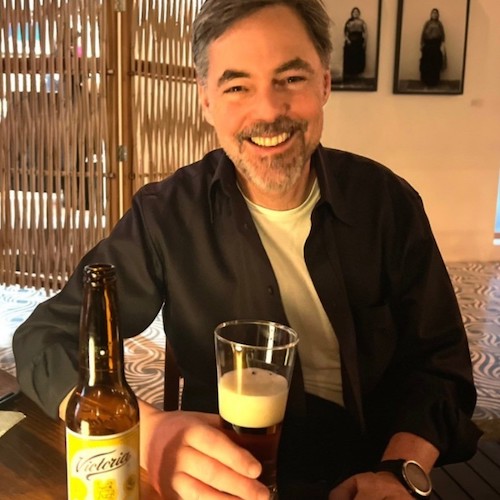
Zack Urlocker
Serial Scaler, Author
Zack helps scale software companies – to billion dollar exits 4 times: Duo Security, Zendesk, MySQL, Active Software. Zack’s been an advisor and board member to high-growth venture-backed software companies including Contentful, DataStax, GitLab, HubSpot, PagerDuty, Recharge and more. He’s led sales, marketing, product, engineering, business development, support and services and worked with VCs including Benchmark, CRV, Index, Kleiner-Perkins, Matrix, PointNine, Redpoint and Scale Ventures.
Zack knows it’s hard to build a business but relaxes by reading and writing fiction, playing pianos in public places and composing rock operas. His thoughts on scaling can be found at https://buildtoscale.substack.com/
💻 Online Workshop
This workshop is the starting point. In two sessions across one week, you’ll see how a company OS gets built in practice, then build a first version for yours. Not a framework to think about later. A concrete start.
💻 Online Workshop
This workshop is for founders who are already in motion, already using the tools, already tinkering, and have hit the ceiling that only a documented OS can break through. Over four weeks, you’ll build one.
Want more of these insightful talks?
At BoS we run events and publish highly-valued content for anyone building, running, or scaling a SaaS or software business.
Sign up for a weekly dose of latest actionable and useful content.
Unsubscribe any time. We will never sell your email address. It is yours.