What makes an iconic team? Jim explores what enables certain teams throughout history to achieve incredible feats and change the world. Great teams and great systems go hand-in-hand.
He shares stories of iconic teams that pursued bold visions with phenomenal execution and distill the common elements and principles that made these teams so successful. He discusses the vital roles of purpose, trust, leadership, and team dynamics in high-performing teams to offer practical guidance on how to build “great teams” that consistently deliver remarkable results.
You’ll learn:
- Why alignment beats ambition when it comes to building high-performing teams.
- How writing down and sharing your goals makes them 10x more likely to happen.
- Why struggling teams aren’t about bad hires—but about broken systems.
- How a steady rhythm of execution (not more meetings) unlocks real progress.
- Why defining your purpose beyond profit is the key to keeping your team engaged and motivated.
Slides
Find out more about BoS
Get details about our next conference, subscribe to our newsletter, and watch more of the great BoS Talks you hear so much about.
Transcript
Jim Benton
I’m quite excited to be here to share a dream that started back in 2015, and I’ve never shared this before. So this is a new thing I’ve been working on, and oddly enough, I came to the right place.
The Dream Unlocking Iconic Mode
I bought a domain name called Alignment.io back in 2016, and today I’m going to tell you about it and all the stuff that’s gone behind it. I also want to share that I think I should change the title of our topic. It’s not really about building iconic teams. It’s unlocking iconic mode – you guys already have it.
It’s like a video game. You download it, you get all the levels, but there’s a couple levels at the lock screen. You’ve already bought it, you’ve downloaded the software. It’s there. You have these teams right now. I promise you, you have the people. They’re right there. We simply need to learn how to earn the right to unlock that next level. And it is so fun when you do this. It’s the joy of running these teams.
And this group, we represent 1000s of employees, we’re the leaders. How lucky are we? Honestly? How lucky are we? It is a tough market out there. And we’ve got teams that count on us. We gotta build the ideas that we passionately care about. So thank you. Awesome to be here. Let’s get started.
Lessons from ClearSlide Talent Alone Isn’t Enough
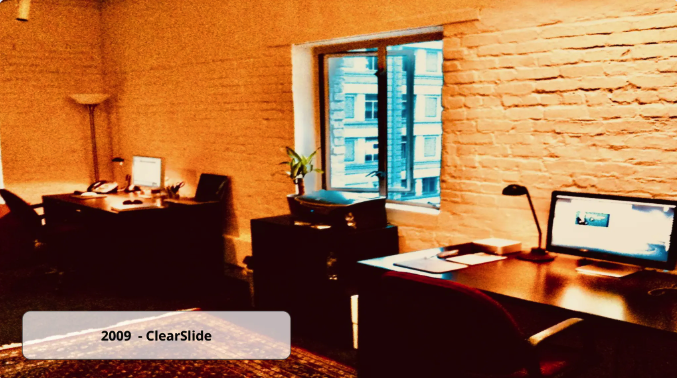
This is 2009, let me go back a little bit. My dream was always to be a founder. It’s just one of those things. I came from a big family. I wanted to prove that we could solve a problem, that we could build something from scratch. And out into the Bay Area, this was our first office in 2009 working with a dear friend of mine and a brilliant engineer.
And this is ClearSlide, and this is the day before our first two sales reps started. So we had about 16 customers, 10,000 in revenue. We had just enough payroll for a couple months. And you flash forward, we went for it.
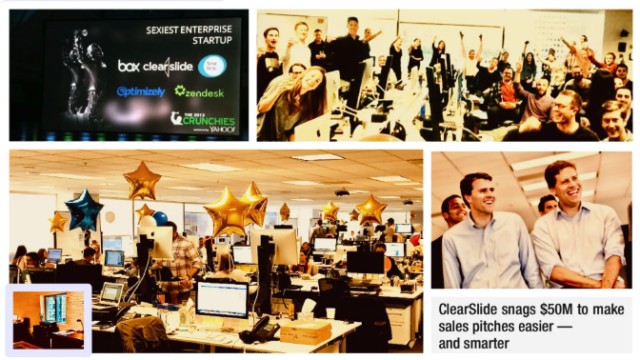
We were two guys selling to accounts like Expedia, Yelp, Comcast. Two guys that basically built a better product and WebEx that had 10,000 employees, and you know what I’m talking about. We just took a different approach. And this is ClearSlide just a few years later, 2014. I mean, it was amazing. We’ve been there, you’ve been there. Where you have these companies, and the vision and the dream comes alive, and suddenly you’ve got just this energy and people and balloons, and you name it. It was a great time, but it wasn’t perfect.
And I think that when I look back at this, there was one system we didn’t have. We had a lot of systems. We actually built a ton of systems – jam mode, touch point and all the systems we bought. We loved building systems. I mean, we’d literally autocall our sales reps when the customers would first log into their account. We loved building things. But there was one system we did not have that I think would have totally changed, changed a little bit of our future, and that system was iconic mode – the system to unlock and align all those brilliant leaders that we brought in.
We had an incredibly talented group, all of the ambition you could ever have – raised 100 million in funding, the best investors. We powered the enterprise. Pretty much every sales pitch went through ClearSlide for an era – from the Googles, to the Linkedins, the Expedias. It was a lot of fun.
But what I really wanted is, I wanted to be part of what team like this.

I think about Apple. You guys watch the iPhone events every September. And you know, I’ve been in startup land for quite some time, but every time I look at this, I see the same guys. I mean, that’s the iPhone 7 with Phil, and that’s the iPhone 15 with Phil. How did they do it? Phil didn’t have experience running a trillion dollar company. They didn’t say, hey, we need to find the guy that does a trillion dollar level. They stuck together. They’ve had wins, they’ve had losses. They’ve had products that are brilliant. They’ve had products that don’t perfectly work, but they just kind of seem to stick together. They seem like they’re having fun up there. And that’s the kind of team that I want to be a part of. But there’s challenges out there.
The Cost of Misalignment Silos Politics and Bureaucracy
If we’ve all talked about founder mode a little bit, and I have just a brief a few seconds on this. Brian, CEO of Airbnb, talking about the challenges of the operating system. How do we run these companies? Especially when we hire all these brilliant execs, but they come from completely different systems, and then we got to get those systems aligned. It’s hard.
Brian talks about what happens when it doesn’t go so well. This is 2019 Airbnb. And what he is basically saying is that, I’ll paraphrase this.
Video Audio
The first thing you notice is that these different groups might be running on slightly different technical stacks. That’s the first problem, and they may actually be required accumulating technical debt. The next problem you’ll see is that there’s a lot of dependencies. So five teams are going some different directions, but they all need a payment platform, and so that once it happens is that the teams that everyone’s dependent on get this backup, like a deli, and people are going around the block, and then they are basically like, at some point they just kind of give up.
So then the teams that are dependent on other people say, give me the resources, and I’ll build this group myself. So instead of five teams going to marketing to get a campaign or to leverage some service, they start building their own marketing departments, their own groups. So now they’re really becoming separate divisions, and this is where division comes from.
Now, once you have a division, your division as successful as you are a priority. So now you have to advocate for your division. There’s a lot of advocacy. If you have dependencies, you’ve got to persuade people by building relationships. And so the people that are like that build the best relationships are the ones that get the most resources. And that creates what we call politics. And so now politics have brewed in the company. And suddenly people gets more subdivided, more subdivided, subdivided. And that creates another problem, which we call bureaucracy.
And that bureaucracy means it’s hard to know who’s doing what you can’t like people are going in different directions, and that creates a lack of accountability. When there’s lack of accountability, then there’s a sense of what I do doesn’t matter, and that creates complacency, and then suddenly a fast growing company becomes a big, slow moving bureaucracy.
Jim Benton
That sucks. We don’t want to be a part of that, but I think we’ve all probably experienced parts of that, where that happens. And what I’ve seen and what I spend a lot of time with different CEOs over the over this kind of nine year journey, and when we get into silos.
Silos is where you have your exec team come to the meeting and they present the marketing plan, and then let’s go to Sales and they’ll present the sales plan, and they haven’t really seen each other’s plans. We nod our head. We sort of work in our own environments. We probably have our own tools. We have Asana in marketing and JIRA in engineering. We all kind of live in different ways, but we come together, and what happens, and I’ve seen this, is that the execs start to work in these operational silos. They get along. We’re all great people. These are brilliant people.
But because they’re in the silos, the execution isn’t ideal. They start to have a ton of meetings, you feel left out. So I need to be in a meeting. Let’s call a meeting. What’s going on? I don’t trust that we’re actually doing these things that we need to be doing. And with that poor execution, you start to have failing leaders. We saw it yesterday on stage. You know, it becomes who’s the stronger one? Should we get rid of marketing, or should we get rid of sales? But we got to get rid of someone, because there’s a problem and we got to solve it. That’s horrible.
And that then leads to low morale, right? Your team is like watching these challenges, and they just want to do their best work, but suddenly their manager just changed. Their boss changed. They just can’t get things done. So they start to not want to work there. They want to leave. And that leads to your customers saying, I don’t know what’s going on, but your competition is moving a lot faster, and they haven’t changed reps five times, and they’ve launched those new products and features, and you essentially have poor business results. Happens a lot, happens a ton of times. Let’s ask Chamath, how often does this happen?
Video Audio
There is no easy answer here. It is so hard. That’s why 95 plus percent of our companies and our efforts end up with nothing to show the word at the end.
Jim Benton
95% show up with nothing. We know that that’s the stat, that’s the game that we all play. This is hard. I mean, again, how lucky are we? We are the folks that are going to make it happen.
I look at that challenge, and I say, game on, there’s got to be a better way. And if you watch the rest of this all in, they actually say that this is an impossible problem we’re trying to solve – that every leader is so dynamic and unique that there is no common system. There is no way to do this. And I think that’s a great challenge for us as founders.
The Turning Point A Solo Trip to the Grand Canyon
So 2015, I had a moment where I stepped away from ClearSlide. September of 2015, ended up being a brief step about eight months, and poof, you’re out, right? I mean, I don’t know if you’ve gone through this. One day, we all go through it. But you are going 24/7 for six and a half straight years, and then the next day at the kitchen table with your wife and going, I don’t know what I’m going to be doing. We’re just done. We had promoted up a great leader. We hired out of Microsoft, and I had just fallen in love with OKRs.
Early days, reading about the Google ones, and I had set an O (Objective) of I want to clear my head and reboot. I really want to figure out what I want. And I thought I had a small problem. I always wanted to be a founder. I did it. I felt like we built this incredible business. People knew about it. And I was like, Uh oh, that was kind of the goal. And it wasn’t that rewarding. It wasn’t what I thought it would be for some reason. I thought the leadership would have flowed a little bit differently.
So I was at home. I was feeling very anxious about sort of being home out not loving it, and I told my wife, as part of this, oh, clear the head reboot. I want to go to the Grand Canyon. I saw that movie a long time ago. It was mentioned last night by Adam. But I loved the movie, and I was like, I want to go to the Grand Canyon. That’s what I want to do was bring the family, two young kids and a pregnant wife. And my wife said to me a couple days later, as I was getting more anxious, I think you should just go. You should just go to the Grand Canyon and do it by yourself.
And so I took an old 2004 Audi TT that had 93,000 miles on it, and this might be the last trip it ever sees if it doesn’t make it back, and I went. I literally got a last minute booking at the Phantom Ranch, which is the National Parks 1929 bunk house at the bottom. And they said, Yep, we have a last minute cancelation for Tuesday night in the bunk house. I told my wife, I said, I gotta leave tomorrow. Put a tent in a sleeping bag in the car. I’ll be there by Tuesday. And I just sort of hit the open road.

These are photos I took on the drive. But you know, think of your world right now fast you’re moving. And next week, this is 14 days after I left ClearSlide. You’re just on the open road thinking about, what is it that I want to do? And reflecting on the experience you just had that was epic, hmm, but something was missing.

And so I got to the canyon. This is a photo I took, and here I am. I’m like a 40 year old guy. I’ve never gone on a solo trip in my life, and I am hiking on a Wednesday with a bunch of retirees, because that is who’s out hiking. And I’m just by myself, thinking I’m going to go to the bottom of this thing. I had a notebook, and I was a man on a mission to figure this thing out. And what struck me was this comment of achieve anything. It’s in my notebook of that day.
Here I am at the Grand Canyon, walking down this thing. I slept in a 10th the night before, never camped by myself. And the only reason I’m here is because I set a goal. I set a goal, put it literally on a Google Sheet, showed my wife, so I’d shared the goal, and now I’m walking down the Grand Canyon.
The other thing that struck me, and one more comment on that, is that I just think in life – if you know what you want and why you want it, it is so easy in some ways to get there. Maybe easy is the wrong word, but predictable, I think you will get there. The other observation, as I’m walking down this six mile walk is I just realize these rocks are old. I’m going to be, in a blink of an eye, walking back down this canyon at 65 plus. You know, in my retirement days, whenever that kicks in, but when that day hits, I’m done. We’ll all be done. I don’t get to work anymore. I don’t get to do what I love or whatever that end of period is. There’s no set time.
But I had about 20 to 25 good years left, and I was thinking to myself, what is it that I want when I come back here? Because I probably won’t be back for 25 years. And what struck me is that all these products, we’re building, all these amazing features, I don’t know if anyone’s gonna talk about it in 25 years. I think when you retire, you get like one line in your bio – business man. And then they talk about all the people in your life. And what struck me was they’re not gonna talk about ClearSlide in 25 years. That product will have evolved. Chorus, which I was recently CEO of, and a brilliant product. It will have evolved immensely in 25 years.
You know what they’re going to talk about is the impact you had on people. And so it hit me there was, you know what? When I’m 65 or retirement age, I think what I want is just a lot of people to show up. Instead of saying how great the products where we built, we’ll build great products. I just hope that people show up and say, You know what? That was the most fun I’ve ever had working. My kids went to college because of that team we were on, and we did great. You know, I would go home happy and be at the dinner table and we were just lit up. I mean, it was fun to be at work. It was Ted Lasso style environment, and we won.
It’s not about being soft, but we did it in a way that was fun to go to work. It wasn’t the the frictions that we all experienced that we saw last night. I’ve lived that never again, and that is why I’m on the stage. Never again. Will we ever do that again? And it is solvable.
So I get to the bottom of the canyon. And I just kept having this idea that, boy, if people just could figure out what they want, we could help them achieve it. I’ve worked with too many people that don’t know what they want. They know what they want. Like, the next thing they know that they want to be promoted to a sales manager or they want to kind of do this thing. But I always ask people like, Tell me right now, 10 years now. Just paint the picture, If I see you and I say, Holy crap, I can’t believe what you’ve achieved. What is it that you’ve achieved? Just paint the picture of the future. I’m pretty sure it’ll happen. If you can tell it to me clearly and you feel it.
And I would work with young sales reps that would have ideas, and I would just push them out. Tell me 10 years, you know, I can answer the question of what the next path is. If you tell me where you been 10 years? If you’re gonna run sales teams, are you gonna be a CEO? Are you gonna go to product? We can connect the dots. So I was like, Wait a second, we’re onto something. What if we build a system that would help everybody achieve whatever they want? This would be a lot of fun.
And so I get back in the car, you can see the date you have 14. And I’m like, this is the start of the journey of building an iconic team. All right. So I get home and I am just trying to read as many books as possible, because I quickly realized in my first week back that this isn’t a software problem. There’s a million OKR platforms on the planet that all sort of look the same. And as I’m looking at the software and thinking, we got to build an OKR plan, I had a different vision of one. I realized nobody knows how to set their OKRs. That is what creates all the friction. There’s no alignment. I mean, what you see today is, everybody, please fill out your OKRs, put in your OS and put in your key results, have it checked into HR by a certain date. It does not work. I have not come across a single company where I’m seeing them rave about the way this is working, and I know exactly why.
The Power of Clear Written Goals
So I just started reading, and this is one of the books. This book had a quote about Harvard. Have you guys all seen this study? Raise your hand if you’ve seen this. I’m sure many of you had. But what’s fun about this study? I mean, you read these things, you know the class of 1989, 84% of the graduates from Harvard had no goals. So they knew what they want – to go to investment bank, they do their job. They knew they wanted to get a job, right, but they didn’t have a goal. 14% of these folks, 13% of these folks had goals, but they didn’t write them down. But they had goals. They knew what they wanted. They earned 2x more than the 84%. And the 3% that just had a goal, wrote it down, earned 10 times as much as the entire group. Just think about that. And there was no other difference in the people based on the study.
So if we can get 84% of the people to align and have goals and think about what they want, we’re going to be 10x more. This is the greatest ROA product I could ever think about being on. So let’s figure out how we do this.
Building the System of Alignment

So then that became a problem. I bought all these books, so you guys have probably bought a lot of books too, and they’re sitting around. I’m trying to read these, and I’m at home, and it wasn’t working. And so I remember telling my wife, I just need to read these books, like I’m dying to get the answer of this. And so again, boom, I’m out for a week. I said, All right, I’ll be back next Saturday, but I’m just going off the grid, and I just read these books. I went up to Lake Tahoe. I had a computer. I took tons and tons of notes. The notes was kind of the key here, and I did take a photo of myself here. I don’t do I’m not on Instagram, not on Facebook. You don’t see photos. I took this for a reason.
At that moment, I really thought there was magic. You know, you’ve been there, right? Any of you that have created a product, you have that small moment you’re like, wait a second, it clicked. We’re on. And here I’m sitting by myself reading for a week silently, and it just took the photo because, like, it’s all clicking, it’s all right here. I literally think we can solve this problem. The neurons that fire together wire together, the reticular activating system. I remember reading about this where your brain, once you lock on a goal, once you can see a goal in your head, you can visualize it. Your brain becomes like a laser guided process, a self driving car. It’ll literally take you there. It’s no different than when you decide that you want to buy a new car, and then suddenly you see that car everywhere. It was there before, you just didn’t see it. And once you say, you know we’re going to win the enterprise, suddenly everything about winning the enterprise shows up and is right there.
And so I had this moment where I was like, Wait a second. I think we figured out how we could unlock iconic mode – a mode that would help all of us, a system that would help all of us to take the talent and make them a players. I really think when I hear someone say B player, all I think about is a B system, and that is on us as leaders. There are people that sometimes just cannot fully opt in. Something’s changed. They’ve got a circumstance. They might be in the wrong fit, and we need to help get them into the right fit, and do that in a really thoughtful way. But the rest of your team, you hired a players, right? I mean, anyone here hiring B players at the job interview stage? No, we’re hiring remarkable people, and when they don’t work in our team, guess what? A lot of the folks that don’t work that we have to let go, don’t they go on to become someone else’s future star? And why? Because they get plugged into a system, an operating rhythm that brings the best out of them. So that was the system of alignment.
That’s like, oh my god, I’m going to buy the domain name. We got to go do this thing. And what I wanted was a system that could essentially align every team to execute. I wanted people to execute with a sense of purpose, with a really bold, audacious vision. Think Elon Musk. You know Elon Musk, what does he say on the sense of purpose, revolutionize space travel, which means make it reusable. And what is his bold, audacious purpose, we could all probably recite it – be a multi planet species. And guess what? He’ll probably do that. I mean, that is something that he’s laser focused on.
So I wanted every team, not just the leadership team, to really have the sense of purpose, of why we come to work, really awesome, bold, long term goals, not three year goals. 10 plus year goals. Then I want us to be aligned on the right priorities, because I’ve seen way too much friction where we don’t come together, too many sticky notes, too many mirrors, too many off sites that just are feel great for about 24 hours, and then we’re right back to where we were. Then I wanted very clear goals. Goals that were measurable, goals that inspired, goals that were more than the key results we see today. Too many key results out there are NPS up 2% grow sales, 4% improve website conversion. That’s not enough to build trust. I want to know how you’re going to do it with that measure of success. I want to be fired up that when I see the plan, we can do it.
And then I want the defined metrics, the metrics that drive the board meeting, the metrics that determine the higher fire of our exec staff. And then I want to do in a really high velocity rhythm. And so this is the system of alignment that came out of all of that process. A system that I wanted to be very simple, that had a combination of a methodology and a rhythm. And the methodology is that we’re going to start by just aligning every team on the mission. It’s a framework for questions, but we will get every exec team together. And many execs in this room have done this already with me over the last year. But we’re going to get your team together to say, let’s just align on this. How are we doing? What is this the right purpose? If it’s not write it better, let’s vote. Let’s talk about it. It’s very fun, quick process. Once we know where we’re going as a team, and it better be big and bold. Doesn’t have to be that. We have to put people on Mars, but we better be best in the world at what we’re doing. We should do something that matters, that we would never quit on. It’s kind of purpose you can’t give up on. Once we have that, we need to know the current state of where we are.
So if we’re trying to, you know, get up to Mars and we think that’s going to save humanity, then what’s our current state right now? And we use SWOT. SWOT is something that when 2015 when I first reached out to my friend, literally the day I took the picture, a brilliant engineer that I’d worked with before, a co founder, and said, I want to build a system. Can you work with me to do this? The response was, let’s build SWOT analysis. I was like, Okay, that’s a good start. And so we bought SWOTanalysis.com we built SWOT. Over 90,000 SWOTs have been created, sort of casually over the years by the community that use that product. But SWOT is a brilliant product that I see often used sort of wrong. People are often just doing SWOT to their company. Whoa, what does that mean? SWOT of your company? I don’t know where you’re going.
So if you’re doing a, let’s say you love hiking, right? Your purpose is to explore the world, and your vision is to hike some of the great mountains of the world. And you want to go do a SWOT on that. Well, if you’re if, let’s say your objective is, you know, your vision is to hike Mount Whitney or the Appalachians, then my strengths are pretty good. I’m in good shape. I go running, I do things. I’ve got the right people around me. But if your vision is summit Everest by the end of the decade, and get down safely. Holy crap. I have very different strengths. I’m not, I don’t feel good about my hiking all of a sudden. So we need to know where we’re going if we’re going to do a SWOT. And that’s why that’s so critical.
And I need to know that at every team, I need to know the purpose of my product team. Why do we have a product team? What’s your vision? And then show me in a SWOT how you guys are doing once we have that, we align on a single page plan, no scroll. Everything fits to a single page. I haven’t worked with an exec team that does great when you scroll down and click and go and it becomes a Salesforce type experience. It has to be literally printable, that tight, and that is the OKR. That’s the alignment plan that we have that puts this together.
Once we have that plan set, and it’s not a sales, marketing, it is, you know, our SWOT said that we have to do these three things to accelerate our ability to hit the vision. Then we talk about, you know, putting that into one plan. I’ll show you that in a second.
And then the next part of this is, we got to activate it. Too many plans are great. Right? We build them. We see them, and you never see it again. Maybe you’ll see it at the end of the quarter. We do a quick 30 minute check in on the numbers for, I don’t know, eight years now, two, three different companies, we do a weekly top six is based on the IV we method. It’s about 100 year old method, but every exec puts in their top six most important things that they’re gonna be doing for the week, aligned on one plan, aligned our objectives. I’ll show you an example to magical experience. It moves you forward. It solves a lot of this conflict. This will go away.
And then at the end of the quarter, let’s do a retro. How did we do? Let’s learn. What went well? What didn’t go so well? Let’s take the friction out of the system, because there is friction. We just need to talk about it in one room.
And lastly, we need a high velocity rhythm, a rhythm where we meet weekly, but not in a separate operating meeting that has nothing to do with our OKRs. No, we live in this world, not in the software. I don’t think you can run the meetings and software that well, but we convert into slides in a unique way.
We then do a weekly all hands. I’m a huge fan of weekly all hands. I’ve had to run companies that need to be jump started. Sometimes I have, I don’t see a lot of weekly all hands. I’m telling you, it’s a magical play. I never I never lead them. They’re always hosted by an employee, but they’re really fun. I’ll talk more about that. Monthly operating review with my leaders and the quarterly board deck.
So let me walk through what I mean by one page plan. We need to have our workspace at the top, every team, you know, every cycle, OKR. Then we need to have our mission. So we use that framework, and at the very top of everybody’s plan, exec plan would be the company, mission and vision. Every team would have theirs. We anchor it. It’s something we need to look at day in and day out. It should be absolutely memorized, and we need to anchor it on our core values. The values are critical to our long term success.
Once we have that, we then need to align on the priorities. So we work through the SWOT and the retro to define what are the priorities and what are the key results, and then we add metrics. This is a little bit different than the OKRs you do. It comes from a little bit of the Bill Walsh that the score will take care of itself book. You got the scoreboard, and then you got the playbook you do on the field. I found that in my past on the OKRs, the metrics can sometimes change. One quarter, sales has hit the revenue number at a certain number, the next quarter, it broken into three different buckets, and you can sort of lose sight of the key metric that you need to hit as a collective team.
So the metrics areas where we put, what I would call like the company, census metrics or the North Star, plus the key metric that the board uses to evaluate the business. Because if you lose sight of that, our team will disappear and there’ll be a new team running the company. So how do I just make sure that with all the great work we’re doing and all the OKRs, that even if it’s duplicative, I have the top three key metrics the bottom that ultimately say, if the top is green, I better hope our metrics are green. But we’ve got it right there, and then we have the values. We need to talk about these plans. We need to be very focused on these items with updates. And then I want to be able to see every other execs mission statement. I just want to know where you’re going. I want to hear what our HR team says when they talk about why they’re there. If you look at take space x, since it’s a fun one.
If you were take the I’ll take the maintenance service. So the folks that have to clean that do clean the office at Space X. What is their job? You know, I bet it says something. A lot of companies, their job would be to clean the facility, right? Maintain, you know, cleanliness. If I were running that facility team, that’s not right. The purpose of our group is to build a facility that is attractive and safe and attracts the greatest talent on the planet to want to come work at SpaceX, to take us to Mars. And if we don’t get this facility looking amazing, if the plants are dying and it looks crappy, I don’t think the top engineers the world are going to want to work here. That’s what we do, and that’s why you should come work for our team, because we are going to build something great here. That’s the energy I want. And I want to see that for every team.
I want to know what marketing’s vision is. I can basically spot who’s engaged and disengaged in my first week as a CEO. I’ve been hired post founder. I’ve been two times joining existing teams as CEO, Apollo.io, and Course.ai, and I’ll do this exercise day one with my execs. Very first one on one is, hey, let’s just have some fun together. Let me understand the purpose of the engineering group. So why do we have an engineering group? What are we trying to do? Let me understand your vision. 10 years from now, I go, Holy crap. You know, this is amazing. What is it that you’ve built? What is it that we did? Let’s talk about that. It aligned on that. What’s your key metric that you use in your department? That’s what I want to have in there. And by the way, I really want a system of record, because I don’t want strategy disappearing. I want to go back and see what we did last quarter, last year, five years ago. I want this to be really tight. So that was the vision.
And the last part of it is I don’t want our meetings to be a ad hoc ad agenda of highlights and lowlights and, you know, status updates or just going over metrics. No, we gotta bring that entire plan to life. I want to talk about the plan. I want to break these out. They all have owners, and let’s jam and let’s jam hard.
So what happened? I built this thing. This is back in, like, 2017/18. I got pulled back into ClearSide eight months later. So I didn’t get to quite finish it, but I did get the first kind of core part of the system down the one page plan with the methodology, and then I got pulled in as an EIR to a bunch of startups. I had set a goal for myself that the next company I joined I will be a CEO. I wasn’t sure how to do that, because we just come out. It was a COO at ClearSlide. Came out, nobody hires first time CEOs. You don’t just go apply for that job. And I knew that if you want to set the rhythm of a business, if you want to build an iconic team, there’s only one person that can do it, and it is the CEO. COOs cannot do this. If the CEO doesn’t care about goals, then goals don’t matter. If the CEO has a different vision, then that has the vision. The CEO is the one that says what we’re going to be.
I had a breakout group yesterday with a bunch of brilliant people. Shane, who was in there. There you go, Shane. I just remember Shane talking about his purpose and vision and about the type of company, this kind of indestructible business, the place that he quoted, a business, I think I have this right, Shane, that, you know, where someone hadn’t been fired, and, you know, for a long time in a past company, but building something special, that is something I could feel in his bones, as he said it. You can’t have the number two say that, if the number two felt that way, and the number one doesn’t, it doesn’t work. CEOs control this.
So I set that goal, and I as a way to get in. I just started helping startups. I got pulled into one signal color, which is a genomics company, and I got to learn a whole bunch of different ways teams work as a really fascinating way to learn rhythms and different leadership styles. I was in healthcare business for eight months. It was remarkable. And what I found is that this darn system worked. One signal is a tiny business, went on to raise a ton of money. Color was in a different position, went on to do great. And I just played a very small role in these but it just showed that where we touch it worked.
Real-World Proof Applying the System at Apollo and Chorus
And then Apollo, which I sort of organically became friends of the founders, and got in, we had a bigger idea for the vision. And I remember, as I joined this back in 2019 really talking about our purpose. Our purpose at Apollo, in my opinion, was that we were able to connect some of the greatest solutions, the solutions all of you are building, that solve real problems, to people that need them. And I remember being at those other companies I just talked about, where they were literally saving lives, but they couldn’t figure out who to call. You know, who do we call? We I can literally tell you if your risk of cancer is higher based on your genetics and these things, and they couldn’t figure out a call. And Apollo database and Zoom info, which acquired Chorus had the ability to help us find those people that need it and to connect it in smart ways. And so we changed that vision and where we accelerated it, and kind of built this concept of a Spotify of sales, a pre loaded database with every human and person on the planet to connect.
And guess what? Just three years later, Apollo went from a tiny little business, when I was there, we were 30 employees. It’s valued at 1.6 billion. That’s vision. That’s brilliant execution by the Apollo team and the founders and Tim and those folks. What a fun time. And it was part of that for many years on the board as well. And by the way, fastest growing tool in 2022 it shot up. It wasn’t there in 2019 so that’s the power of doing this. Now March 16 comes around. You guys remember March 16? This happened to be the day that I was announced as CEO of Chorus. Says March 16, 2020, and week earlier I signed my offer letter. And this is the day where I’m like, I’m going into the office. Well, let me just show you. Let me show you what my what the news was on that day, and we’ll need a little audio on this one.
Video Audio
Americans order to shelter in place as the Coronavirus pandemic spreads. The drastic new measures of the San Francisco residents told to stay in their homes and avoid contact for the stock market plunging the worst single day dropping history, as the President acknowledges we could be headed for a recession and the chaos at grocery stores, what they’re now doing about those empty shelves, the surge in school closings, over 30 million children out of the classroom. This is NBC Nightly News with Lester Holt.
Jim Benton
I’m being announced as CEO that day. I’ve got three kids now, on Zoom at home. I’m trying to go to the market to buy bags of rice, because I don’t the world’s gonna end. I mean, it was an interesting time. We all lived through that, and it happened to be the day one of the most epic journey of my life. So fun. And what made it fun is I got all systems go. I sort of built this system, ad hoc over the years. And all of a sudden, day one, I’ve got an environment where the recession starting. We’re not going to have cash for that long. We’ve got a brutal competitor, as many of you guys knew in the space, that would literally call our customers every week. And so we just have all these things happening. But we had a brilliant team. They just didn’t know it. They weren’t unlocked yet.
And suddenly we had the keys. We had this system. And I was so happy. I mean, how lucky are we to do this? I felt like, how lucky I was to get to join this brilliant piece of technology, a leading AI company, a product I’d used and knew, and a system that I thought could make it a lot of fun to work together. And what I found is that once again, it worked. You know, I was seeing comments around, you know, the culture is incredibly transparent. Everybody is aligned. I saw notes from like one of our SDRs in Boston coming out after we did our recap where we grew revenue 3x in our public press release that we shared, talking about what it was like to work here.
And if you notice, March 20 were named by July of 2020. We didn’t do what a lot of people did. We had this dream of an iconic team, the kind of team that you’d write a book about. That’s the Apple team, I really, really wanted. That’s what I want when I go back to that Grand Canyon. Think about the people that we helped. And so instead of doing that big layoff, which a lot of pressure to go downsize the teams back then, I just thought that’d be a brutal time to have to go look for a job. I mean, how do you go look for a job in April, May? I’m sure many of you had to do that, especially if you don’t have to do it. And so my take was, we’re doubling down. We’re moving faster. We’re doing top sixes. We’re doing all hands, literally for an hour once a week. We are jamming from Israel to Toronto to Boston. We are getting this team humming, and we are going to be the momentum story of Silicon Valley in one year. That was my short term goal.
When you walk the halls of the year from now, at your dinner parties, people are like, I don’t know where you guys came from, but that was insane. And that’s what we set off to do, and guess what? By July, we raised $45 million in funding that should not have happened. To announce that in July, that means we’re signing term sheet to May. May was the down part. This was not in that hockey stick of the 2021, and Georgian was a key partner in helping us do that, which was very, very special. And why did we get that? Because we had an epic board meeting first week of the first two weeks. Showing, I guess, actually, this board maybe about a month and a half in, showing what we could do. And they said, you guys can win. We want to fund this.
And we also rolled out a new vision. Because the vision, you know, conversation, intelligence, great, absolutely love it. That’s not why I was there. I thought the Chorus really would change the way relationships are developed. And I had been in the CRM space for quite a while. There’s no R in CRM. There’s a lot of C and there’s a lot of M, tons of customer data, tons of workflow management. You can’t find a great relationship data in there. You don’t know why they bought the deal two years ago. I thought we could solve that. I thought we could be the R in CRM. We would know every conversation. We could use AI to analyze it. We can help the engineers know the problems. That is what we want to do, and that is how we executed.
And what I found is that when we activated iconic mode, we didn’t get what we saw last night. We got a mode where every team had a very clear plan. And these when I say plan, it’s not that marketing had a plan in sales engineering, no, we had an exec plan one plan. It’s the only one we ever looked at. We never had a meeting where we pulled up somebody else’s plan that was for their team. And it led to phenomenal execution. We made bigger bets. We were able to say, hey, this feature, which took us nine months to launch three different quarters of showing the plan we’re going to do. So when a new shiny object came up, we were able to say, Hang on, punt on that, because we’ve already agreed. We want to launch this thing.
One of the companies working with Alignment right now, Defense Storm. I was talking to Steve, the CEO, and he said, I could share this. He just went through this a few months ago with his exec team, and I checked in two weeks ago. I said, How’s it going? You’ve been using alignment and sort of this methodology and this one page. And he goes, Jim, we’re chasing so many less shiny squirrels. That was his comment. And I think the shiny squirrels that Saturday slack you get from some exec that’s like, I got an idea. What if we do this thing? And then usually it’s another exec that jumps in quickly. Maybe it’s the person that you think, you know it’s not as busy as you with yeah, we should do that thing. Let’s meet next week. I mean, no, we’ve already agreed. We have a really tight plan. Let’s go do it.
And what I found is that with that execution, our leaders were more successful. We kept them. They were there. They thrived. It was not all perfect. No way. It was like a Ted Lasso. It’s not all perfect, but it was definitely showed glimpses of iconic and yeah, they came together. They worked through the challenges. So we had much higher morale. The team was happy. They attracted the top talent, their best friends, came and worked for the company. We saw leaders that you just didn’t know who they were, rise up and start to become key pillars of our all hands and the way they talk about different project level teams they led. And it led to us winning a lot of customers.
Customers could see that we were executing. We were enjoying our jobs. We were building really long term innovative features. And we were going to solve the R in CRM. We were going to make your sales force be able to perfectly tell you your relationships. And it was an extraordinary outcome.
I’ll show her one more photo, because I think it’s important to see what success when you can do it the right way. I showed a photo ClearSlide. It kind of looks similar. I liked it. I liked it. It was good. It was fun. Been there. This one was epic.
And this one, I even put a picture of the family, because I found that the impact of running an iconic team, a team where the exec team would come to my house. We would do a backyard. I mean, it was COVID, but we would come together. We were we had a lot of execs remote too. So we’d have, you know, we did a lot of this, async, of course, via the system. But I just found that everyone was happier. Families were happier. People were happier. People were thriving. People felt really great about what they could go do, and so Zoom info been a terrific partner and acquired Chorus back in July of 2021.
Why Alignment Matters More Than Ever
One of the quotes that Sam Altman said is the single word that matters most, I think, to keep a company productive, is alignment.
Alignment is a big deal. We talk about a lot here. I actually think the Jim Collins quote is more how I feel, which is “To build a extraordinary company, it’s 1% vision.” You need the vision. If you have just alignment, without a bold vision, I actually think you’re going to have that friction. You can be aligned, but we don’t know where we’re going. How do you really get aligned without a bold vision? You need a bold vision that brings everyone together, saying we have to do that.
So what I wanted to do next is I want to talk about the system of alignment. Let’s talk about in a really practical way how to do this. I’ve been to a lot of talks. I’ve read a lot of books, and the challenge I’ve always had in the past is that I hear this stuff, and I want to go do it. I’m pumped up in the room. And I get back and I’m like, oh, that’s hard. I can’t quite remember how to do it. And I wanted to be maybe one of the first to solve this. This is the dream I’ve been talking about.
I want every team to really shoot, to be iconic, to unlock this, not just be inspired by this, not just say, hey, that’s great. We’ll go back and we’re going to go to our notion and fill out that list. No, I want starting tonight as you think about planning q4 next year. This could be the change of your companies. This could be the moment that you look back and say that talk changed our company, that you’re going to have to do some work to get there, and we’re happy to help you do that. So we’ve got the methodology for unlocking. Let’s break this down.
So the first step is, every team defines a mission. And when you go through this process, let me go through this process. The first question is, purpose. Purpose is interesting. You don’t see it a lot, lot of CEOs I go meet. I never hear, I don’t hear a ton of purpose. I get a little bit. I always hear goals about hitting revenue or, you know, leading a category. But why?
So the purpose of the Jim Collins framework of built to last is that, you know, it’s the reason that you exist. It is how you help people. So, how do you help people? You know, we help unite teams. What do you do that helps people? That’s the first part of it.
The second part is, then, what is that bold, audacious goal? Jim Collins would say it should take 10 to 30 years to achieve this goal. What I constantly hear is a two to three year goal when I talk to CEOs. Oh, our job is to do this or get to this stage. We just want to get there. So then what? We’re just going to be another $80 million SaaS business with nowhere to go. And that’s hard to achieve, but we don’t want one of those. Those will have their moment, and then they won’t have their moment. It’ll become part of that Martech stack. How do we become that business that controls the destiny that in 10 years, you know exactly where you’ll be, and it’s a really meaningful spot, and you’re going to bring your team with you. So that is the exercise we do.
And on these pages, I have the whole team involved on this stuff. I will, as a CEO, align the executive draft of this. I think as a CEO, we do need to have a good sense about what our purpose and vision is. But I’m not the wordsmith, and I don’t know if I said it perfectly. So when I get my team together, I’m asking them on a scale of one to 10, how do you feel about this? And if not a 10, what would you add to that purpose statement to make it good?
So I’ll quickly go around the room and they’ll be like, I’m a seven. You know, it’s good, but I think we’re not talking enough about this. I’m a seven. I’m an eight. If someone says seven, that’s basically a one, so eight and above, you’re okay, but sevens are like, I don’t like it. And then you know what you do. And this is the tricky part, as you don’t want to feel like you put something up. People don’t like you. Just pause. Everybody, click the button, add your How would you write it better? What would you say? Everyone, take five minutes. Exec team, write one. We’ll vote. And what you’ll find is that the person you expect says it a little better as a word and it jams. I mean, it gels.
I was at a meeting in San Francisco with the team, and I could tell that something didn’t go great in the off site. It was okay, but they were not aligned, and I offered to come in. So I told the leader. I said, yeah, if you want, I’m happy. This is a couple years ago. We’re just starting kind of this. I’ll come in and help you guys. And we put up the vision and purpose that this leader had, and the team did not like it. They were very polite with their sixes, sevens and eights, and at the end of that hour, they had rewritten it, just a little bit tuned it, and the leader lit up because the team was now united. They all loved the words, and they had a mission, they had a vision. And it was super powerful what they were doing.
The next part is values. Everyone has values, but how do you know if you’re aligned on them? We got to do the same the same exercise, go through it. Make sure everyone’s on the same page. And then we take this and we add the metric. I want to make sure that everyone on the team knows the goal. I’ve joined some companies where it’s fuzzy. You join the board’s kind of giving you a couple directions. Of we want to be at this number. I really just want the team to know that we need to be this year at 650 million. This is a beta works, which is sort of Git lab in this data here. So if you look at this, this is the Git lab purpose and mission for real. And you know, I want the team to know our revenue number this year, and I want them to know the path that we’re on for next year. So for 3x next year, by halfway through this year, we better start doing a lot of that work to get there, in terms of the hiring and the pipeline, et cetera.
And then the last part is we need to group all that together. This is just simply a worksheet to build that top line. We need to combine the purpose and vision into a mission. And it’s easy, super easy. Take Space X. Purpose at the top? Revolutionize space. Vision? Become a multi planet species. put the two together with the word by or with or two, you know, revolutionize space travel by ultimately becoming, you know, a multi planet species. That is what we’re looking for from every team.
So that’s a fun exercise. We use the votes we go around, but you will find that within one hour, you will get your entire exec team fully aligned, but have them write their own the minute they start to say, I don’t like this, or I just think we’re not doing it. Hey, that’s great. Can you just take a pen and paper out and write it a little better. It will diffuse your room so fast when you ask the person that says, Oh, I just think we can do so much better. Yeah, just take a quick stab. Five minutes, everybody, open up your laptop, write one. It is amazing. Within five minutes, you see the joy people have written it. They realize it’s kind of tricky. People are like, I like that word. You vote, you delete, you go on.
And then once everyone has it, I want to be able to see everyone’s mission. So do I like the engineering? Do I like the finance? I want everyone to know where every team is going and that they’re all going to the same direction.
Space X, Microsoft. Microsoft’s interesting. If you think about Microsoft’s purpose, the word that they would use is that they are to empower others, and the vision is to empower every person, every organization on the planet, to achieve more. Just think about that vision. If you are in their meetings and you’re having to do a SWOT and say, what are our strengths to doing that? Okay, we get that. What are the opportunities in the world that we could tap into to accelerate our ability to do that? AI. AI is probably the greatest thing if you want to help people achieve more. So why was Microsoft the first leader to really figure out open AI? The vision told them they had to go do it. It’s brilliant.
The next step, step two is a SWOT. Good news, SWOT is super easy to do. Everyone knows how to do it’s been around for 50 years. It’s a brilliant methodology. It’s just typically not being done great. And it’s not uniform. Too many post it notes. I love post it notes. Those are fun back in the day. I want structured data. And too much canvas, where it’s about getting the group together to chit chat and talk, no. I ask all my execs have your SWOT done by Friday. So make sure that you have your mission you get with your team. And I want you to ask your team, what are your strengths? So if you’re trying to build the industry leading product, or if you’re HR and you’re trying to attract and build the best place to work, what are the current strengths that you have in your team? Don’t tell me what’s wrong with the company right now. We’ll get there. So I don’t want that friction of like, oh, this place is it doesn’t work. Nope, your team, you’re the leader, show me where you’re going, and then ask your team and work together to figure out so what are the strengths that we have? We have great people, we have great tech we’re in a great market.
What are the weaknesses that you have to overcome in your team to achieve your vision? Oh, we just need to solve this. And we’re not working together that well. We got this problem. We don’t have enough of that great force rank all those items. I want to know what your number one strength, your number one weakness, number two.
And then I want to know external areas, opportunities and threats are external. These are things you can’t control. What’s going on in the world? What do you need to tap into, on the opportunities to accelerate your ability to put a person on Mars, to do what you’re trying to go do? And that’s where you say, wow, there’s a key partner we could tap into. Or we really need to use this new technology, or there’s a new law. You know, the government’s passed the law. They’re going to do a EV credit. We should figure out how to way to get our cars to be light enough to get into that. Those are really important things that we need to have and think about. And then the threats are, what are those threats that are external, that we need to make sure we’re aware of and that we mitigate. Oh, the economy might go down. Hey, COVID is happening, and people might not be in offices for a long time, and we’re an office company. All right, we gotta mitigate this. We got to figure out a plan B.
And then the last part of the conclusion, which is the most important, I don’t see it that often, is the conclusion. And the conclusion is putting this together and understanding specifically, if that is our current state, and that’s our vision, what are the top three to four things we must do next to accelerate that? And so we have all the data in there. We vote on these. We give everybody four stars after they read each team’s top three items mixed together. And then the product always focuses on putting things back into one page. Never want to see things below scroll. So we can see our conclusion items here. This is GitLab.
We then take that conclusion, and that is the O’s in the OKR that so many people struggle with. So now we have an entire exec team aligning and prioritizing in a very structured way. What we need to go do next? We just agreed on it after an hour session, and now those become our objectives. And this is just an example of the alignment plan. This is using beta works. Those become very clear items that speak to us. It’s not sales, market engineering. What are the buckets we said we would do? Our execs will now add their three to four key items on here. We’ve got our metrics, we’ve got our values, and there we go.
And I just decided last night to put, this is why I screwed up the slides. I decided to put our plan in. I wasn’t going to share this, but I figured, why not? I mean, this is what we, I’m serious about every team having this and this being more than theory and sounding good. We’re a small team. This is our plan. This is Q3 I could show you the last 10 that we’ve had right now, our number one goal is chat on fire. We think that the key to our product is a brilliant real time messaging system. We actually just set it free yesterday, free messaging to the world as a free product, separate than our core strategy product. But we need to have a mobile app. We need to have the best search. We need to have push notifications.
Guess what? We’ve done it this quarter. I got the mobile app in my pocket. It is brilliant. We’re building a search that I think will be stunning, something that WhatsApp and even Slack, who was used search on Slack, that’s not the easiest thing to do. We’re doing things in a remarkable way. And every time a shiny object comes, we’re like, Oh, brilliant idea. We look back at this and say, Yeah, we gotta do that mobile app. Let’s make sure we stay focused.
And when I look at areas like AI, you can see that we’re all yellow. It’s not as bad as you think. I tried it last night. We’ve done it. We just set ambitious goals. I asked the AI last night in alignment, hey, I’m going on stage tomorrow. What’s the best way to win over the audience? And it gave me a few points. I’ve been trying to do those. Thanks, Mark.
But the point is, we can do better. We’re pushing on this.
We talk about things in a very focused way. We’ve got this dashboard that we think would make it easier to roll this out to every team. We’ve got UX, we talk about it. We’re not talking at the channel level. This is not sales, here’s the thing or product. There’s a very focused item. We need a group of people talking about it, and that’s what we’re doing.
And then lastly, we have the top six on here, so we have the ability to see each week how are we executing. And this is our top six from two weeks ago. I don’t know if I have something in here, it shouldn’t be shared, so we’ll see. But this is the magic. I did this at Apollo. I did this at Chorus. It’s funny first week, a little bit like Oof. After that, your execs will beg you to do this. I have execs that still do this today afterwards. But what are the top six things ranked in order matching these goals. We talk about it.
One of the things here, I found that were calm this week. I was talking to someone yesterday. They said, You’re calmer than you were at your clear side days. I said, yeah, the top six said that we’re going to launch the new version of our software before I talk. Team said it, I can see it right there. It did. It went live on Sunday, and I didn’t even talk to him for three days. I was jamming on trying to put slides together. It just knew that we would do it, and if we didn’t, there’d be a good reason for it.
And then the last part of this just talking about the operating rhythm. And this is so important. When you go into the meetings, this type of software that’s out there today, I don’t think you can use it in an exec meeting. It’s very difficult. If you look at these, you’re only seeing one objective into three items. It’s a little tricky, and I’m sure you’ve got better versions than this, and you’ve built your own plans. What I want is the ability to take this plan, click one button, and turn it into a deck, and this is live software. This is a feature we built a little bit ago with Google Slides, where we auto make it so that every manager business has a great meeting. They start with the vision and mission and ask the team to shout out, who helped us move forward this week. Shout them out. It gets into high level planning and breaking it out. And then people add their content here of things they want to talk about. And we do this at the team level, the all hands level, and the board level. It’s all one connected motion.
At the very end of all of this, we do a retro. How did we do? What went well? What didn’t go well? What did we learn? This we get over the friction out of the we’re not moving fast enough, or we had some problems. And that is the alignment methodology.

I’ll end on one last piece here, as I’m at time. That was a picture I drew in 2015. This is the vision of these little units coming together, every team being amazing. And when I left Chorus, I did one more solar trip, I went to Zion. And I thought about, what do I want to do next? Poof, once again, I’m back into the zone. And I thought about this iconic team and how amazing it was, how fun it was. And I thought, what if we could build an iconic community – bring our customers and partners in, help everyone build an iconic team. And so that is what I want you to do. I’d love to help you.
I hope that the system we built could help we’re gonna get better. We’ll see. And I’m trying to figure that out. Is this something that I go use to build the next great person on Mars, or do I help the planet every single team here come together in a different way and unlock iconic mode? Thank you.
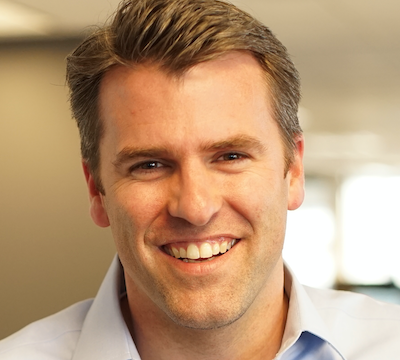
Jim Benton
Partner, Alignment.io
Jim’s career has been focused on revenue generation and applying the voice of the customer to guide product innovation and is passionate about building remarkable teams delivering amazing product experiences to solve large, meaningful problems.
Starting his career with AT&T and Ticketmaster, he co-founded ClearSlide (acquired), served as CEO of Apollo, Chorus.ai (acquired by Zoom Info) and is now founder of Alignment.io. He’s raised $130m in VC & PE funding and achieved over $1billion of successful exits.
Online workshops
Can’t make it? More dates coming up
Learn how great companies are run
At BoS we run events and publish content that is highly valued by anyone trying to build, run, and scale a great SaaS or software company.
Sign up for a regular dose of actionable and useful content: