You’re not losing customers because your features aren’t good enough. You’re losing them because your story doesn’t hit where decisions are made: In the gut, not the brain.
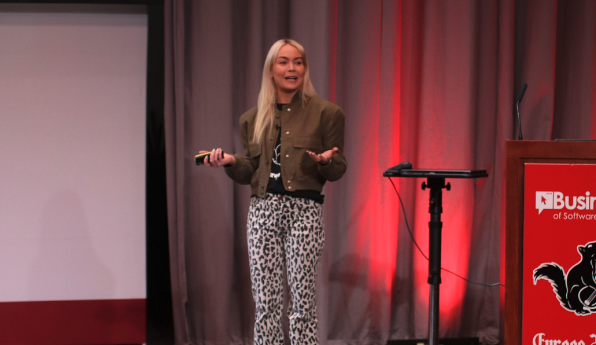
At Business of Software Europe 2025, Sara Kathleen Gordon, a reformed brand strategist and General Manager, unpacked one of the most provocative questions in marketing:
What if the secret to great positioning isn’t logic… but desire?
In her talk, “The Seven Deadly Sins & Positioning” Sara explored how our deepest human motivations (the same ones that have driven behaviour for centuries) still shape how we buy, believe and belong today.
Why We Buy: Emotion First, Logic Later
Most founders and marketers make the same mistake: they start by selling features. But the human brain doesn’t work that way. As Sara explained, every decision follows the same pattern:
- Feel – “Am I safe? Does this feel right?”
- Desire – “Do I want this? Does it align with who I am?”
- Rationalize – “Okay, here’s why it makes sense.”
That’s why selling logic before emotion is like trying to reboot your brain upside down. To stand out, you must speak to motivation first… Even in B2B.
As Sara reminded us:
“Your B2B customers are still humans with ambitions, fears, and pride. You’re not selling to a company — you’re selling to a person who doesn’t want to look foolish.”
Flipping the Sins: The Emotional Engines Behind Great Businesses
Sara drew from centuries-old human psychology, the Seven Deadly Sins, to explain why modern brands succeed when they harness timeless desires.
Today’s winners simply rebrand the sins:
- Sloth → Efficiency (Uber, Notion) – “Do less, get more done.”
- Lust → Pleasure & Connection (Tinder, Flow) – “Feel seen, feel desired.”
- Greed → Innovation (Amazon) – “More, faster, better.”
- Pride → Achievement (LinkedIn) – “Show the world you’ve made it.”
- Wrath → Justice (X/Twitter) – “Demand accountability.”
- Envy → Aspiration (Instagram) – “Be inspired, be admired.”
The takeaway?
“Take a human desire that’s been around forever, and use modern technology to remove the friction between wanting it and getting it.”
Case Study: From Tracker to Empowerment | The Flow Story
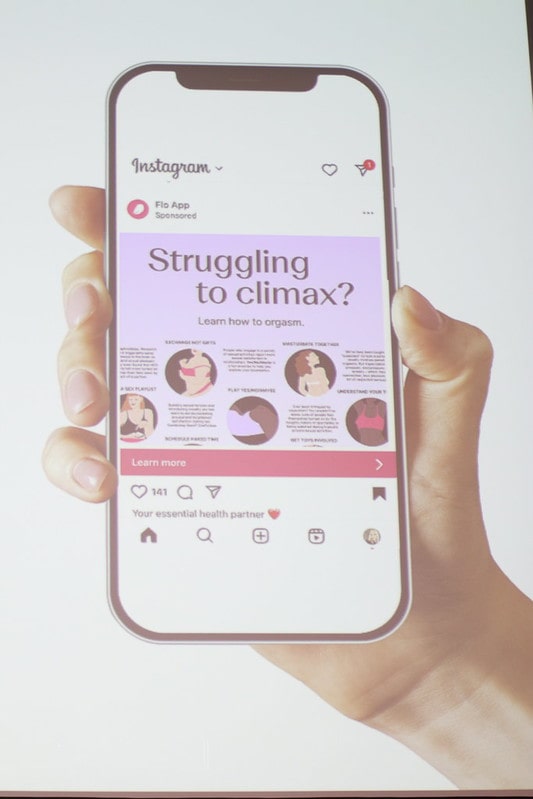
Sara brought this theory to life with her experience at Flow, a period tracking app in a crowded market.
- The Problem: Competing in a free, commoditized “tracker” category.
- The Discovery: Users weren’t just tracking cycles, they were trying to hack their bodies for better health, intimacy, and self-knowledge.
- The Shift: Repositioning from a “tracker” to a “reproductive health partner” that helped women feel in control and connected.
Flow tapped into lust as empowerment, blending emotion with evidence — and transformed its market position overnight.
Measure Your Learn Rate, Not Just Your Burn Rate
Sara closed her talk with a challenge that hit home for every founder in the room:
“If you want to grow, don’t just track your spend, track your learning.”
At Flow, her team ran hundreds of creative tests every two weeks, feeding new insights directly back into product decisions. The result? Faster iteration, clearer messaging, and a business that learned quicker than it burned cash.
The Takeaway for Founders
If your product isn’t connecting, the problem might not be the product. It might be the story you’re telling or who you’re telling it to.
Sara’s talk is a masterclass in understanding your customers as humans first, buyers second.
It’s the perfect reminder that the best positioning doesn’t just sell, it seduces.
Next up
Online workshops
Can’t make it? More dates coming up