Building a multi-billion-dollar company sounds glamorous. The reality? It’s messy, full of wrong turns, and often more stressful than it looks from the outside.
Dharmesh Shah, co-Founder and CTO of HubSpot, has spent more than 30 years in the software world. At Business of Software Conference, he shared some of the biggest mistakes he made along the way and what he learned from them. These lessons aren’t theory. They come straight from the trenches of starting, growing, and scaling one of the most well-known SaaS businesses in the world.
Here are a few takeaways that stand out.
1. Don’t Build Your Business in Someone Else’s Orbit
Dharmesh’s first startup, Pyramid, partnered with a much bigger company. At first it seemed like a win. Eventually, Pyramid’s product became so useful it started competing with the larger partner. The relationship turned sour and Pyramid was forced to sell.
Lesson: Partnerships can be powerful, but don’t let your entire business depend on someone else’s goodwill. Create your own “solar system,” not just a planet orbiting a giant.
He also stresses something founders often forget: It’s not just about product-market fit. It’s about founder-market fit. You need to care deeply about the space you’re working in. Real growth usually comes years down the road, and passion is what helps you survive the long grind.
2. Align Early With Your Co-Founder
Before HubSpot even launched, Dharmesh and Brian Halligan sat down for a brutally honest conversation. They asked hard questions: What if one of us quits? What if we get an offer to sell? How should equity be split?
Having those talks upfront gave them clarity and trust when the stakes got high later.
Lesson: Don’t wait until you’re in the middle of a crisis to work out founder alignment.
3. Sometimes Customer Needs Beat Conventional Startup Wisdom
Most advice says “focus on one thing.” HubSpot didn’t. With just two people, they built a wide suite of tools in their first version. Why? Because customers didn’t just want a blogging tool or SEO tool. They needed a full solution to manage all of marketing.
Lesson: Focus is good. But sometimes solving the real customer problem requires a broader approach than the textbooks recommend.
4. Pricing Can Make or Break You
Dharmesh calls HubSpot’s first pricing model their “most expensive mistake.” They charged a flat $250 a month. It was too much for an impulse buy but too little to support a proper sales team.
Over time, HubSpot learned that smart pricing needs flexibility. A few lessons:
- Charge in a way that grows as customers grow (per user, per product, etc.).
- Don’t promise forever-low prices to early customers. Give a discount window, not a lifetime subsidy.
- Launch new features at the top tier first, then roll them down.
- Stick to fair, consistent discount rules instead of leaving it to individual sales reps.
- Be careful raising prices. Once you do, it’s very hard to go back.
5. Tools Are Bought, Transformations Are Sold
HubSpot wasn’t just selling software. They were selling a new way of doing marketing: inbound. That kind of shift doesn’t happen with a simple click. It requires salespeople who act more like coaches than closers.
Lesson: If your product requires customers to change how they work, you’ll need to educate and support them, not just sell them.
6. Culture Is a Product Too
HubSpot made plenty of mistakes with culture. Dharmesh now sees culture as the “operating system” for the company. Just like a product, it should be built, tested, and improved with feedback.
HubSpot collects employee Net Promoter Scores every quarter, looks for “bugs,” and iterates. The goal isn’t to freeze a startup culture in place but to keep adapting as the company and world change.
7. Prioritize in the Right Order
HubSpot uses a simple but tough framework for decisions:
- Solve for the team over the individual.
- Solve for the company over the team.
- Solve for the customer over the company.
That last one is especially hard but powerful.
Fixing customer pain points, even if it hurts short-term revenue, pays off long term.
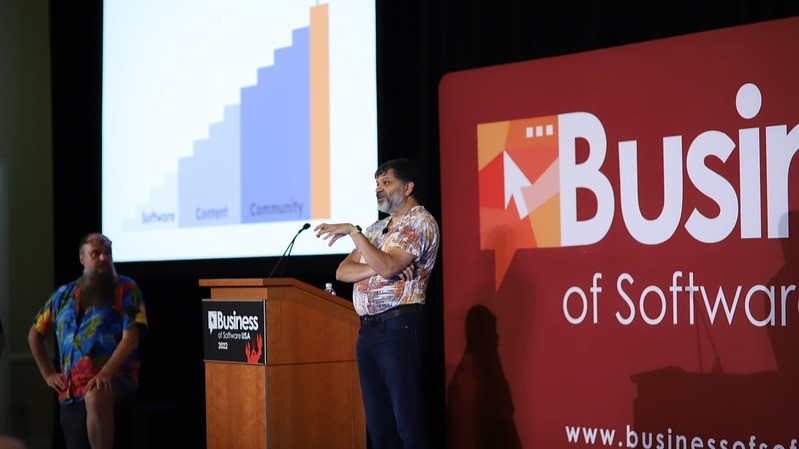
8. The Future is Community
Dharmesh believes the next wave of great software companies won’t just sell products. They’ll build the go-to community for their industry.
Software, content, and community together create real “success as a service.”
HubSpot’s story shows that growth comes from more than just building features. It takes the courage to admit mistakes, align with your team, listen to customers, and treat culture as seriously as code.
For founders and software leaders, these lessons aren’t about copying HubSpot’s playbook. They’re reminders that the hard parts of building a business often are the lessons that set you up for lasting success.
This article draws on excerpts from Dharmesh Shah‘s talk, “Mistakes Made & Lessons Learned Building HubSpot“, at Business of Software Conference.