Most founders optimize the wrong part of their network.
They spend their coffee meetings with the same core circle, people they already know and trust. It’s comfortable, but it’s also where the time gets wasted.
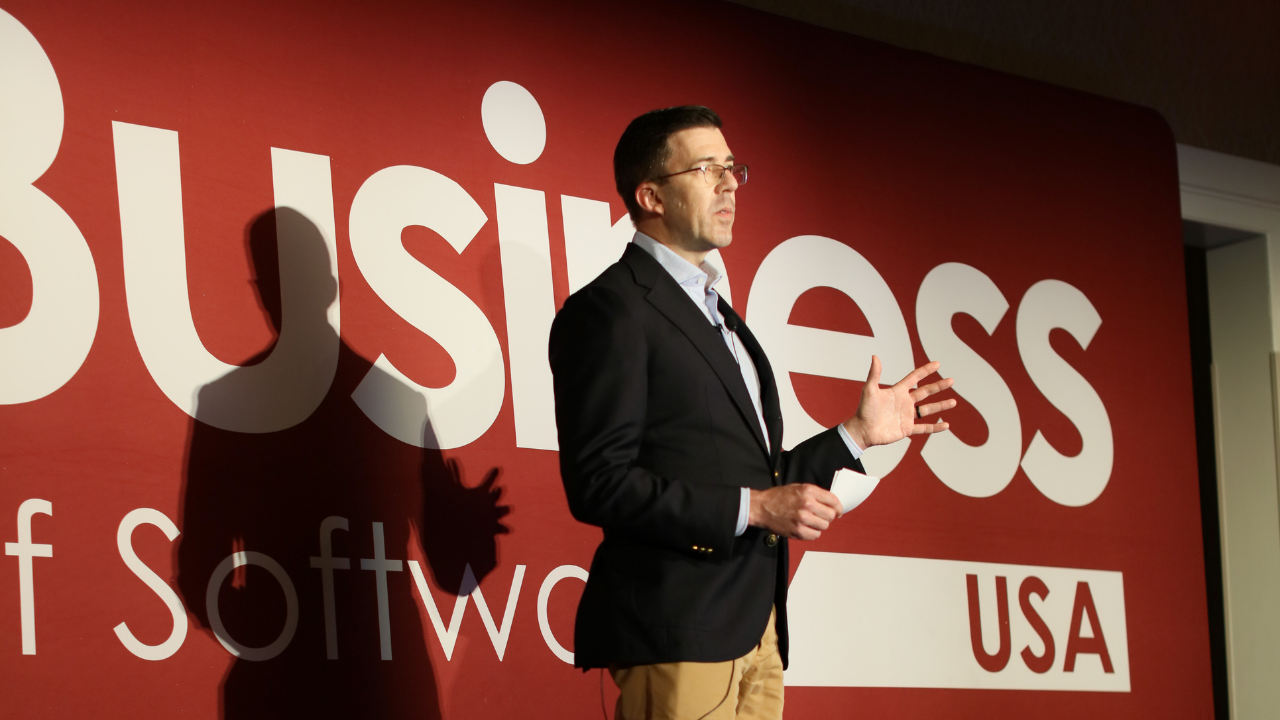
John Knox, in his lightning talk at Business of Software USA 2025, put it plainly: “The edges of your network are the most valuable part of your network. Yet most people spend all their time on the core.”
When John ran an event for med tech startups, he reached out cold to eight founders he’d never met. Seven said yes and ended up speaking at his event, despite having no prior relationship with him and no particular reason to trust his outreach. The leverage was never in his existing contacts. It was in the people he hadn’t talked to yet.
Networking Is Not Sales (or Small Talk)
Founders often conflate networking with sales, assuming it means pitching, small talk, and conference badges. John draws the line simply: “As soon as you talk about prices or establish yourself as a seller and someone as a customer, that’s sales, not networking.”
Networking is the work of building relationships around shared interests and mutual opportunity. “A network is something you do something with,” he says. “It’s interactive.” The moment you’re positioning yourself as the seller and someone else as the customer, you’ve left networking behind.
You don’t need to be in the room to do it, either. If you can only make it to one event a year, Zoom fills the rest of the gap. On outreach itself, John’s advice is specific: “Explain why you’re contacting them. Show respect, maybe flatter them. Prove you’ve done some research and you’re not a bot… Keep it short. Nobody wants to read a novel.”
Two Modes: Use and Expand
John describes two ways to work a network.
One is using it: you have a problem or an opportunity, and you lean on people you already know to help you move forward.
The other is expanding it: you have a direction you’re heading, and you go looking for the people who can help you get there. CEOs often come to John for strategic advice, but he points them somewhere else. The best intelligence comes from the market itself, from talking to the founders you’re trying to learn from and the customers you’re trying to serve. Your existing network will mostly confirm what you already believe. The edges are more likely to tell you what’s actually true.
For the Introvert: Speak Without Hedging
If you’re an introvert, and John counts himself as one, this can feel exhausting. It’s learnable anyway. His first piece of advice: speak confidently about your own work. “I’d hedge or underplay my achievements, and it shows a lack of confidence to people,” he admits. “It undermines whatever you’re trying to achieve.”
From there it’s a matter of showing up, one conversation at a time. Meet the person standing next to you. Help someone find their way around the conference. Make an introduction. Suggest a follow-up call. None of it feels like much on its own, but each small move fills in more of the map.
The Tree Model
John’s last framework: picture your business as a tree. The branches are your business model, product, and market. The roots are your network, and as the tree grows, the roots need to grow with it, into the same new directions.
That work looks nothing like coffee with people you already know. It’s reaching out to strangers and asking for their help, which is uncomfortable by design.
As John puts it: “If you invite the right people to participate in an ambitious project, many people will say yes. Just ask Obi Wan.”
Want more of these insightful talks?
At BoS we run events and publish highly-valued content for anyone building, running, or scaling a SaaS or software business.
Sign up for a weekly dose of latest actionable and useful content.
Unsubscribe any time. We will never sell your email address. It is yours.